Plan around the fixed commitments
Mark meetings, concentrated work and any time you must leave the house. Then place the dog's meals, appropriate toilet outings and other established care around those commitments. Use realistic gaps that include finding equipment and getting back inside, rather than scheduling a walk into the last five minutes before a call.
Notice when your Boston Terrier normally rests. You may be able to preserve that quiet period by moving noisy work or a delivery to another time. Set up the resting area away from cables and a chair that rolls. Keep fresh water accessible without placing a bowl beside electrical equipment or directly under your feet.
Make a break one complete task
Choose what the break is for before stepping away from the desk. A toilet opportunity, a short suitable activity or a meal is clearer than trying to fit all three into a hurried gap. Put your phone away long enough to supervise what the dog is doing. An indoor activity should match the time you can actually attend to it.
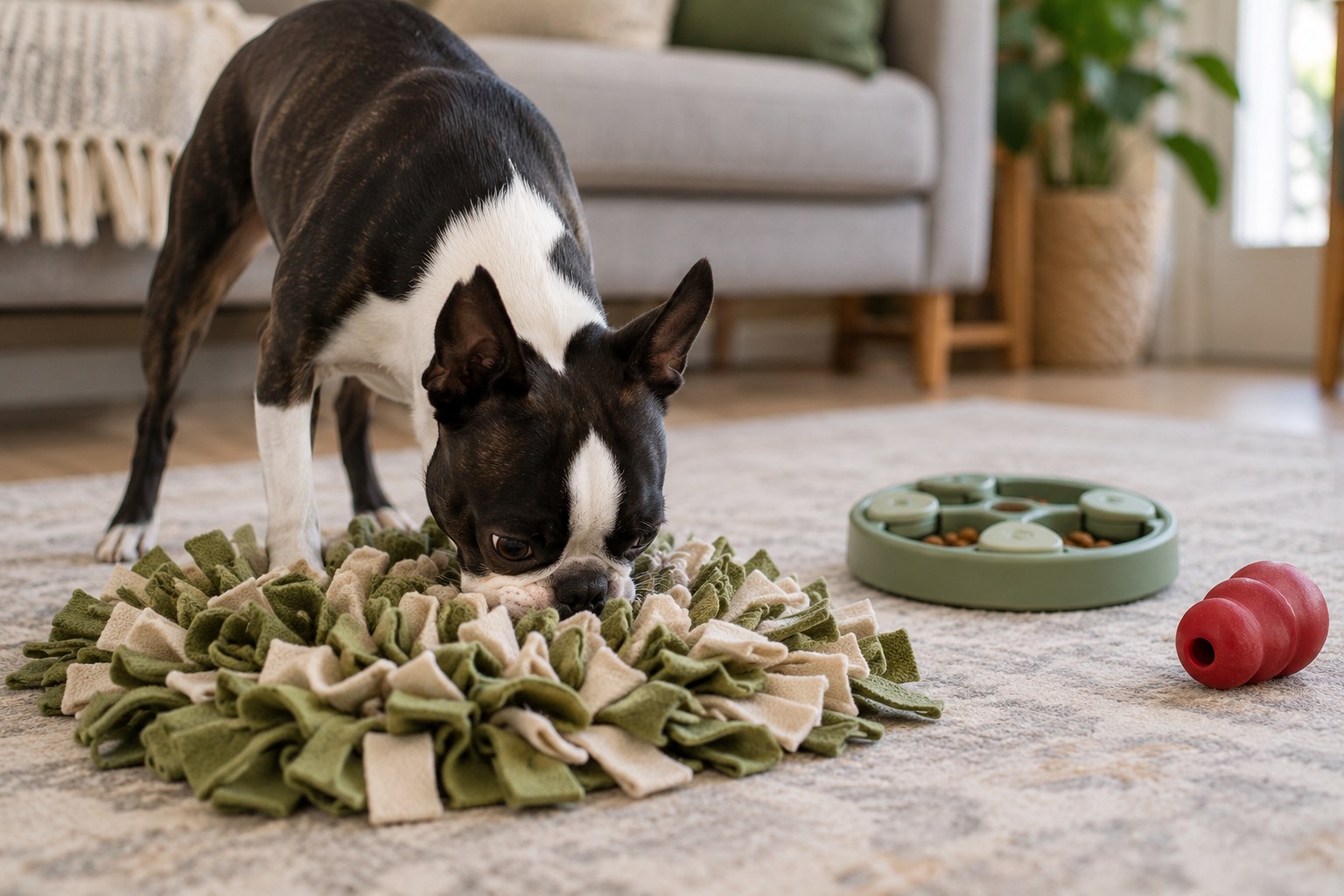
Keep a small set of suitable options nearby but inaccessible to the dog until offered. A familiar food activity may fit one break; a brief game with you may fit another. Check and clean items afterward rather than leaving a damaged toy under the desk. Enrichment is optional variety within care, not a substitute for every outdoor need.
Have a plan for the overrunning call
Agree on a backup caregiver or walker for days when meetings fill the schedule. Give them access arrangements and current care information before the problem occurs. A colleague's calendar invitation is not evidence that the dog can comfortably wait; adjust work or care when those demands conflict.
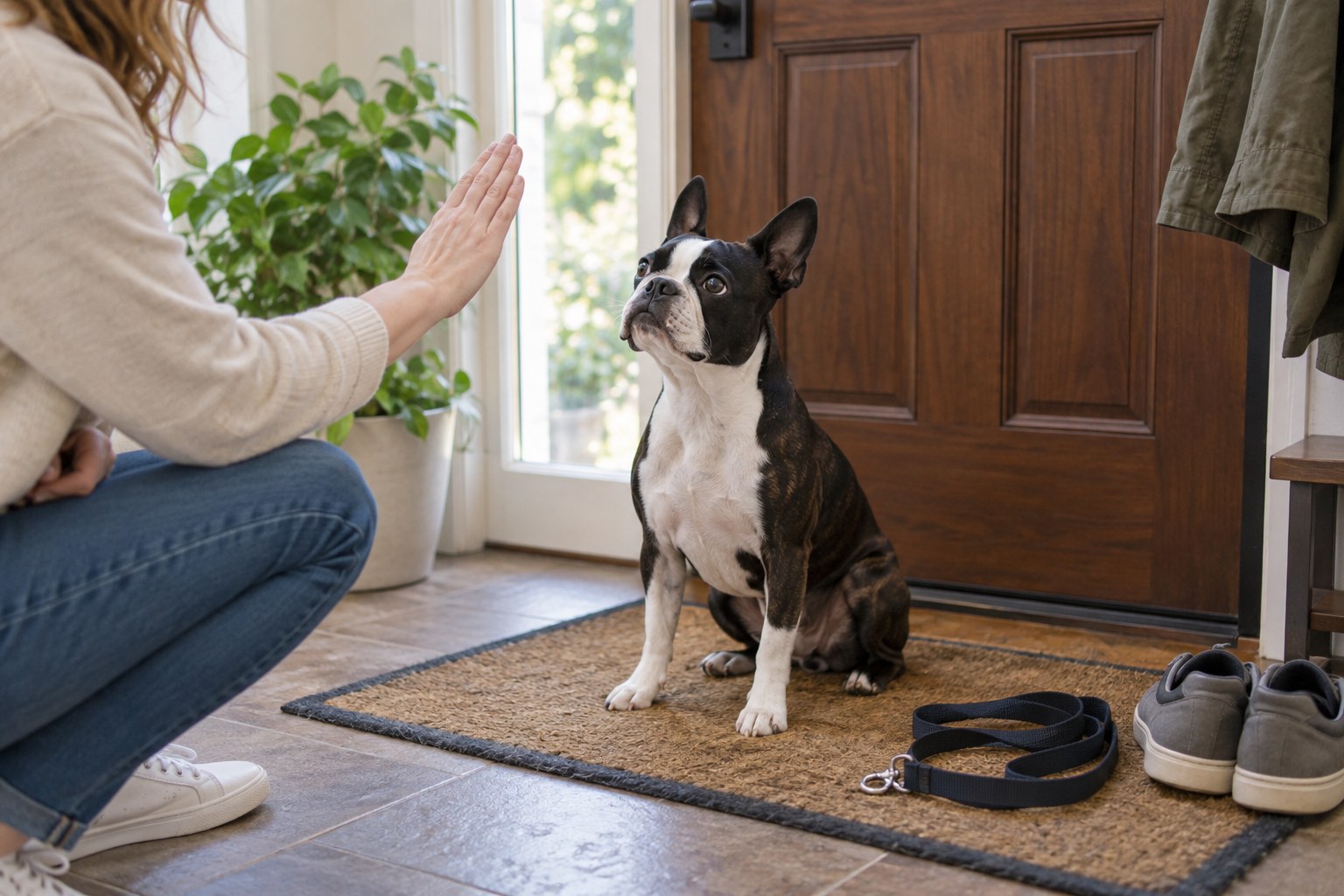
If you are changing from constant company to periods away, plan the transition separately. Do not assume that being quiet while you work means the dog is comfortable when the home is empty. Contact your veterinarian or an appropriately qualified behavior professional if absences cause distress, and arrange interim care while you work on a suitable plan.
Close the workday with a reset
Put used equipment away, check what food or rewards have already been given and update the shared care record. If another household member takes over in the evening, tell them what was done rather than describing the day as 'normal.' This avoids a second dinner or a missed outing during the handoff.
Review a few actual days before perfecting your calendar. A recurring delayed lunch or poorly timed delivery gives you something specific to change. Keep the plan adjustable for weather and the dog's needs. A manageable workday has protected care opportunities and a backup, without needing to entertain the dog continuously between emails.