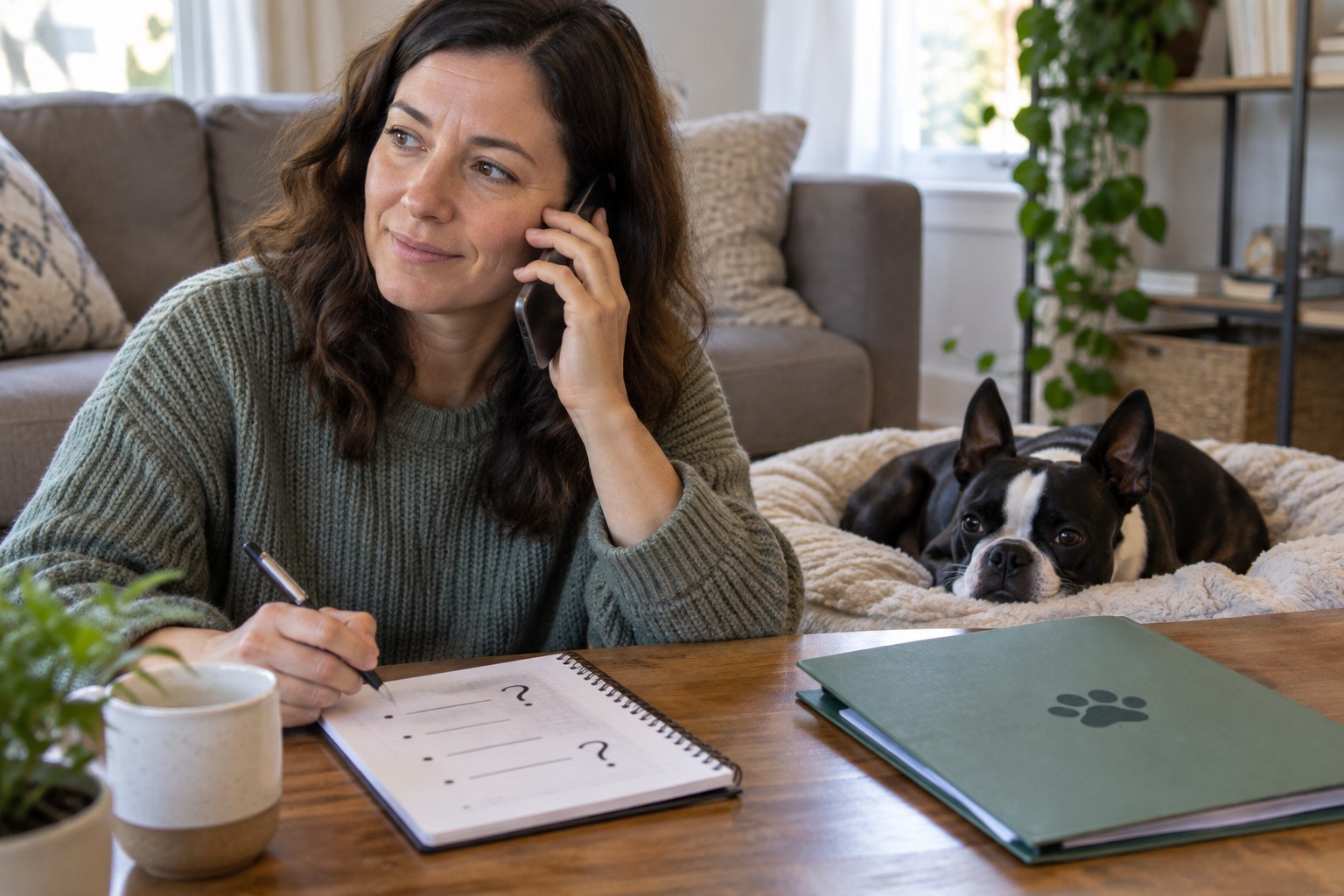
Ask who handles each kind of question
Confirm the contact for administrative matters, care questions and difficulties with the placement. A foster caregiver may know the dog's routine while a coordinator handles agreements. Ask whether you should use email, a form or a telephone number and what response time is realistic. Store the verified details where another adult can find them.
Separate rescue support from veterinary care. Ask your clinic how to reach it for urgent and out-of-hours concerns. Do not assume a volunteer can assess a medical problem through messages or that a rescue contact is monitored continuously. If you are unsure whether a symptom can wait, contact a veterinary service for guidance.
Clarify scope before relying on it
Ask whether support includes referral to a qualified professional, follow-up conversations or particular written resources. If training or behavior help is mentioned, find out who provides it, what qualifications are relevant and whether there is a cost. Do not treat the word support as an unlimited service contract.
Read the agreement concerning trial arrangements, returns and changes in circumstances. MABTR's FAQ, for example, tells its adopters to contact the organization if they cannot keep the dog. Read the selected rescue's own current terms and ask how they apply; that example should not be substituted for another group's agreement.
Discuss foreseeable limitations honestly. An upcoming move, work change or care gap is easier to address before it becomes a crisis. Ask what the organization needs to know and when. If you cannot sustain a required care arrangement, pause and resolve it instead of assuming post-adoption support will make the difficulty disappear.
Send a question someone can act on
Identify the dog and adoption date, describe the observed issue and explain the setting. Include what changed, what you have tried within the agreed plan and the question you need answered. A concise factual message helps a coordinator distinguish a routine update from a request needing prompt attention.
Avoid sending several incomplete versions to different volunteers unless instructed. Keep a record of advice and who gave it, and ask for clarification when instructions appear inconsistent. If a matter becomes urgent, use the appropriate urgent contact rather than continuing a slow email chain.
Give updates when requested and let the organization know whether an agreed action helped. Ongoing communication should support the dog's care without replacing your responsibility to arrange veterinary treatment, suitable daily care and professional assistance when needed. Knowing the route and its limits makes support easier to use at the time it matters.