Begin with the walk you actually take
Consider the usual route, access to suitable water arrangements, the conditions and any individual needs already discussed with your dog’s carer or veterinarian. A brief familiar outing and a longer journey away from home do not require identical packing. Write the essential tasks first: controlling the dog appropriately, dealing with waste and managing the agreed care needs for that outing.
Check the walking equipment and identification before leaving. Make sure clips and fastenings are used as instructed, the equipment is in suitable condition and the contact information is current. Carrying a spare accessory does not resolve a problem with the item already attached to the dog.
Give each carried item a purpose
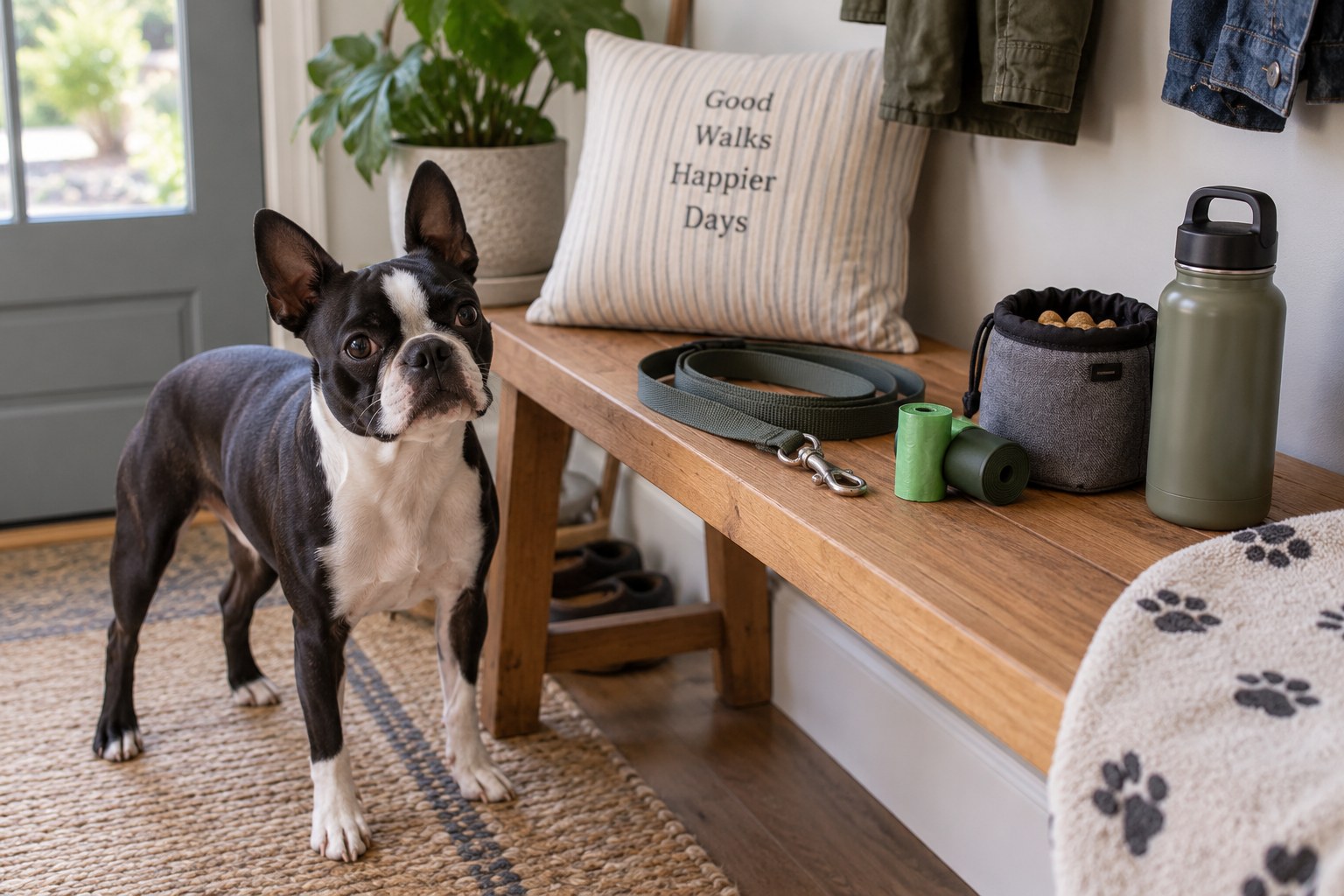
Put waste supplies where they can be reached without unpacking the bag. If you use rewards, choose an accessible arrangement that keeps them separate from used bags and damp equipment. Include water and a suitable way to offer it when the planned outing requires it. Do not depend on an unconfirmed public tap or a shop allowing the dog inside.
Keep your phone and keys secure and retain a usable way home. A phone being carried mainly for photographs still needs enough charge for the purpose you rely on it to serve. If another person is walking the dog, explain the kit instead of assuming every pocket is self-explanatory.
Leave decorative extras at home unless they have a role in the outing. A useful question is whether you can name the situation in which an item will be used on this route. If you cannot, consider whether it belongs in a larger travel kit rather than the everyday walking bag.
Reset the kit when you return
Replace used supplies, empty damp pockets and separate anything that needs cleaning or drying. Do this before the bag returns to its usual hook. An apparently packed bag can conceal an empty dispenser or a wet mat if it is never opened between walks.
After a few outings, remove items that are consistently irrelevant and add a missing item only when a specific need has become clear. Check the contents again when the route, season or dog’s needs change. The aim is a repeatable preparation habit: you know what is in the kit, where it is and whether it is ready for today’s walk.