Name the information you do not yet have
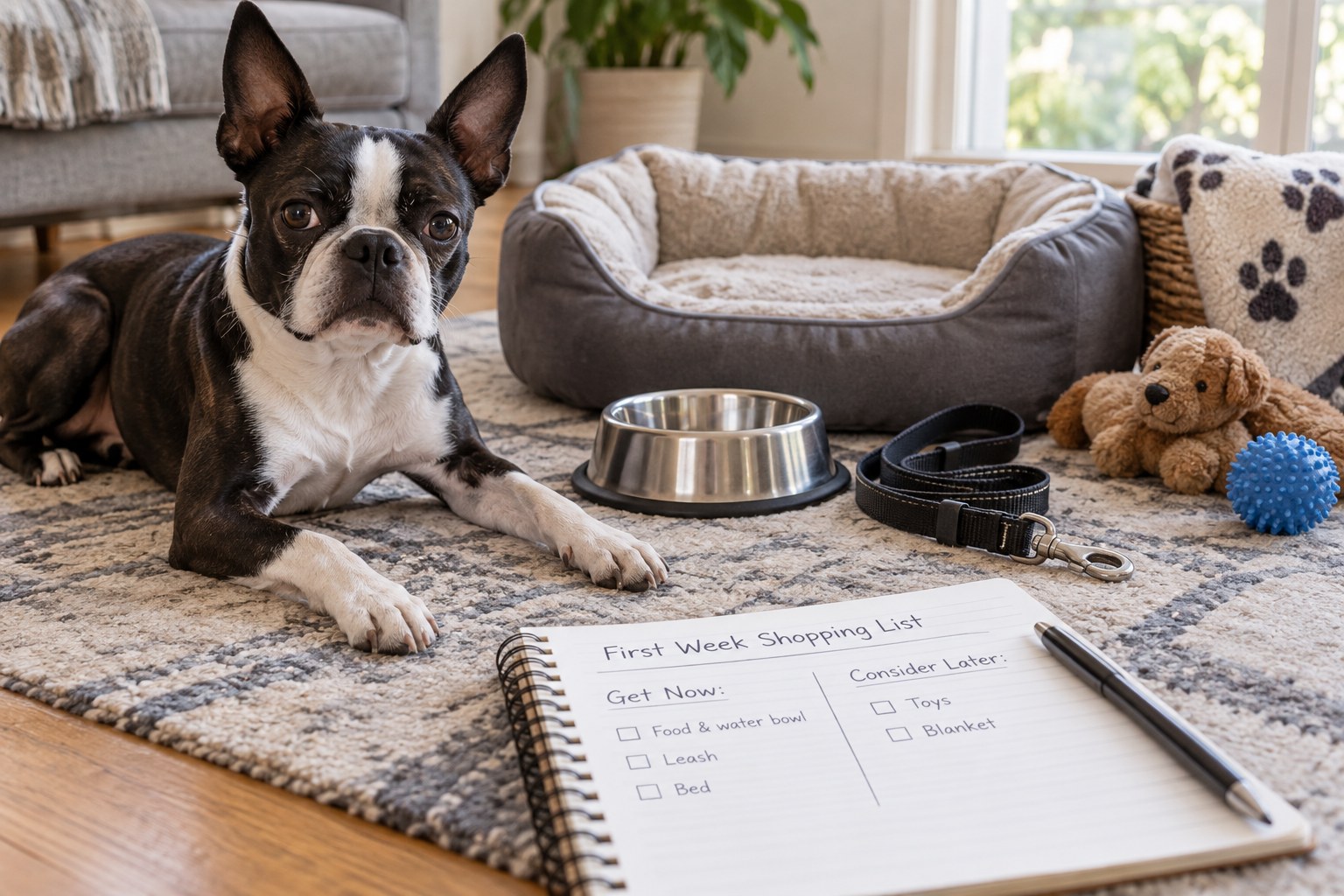
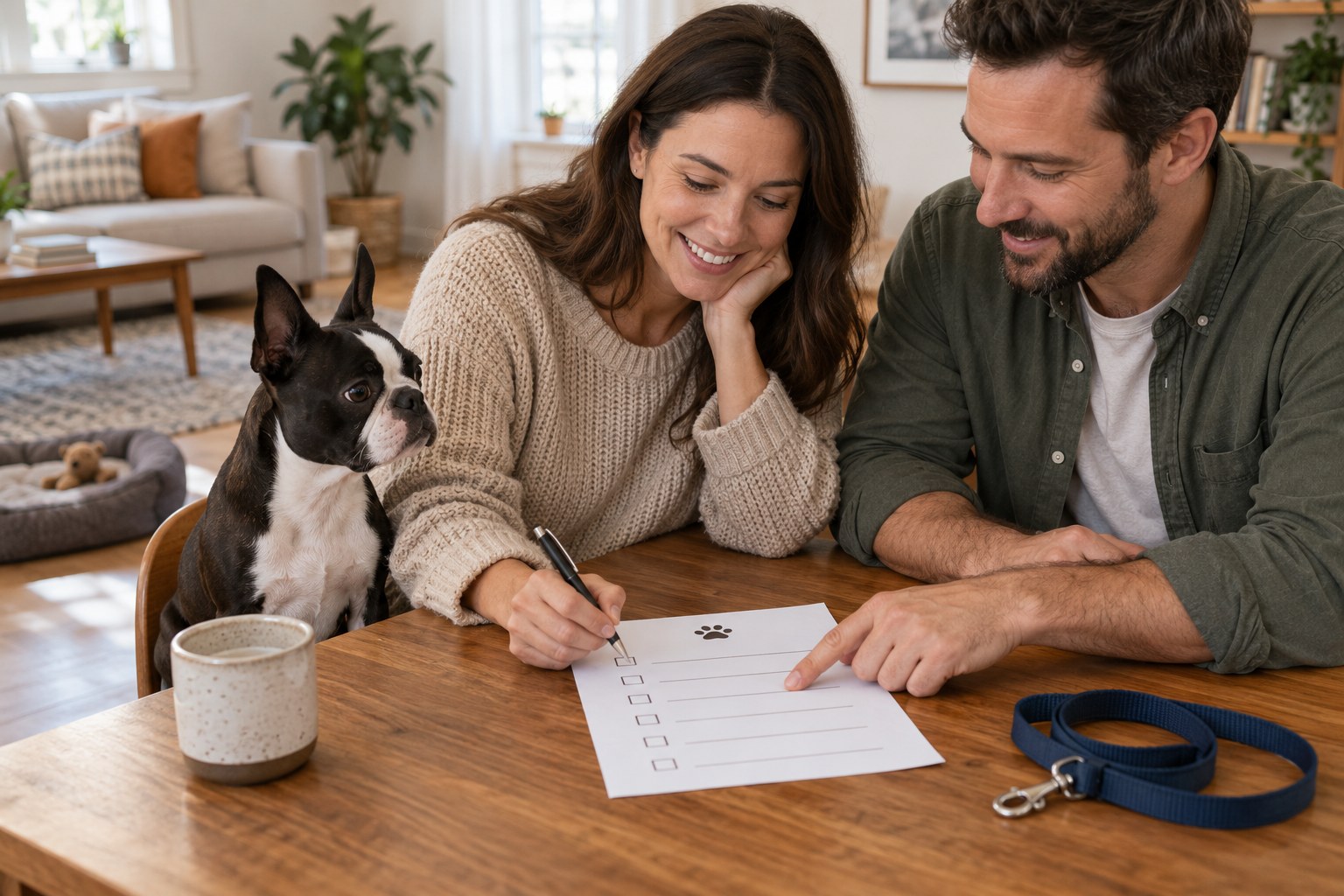
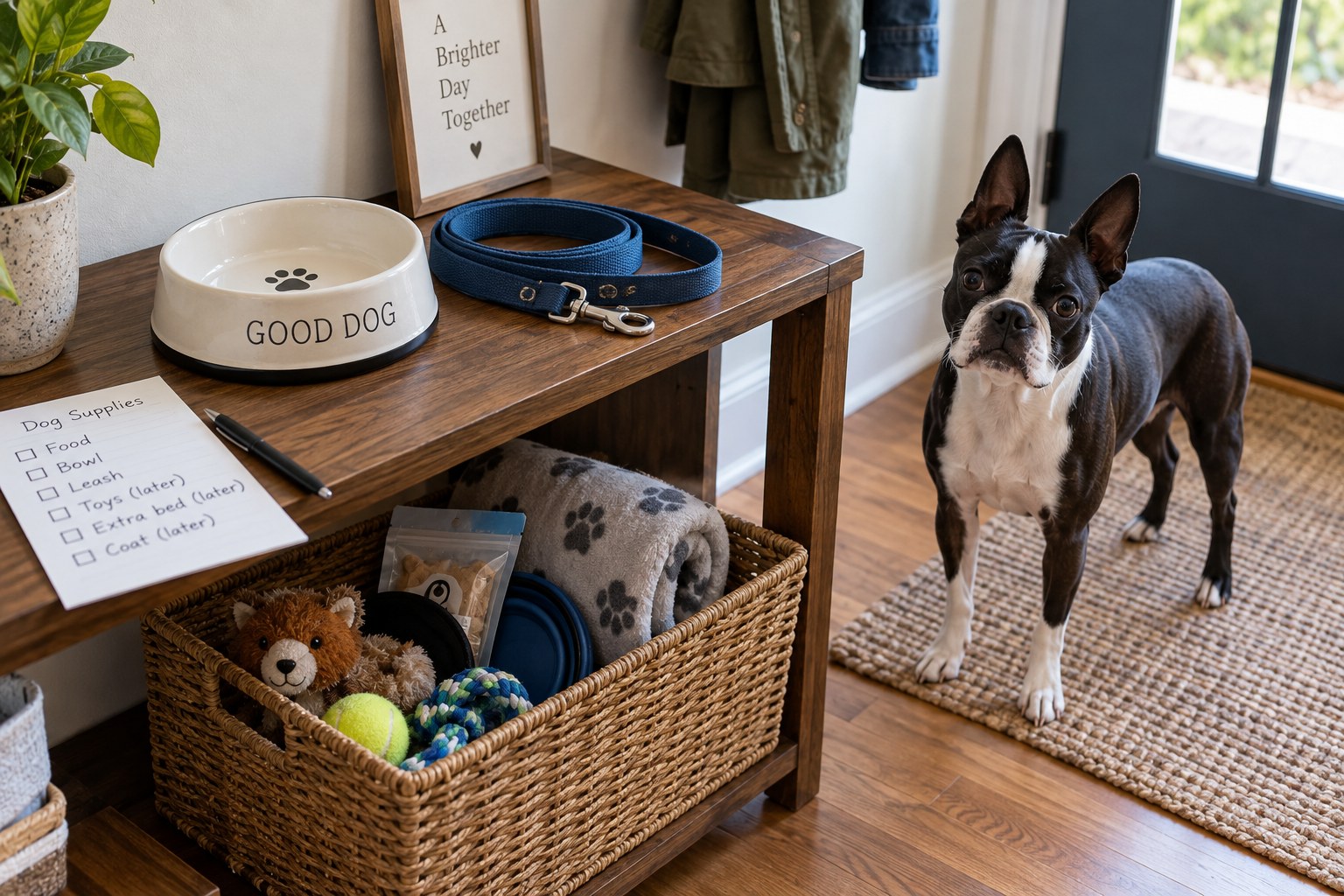
Make a deferred list with a reason beside each item. Instead of writing buy coat later, write measure body and check the intended use. Instead of adding several toys, note that you want to learn which supervised play the dog enjoys. A reason keeps deferral from becoming either forgotten shopping or an excuse to postpone an essential arrangement.
Separate optional purchases from unresolved necessities. If an item is needed for transport, identification or the agreed first-day routine, obtain the required information before arrival or arrange a suitable alternative with the responsible person. Waiting is useful when it creates a better decision, not when it leaves the handover unprepared.
Watch use rather than making a preference from one moment
Observe what happens in a few ordinary situations. A dog resting on the floor once does not establish that every bed is unwanted. A toy ignored during a busy arrival does not tell you how the dog will play on a quieter day. Look at the context and identify what you need to learn before choosing a more specific item.
For something already in the house, examine the problem before replacing it. A washable cover may solve a cleaning difficulty without requiring a new bed. A better storage position may make an existing lead easier to use. Write the task the replacement should improve so that its appearance or a promotional bundle does not become the only reason to buy.
Set a decision point
Review the deferred list after you have gathered the relevant information, not simply because a set number of days has passed. Measure, check the instructions or ask a focused question as needed. Then mark the item as needed, still uncertain or unnecessary. It is reasonable for some entries to disappear entirely.
Keep personalised and decorative purchases separate from equipment the dog will use. A breed-themed mug can be chosen for a person’s preferences, while a fitted coat needs the dog’s actual dimensions. This distinction lets you enjoy the optional purchases without treating them as evidence that the household is better prepared. Preparation is about having the right arrangements ready, including knowing which decisions can wait.