Prepare an empty frame
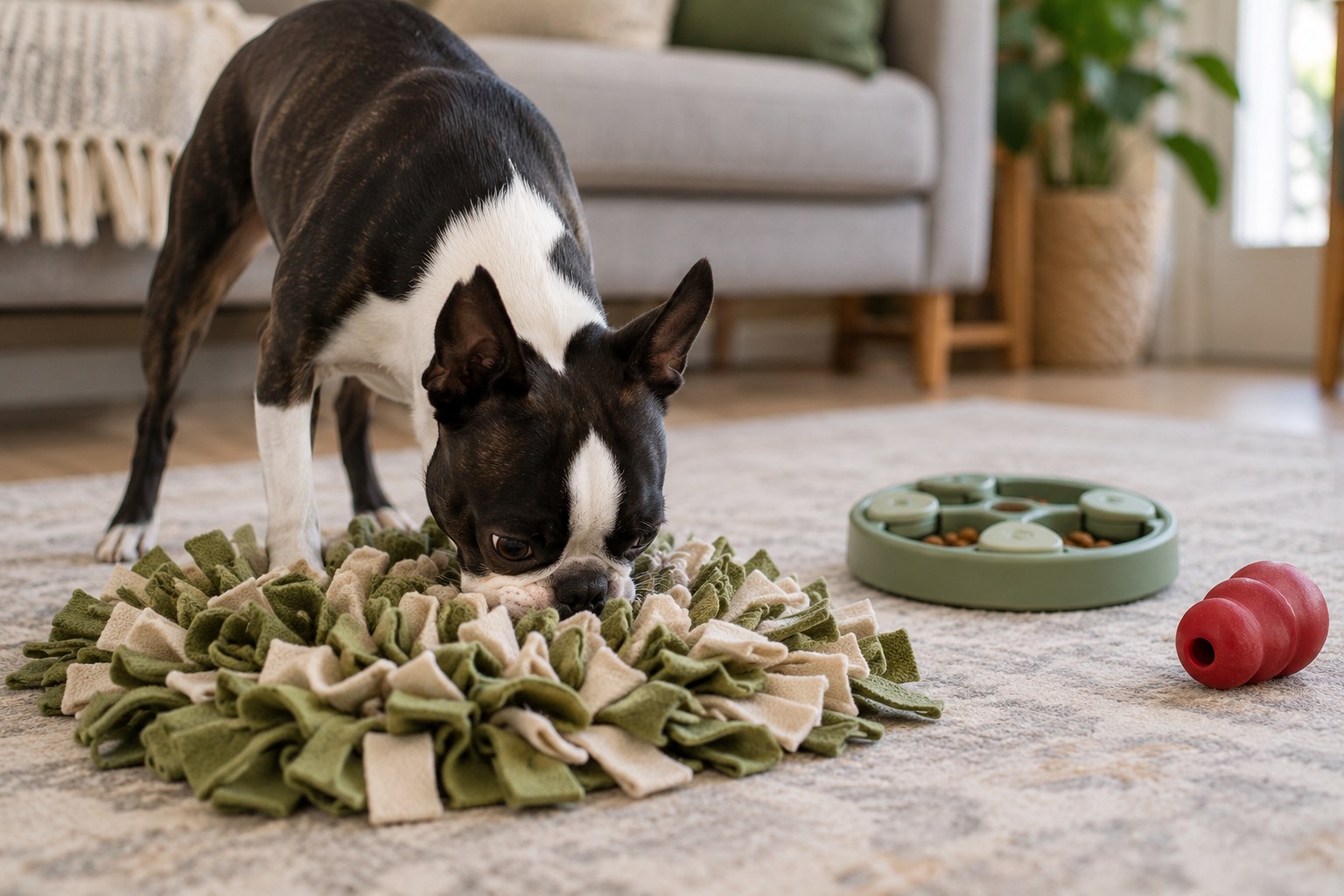
Choose a familiar area where the dog can stand, sit or lie naturally. Remove cables, breakable objects and loose decorations before bringing them over. Look at the background through the camera: a simple wall or uncluttered room may need less staging than a pile of props. Make the camera settings and framing decisions while the dog is doing something else.
Use available light where possible and avoid directing bright lights into the dog's face. Check that a sunny area is comfortable rather than assuming good photographic light means good conditions for a short-nosed dog. Keep an exit route from the setup and put equipment where a wagging body or moving leash cannot pull it down.
Capture behavior the dog already offers
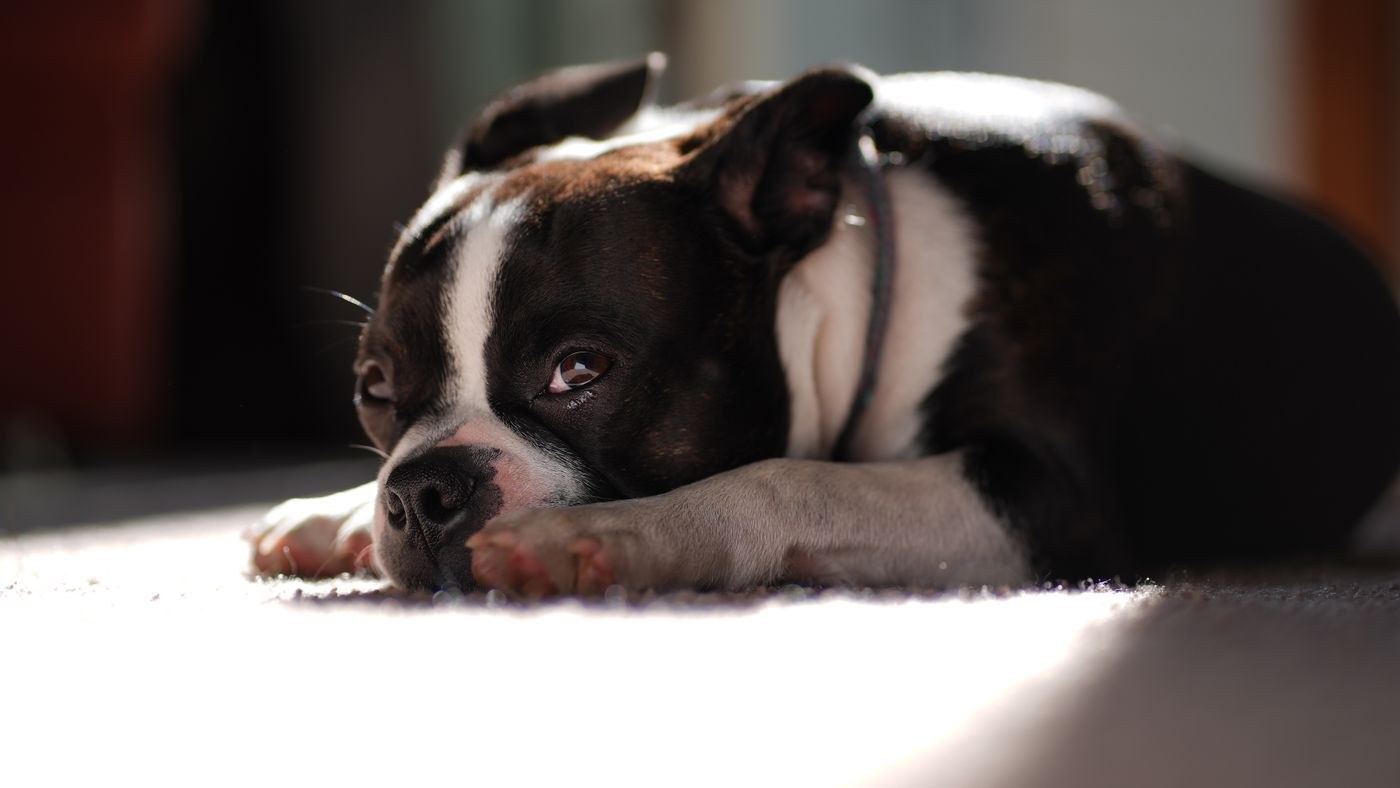
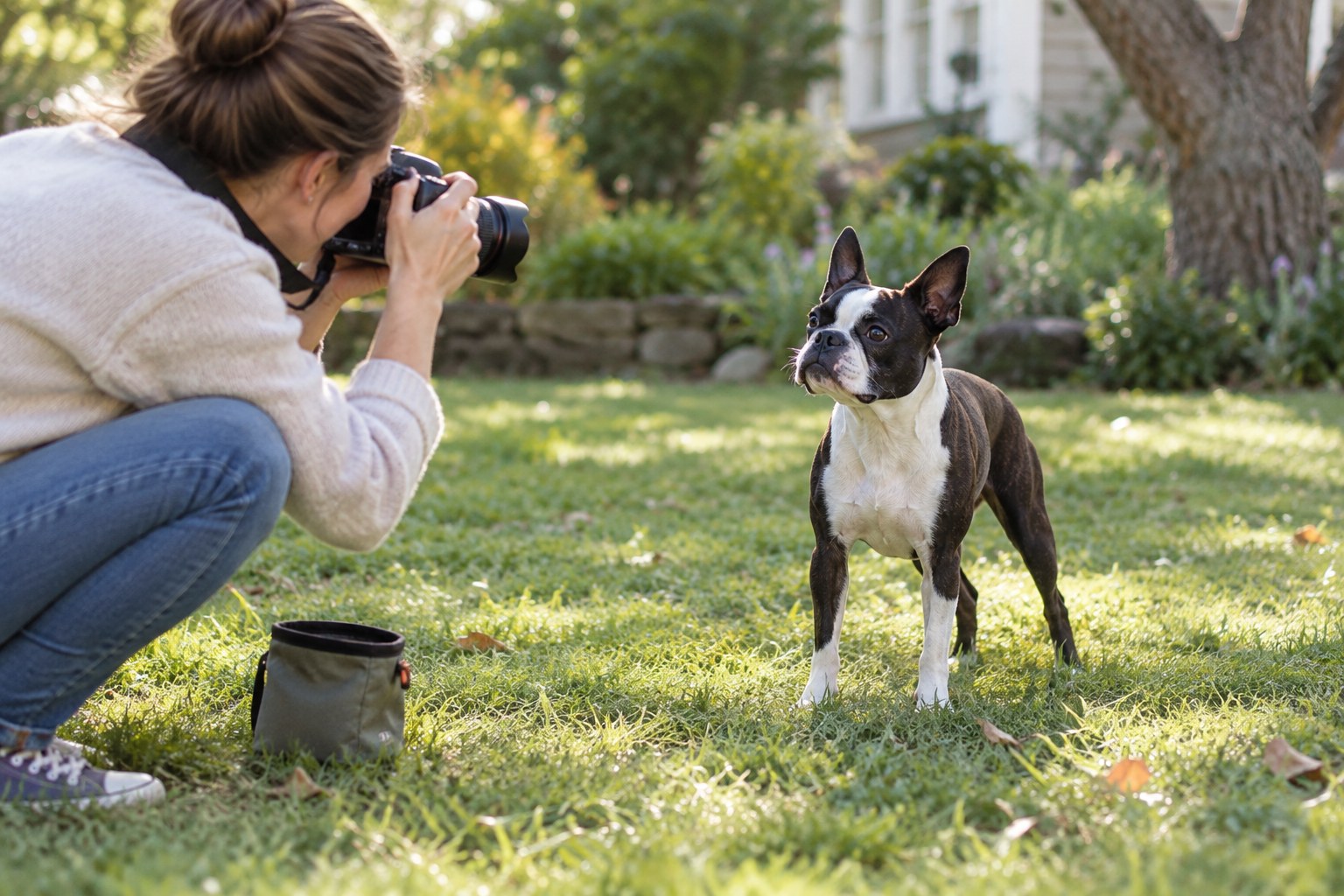
A glance toward a familiar person, a relaxed resting position or gentle supervised play can provide a clearer portrait than an unfamiliar pose. Get down to a suitable camera height without crowding the dog. If a helper is present, let one person handle the dog while the photographer concentrates on the image; avoid several people calling at once.
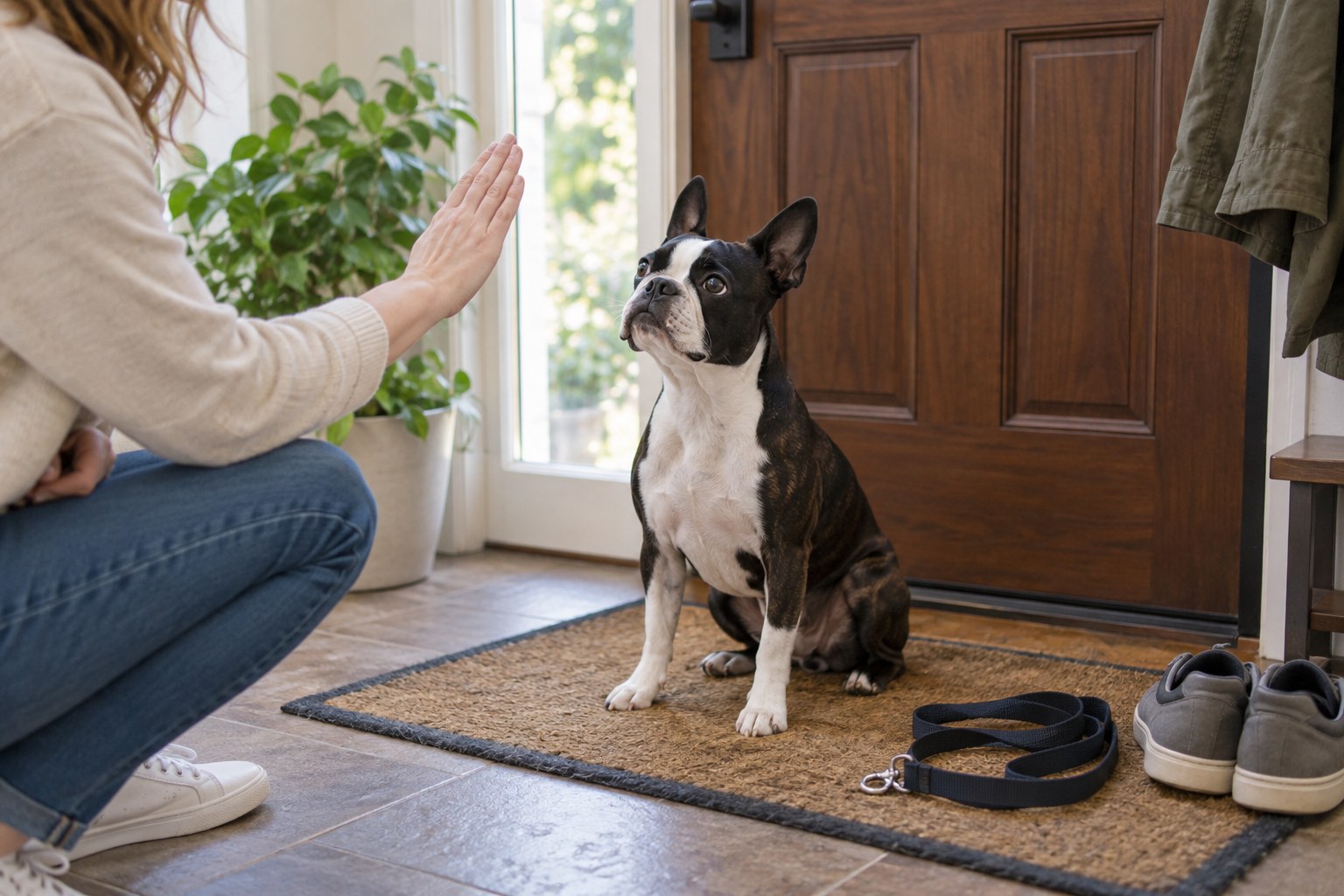
Use familiar rewards where appropriate and account for food already given that day. Keep them out of the camera operator's busy hands if that causes grabbing or jumping. Ask for a known cue only a few times, then release the dog. Holding a pose longer simply because the camera missed it makes the session harder without guaranteeing a better picture.
Skip props that need restraint
You do not need a costume, raised surface or object held in the mouth to show a Boston Terrier's face and markings. If an accessory is unfamiliar or uncomfortable, leave it out. Never place the dog on unstable furniture, tie them in position or use a tight leash to maintain a composition. A floor-level picture usually gives you more room to adjust safely.
If you need a photograph for a custom product, check the maker's requirements first. A clear view of the face and ears may matter more than decorative surroundings. Take several short bursts from one comfortable position rather than rearranging the dog for a full collection of elaborate scenes.
Stop while there is still a choice
Allow the dog to leave, and stop if they repeatedly turn away or seem worried. Put the camera down for a genuine break instead of following them to continue. Pick your image later, when you can check focus and cropping without asking for another immediate attempt.
Save the original file and make a separate copy for edits or uploads. Remove location information if you do not want to share it publicly, and check the background for addresses or personal documents. A useful session can produce just one comfortable, clear image; there is no minimum number of poses to complete.