Record the product as precisely as the dog
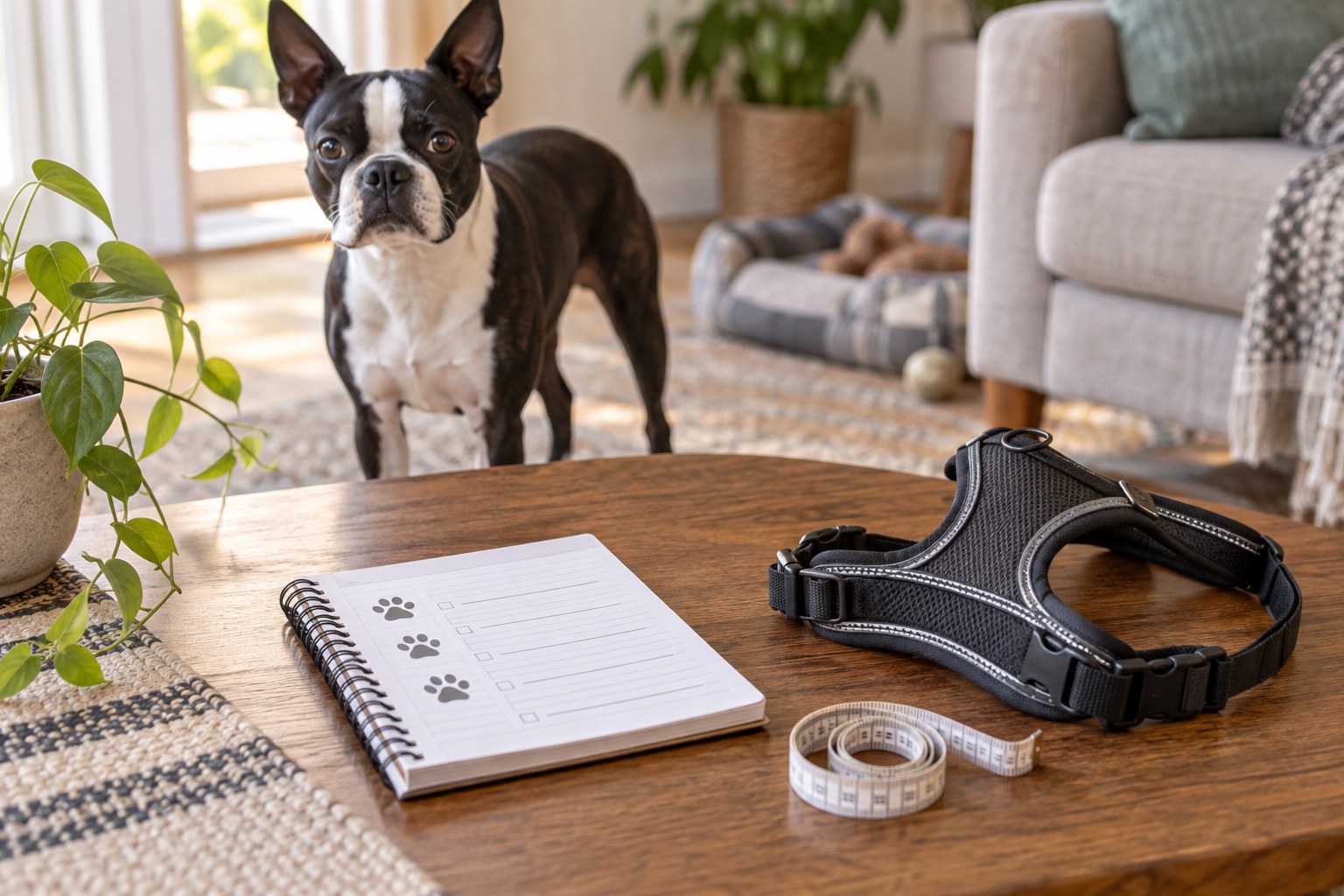
Save the brand, model, labeled size and the manufacturer's sizing chart used at purchase. Different versions of the same product can have different shapes, so include a photograph of the label and fastening arrangement. Keep instructions that explain adjustment points, intended use and any required fit checks.
Date the dog's relevant measurements and record how you took them. For a coat, that might include back length and chest circumference; for a harness, use the locations the specific maker requests. A note saying 'measured standing with a flexible tape' is more useful than an unexplained number. Check the units before comparing an old measurement with a new listing.
Describe what happens in motion
A still photograph can miss a strap moving into the armpit or a coat turning when the dog walks. Observe an ordinary short supervised outing in the product. Note where it sits, whether fastenings remain secure and whether the dog can move normally. Record rubbing, slipping or restricted movement rather than reducing the observation to 'seems fine.'
Take clear comparison photographs if the dog is comfortable, from a similar angle each time. Do not tighten or loosen equipment outside the maker's instructions to match an old picture. If the product cannot be adjusted to fit properly, stop relying on it and seek a suitable alternative. A veterinary professional can advise when discomfort or a physical change raises a health concern.
Use meaningful review points
Recheck when you notice a fit change, after equipment has been washed as directed, when a growing dog changes size, or when your veterinarian reports a weight change. Also inspect after a fastening is repaired or a different layer of clothing is added. The point is to respond to changes that affect fit, not to create a complicated measurement ritual.
Separate wear from body changes. A stretched strap, damaged clip or compressed filling may explain a difference without the dog having changed at all. Add a brief condition note and replace unsafe equipment. Keep a replacement ready only if it has also been checked on the dog; the same printed size does not settle the question.
Carry the record into the next purchase
When shopping again, begin with current measurements and the observations from the previous item. 'Chest strap moved forward during walking' helps you compare a different design, whereas buying one size larger may reproduce the same shape problem. Ask the seller about unclear dimensions before ordering and check return conditions.
Remove obsolete equipment from daily storage or label it clearly so another caregiver does not select it by mistake. Keep the historical record for comparison, but make the currently approved item obvious. A short dated page can save repeated guessing without turning your dog's wardrobe into an inventory project.