Choose a few dependable anchors
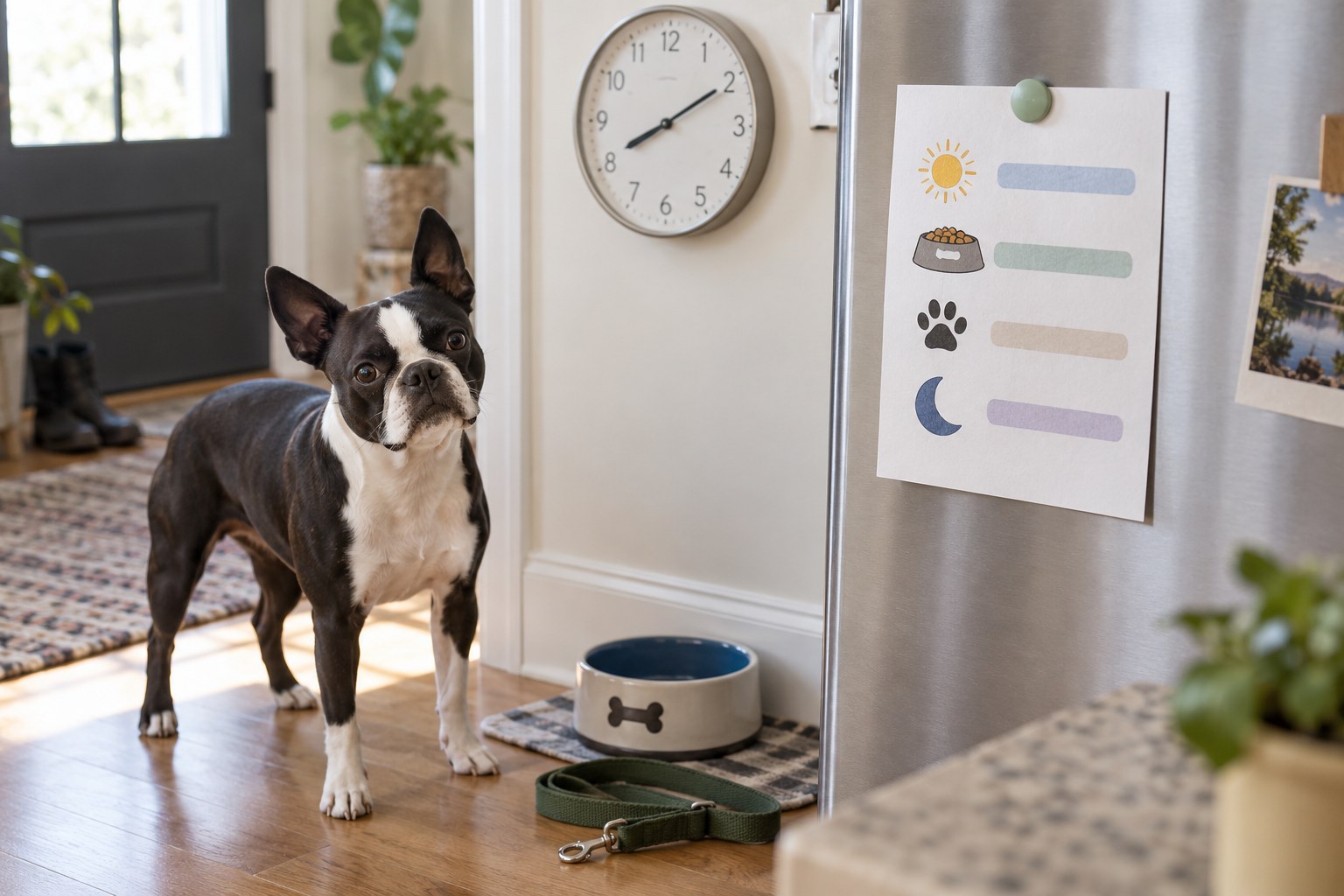
Use the rescue's current care instructions to plan meals, toilet opportunities, rest and prescribed treatment where applicable. Assign responsibility for each rather than relying on whoever happens to be nearby. Write the plan on one page with the equipment and food locations. Keep the original veterinary directions available alongside any household summary.
Retain familiar food and equipment when appropriate and as advised, instead of replacing everything on arrival. Check fit and condition rather than assuming the items must suit the dog forever. Make any needed change deliberately, and discuss medical or dietary uncertainty with the relevant professional. The first week does not need a shopping expedition for every possible accessory.
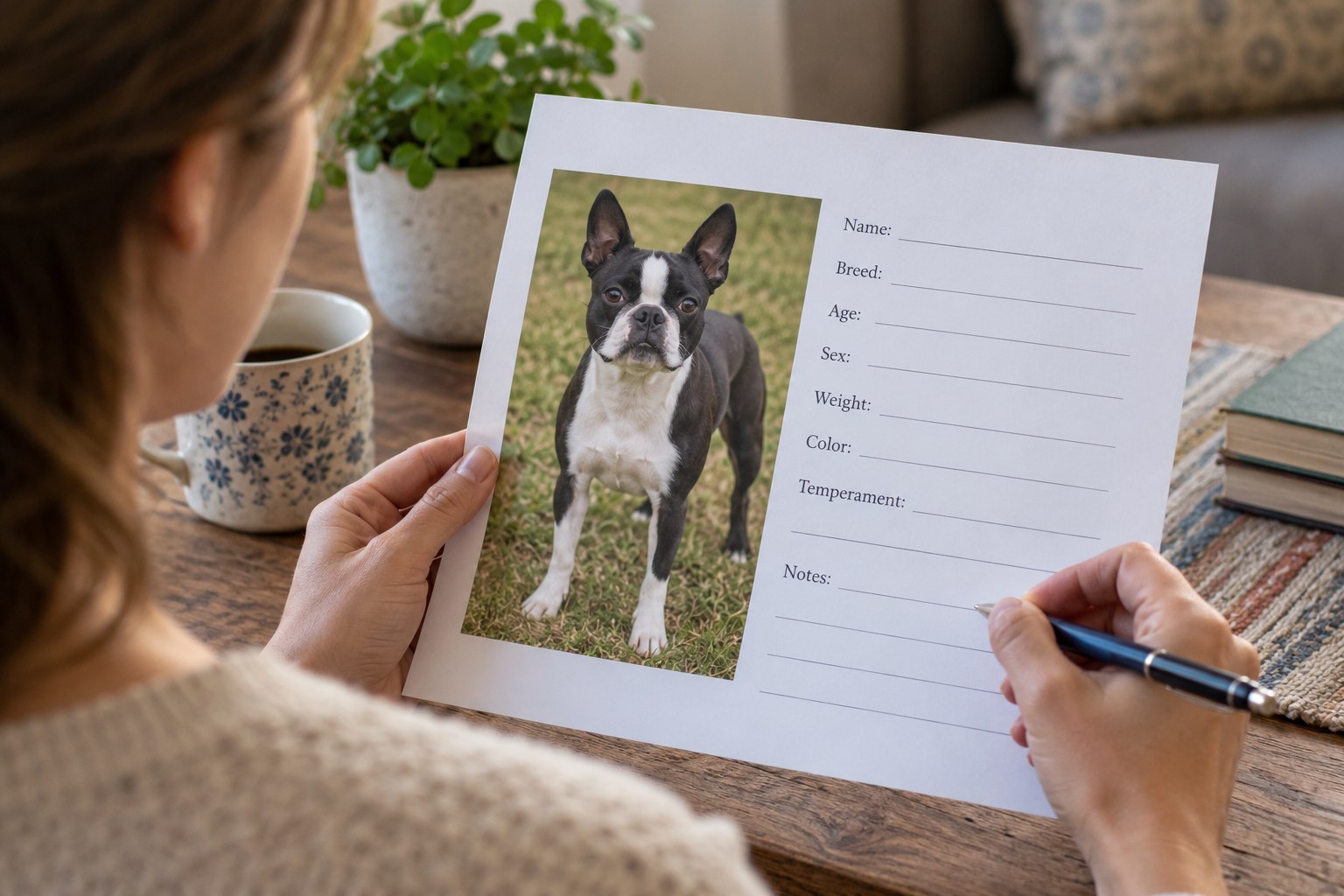
Keep the record descriptive
Write short entries about meals, outings, rest and anything that needs a question. 'Ate half the measured breakfast' and 'moved away when the vacuum started' give you something specific to discuss. Labels such as difficult, grateful or stubborn add an interpretation that may not help the next caregiver understand what happened.
Notice the conditions around an event, including visitors, noise and another animal being nearby. Do not repeatedly recreate an upsetting situation to confirm your notes. Use physical management, provide space and ask for advice when necessary. A dog who is quiet may still need time and support; a lively evening does not establish readiness for every outing.
Keep records brief enough that people will complete them. One shared page can avoid duplicate meals and show who handled the morning walk. Separate an unresolved question from an urgent concern, and contact a veterinary service promptly when the dog's health requires it rather than saving everything for a routine update.
Review the plan with the people using it
After several ordinary days, ask what was hard to maintain. Perhaps the resting area is beside a noisy appliance or one caregiver cannot operate a gate easily. Change the practical obstacle instead of expecting greater consistency from an arrangement that repeatedly gets in the way.
Send updates through the rescue's agreed support route, describing observations and what you have already done. Ask about the next manageable step if an introduction, handling task or absence is difficult. Follow qualified advice appropriate to the dog rather than a social-media countdown suggesting every stage should be complete by a certain day.
Keep visitors, optional trips and new activities proportionate to what you know so far. Expand the routine when it serves the dog's needs and the household can manage it. There is no requirement for the first week to demonstrate a finished relationship. Clear care, accurate information and timely questions give you a stronger basis for the weeks that follow.