Put today's instructions above the history
Begin with the dog's name, the date the note was updated and the person responsible for checking changes. List the current food, the measured portion and the usual feeding arrangement. Explain where the measuring tool lives; 'one scoop' is ambiguous when several different scoops are in the cupboard. Add the normal toilet routine and where walking equipment is stored.
Describe any household separation arrangements plainly. 'Feed in separate rooms with doors closed' is more actionable than 'watch the dogs at dinner.' Include the resting area, how exterior doors are managed and the cue used to end a short training exercise. Write for someone who knows the dog but has not watched every task you do.
Separate instructions from completed tasks
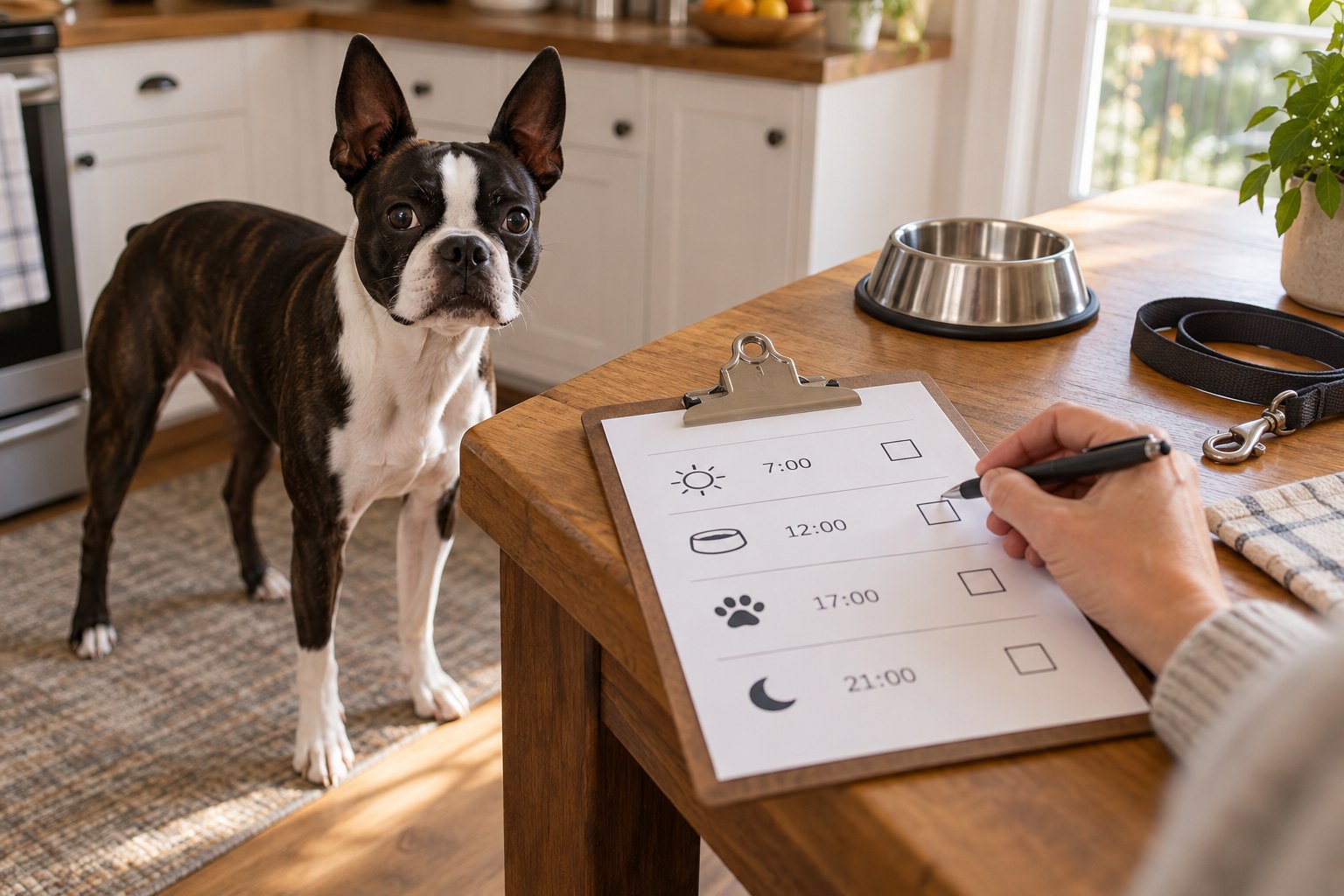
A standing instruction says what should happen; a tick or time entry says what happened today. Give each its own space. For meals, use a date, time and initials so a second caregiver can see that breakfast has already been served. If a task was missed or changed, write what happened rather than ticking a box to keep the page neat.
Copy any medication directions only from the current veterinary label or written plan, and keep the original available. Identify who is responsible for administration and recording it. If there is uncertainty about a dose, missed dose or conflicting instruction, contact the prescribing veterinary team; the household note should not become a place for inventing adjustments.
Make contacts usable under pressure
Include the owner's number, a backup contact and the regular veterinary clinic's current details. Store the out-of-hours clinic information separately if it differs. Explain where identification, medical records and travel equipment are kept so the caregiver does not have to search several chat threads while arranging help.
Add what the caregiver is authorized to do and how to reach you if you are unavailable during work. Discuss arrangements with the clinic in advance when another person may bring the dog in. A note in a drawer is not evidence that a clinic has accepted your payment or consent arrangements.
Retire the old version
Keep one master copy, whether paper or digital, and remove obsolete printouts when instructions change. Date an update such as a new portion or different walking equipment. If you use a shared document, check that the people who need it can open it on their phones without requesting access.
Ask another caregiver to perform one normal handoff using the note. Their questions reveal missing details: the door key, the food location or the difference between the clean and used towel baskets. Revise those gaps, then stop adding background that does not help with a decision. The record should reduce uncertainty without requiring a diary entry after every interaction.