Set up the return before leaving
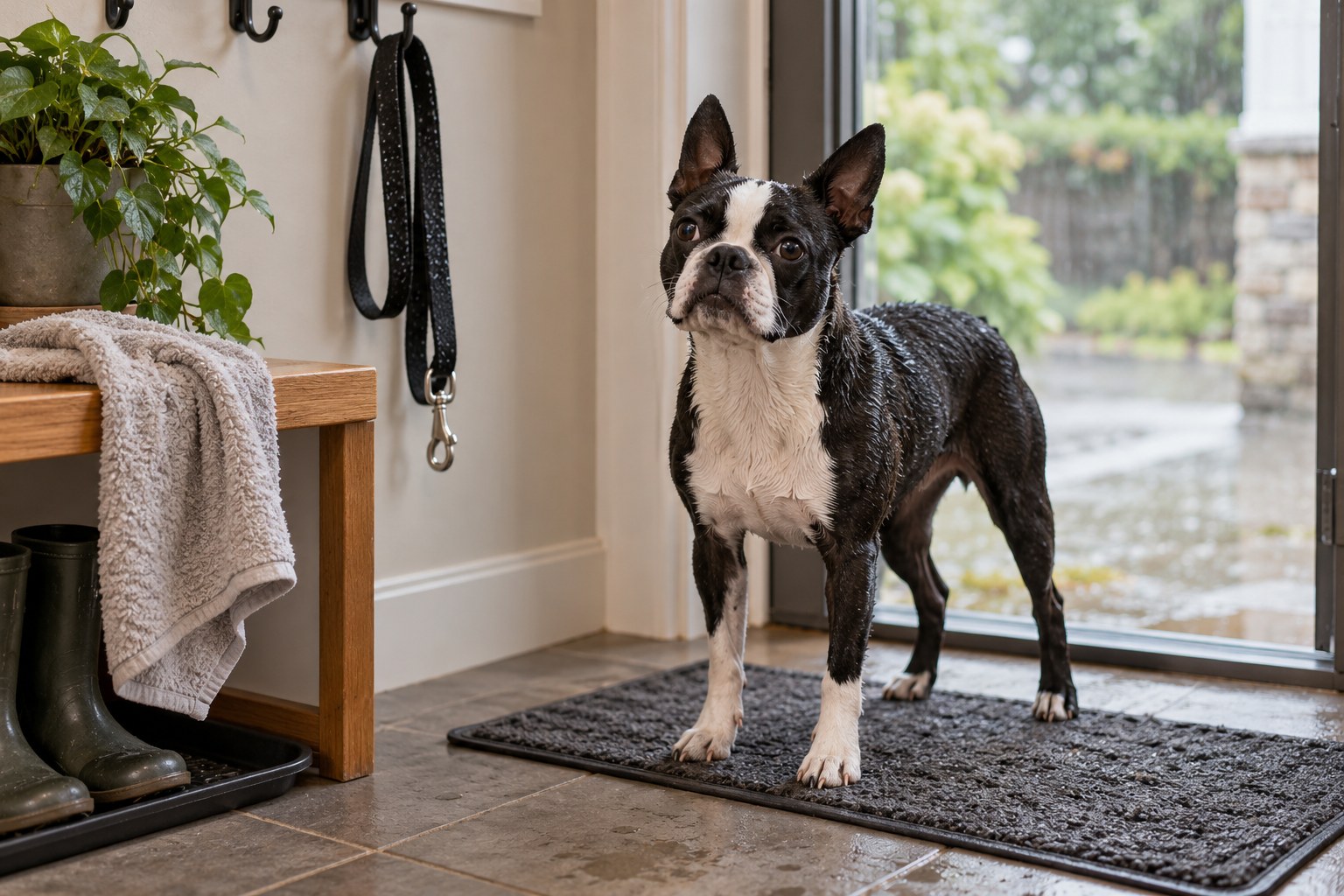
Place an absorbent towel within reach of the entrance, away from the swing of the door. Have a second dry cloth available if the first will be soaked. Use a washable floor covering that lies flat and does not slide when your dog steps onto it. Keep the leash attached while the exterior door is open rather than unclipping in the middle of arriving.
Choose where coats, harnesses and shoes can drip without wetting clean bedding. A shallow washable tray under a drying rack may fit a small hallway better than a pile on the floor. Put cleaning supplies somewhere the dog cannot access, and make sure drying gear will not block your exit if you need to go out again.
Plan a route with choices
Check the conditions outside rather than assuming rain is the only issue. Wind, thunder, standing water and slippery surfaces can change an otherwise familiar walk. Choose a route with places to turn back, avoiding flooded paths and water whose depth or contents you cannot judge. A closed park entrance should not force you onto a fast road.
If your Boston Terrier wears a coat, use one that fits their movements and equipment. Check that fabric does not bunch at the harness attachment and that the dog can walk without the garment twisting. A coat is not a reason to prolong a walk your dog is finding difficult. Ask your veterinarian about individual weather and exercise limitations rather than using a breed-wide duration.
Handle one wet item at a time
Once inside and the door is secure, remove wet outerwear before the dog settles on their bed. Dry gently, including areas underneath equipment, without turning toweling into a restraint struggle. If handling paws is difficult, practice brief rewarded handling separately on dry days and seek help if it causes distress or discomfort.
Follow the care label for each item. A padded harness may take longer to dry than a thin coat even when both feel dry on the surface. Open straps, separate removable liners if instructed and allow air to circulate. A second correctly fitted set of walking equipment can be useful when the first is still damp; an ill-fitting spare is not a useful shortcut.
At the end of the day, replace the entrance towel and wipe the tray rather than waiting for the next walk to reveal a muddy heap. Notice any persistent rubbing, unusual soreness or change in movement and contact your veterinary team when needed. The aim is a repeatable arrival routine, with enough flexibility to make the outing shorter when conditions deteriorate.