Map access, not just the number of beds
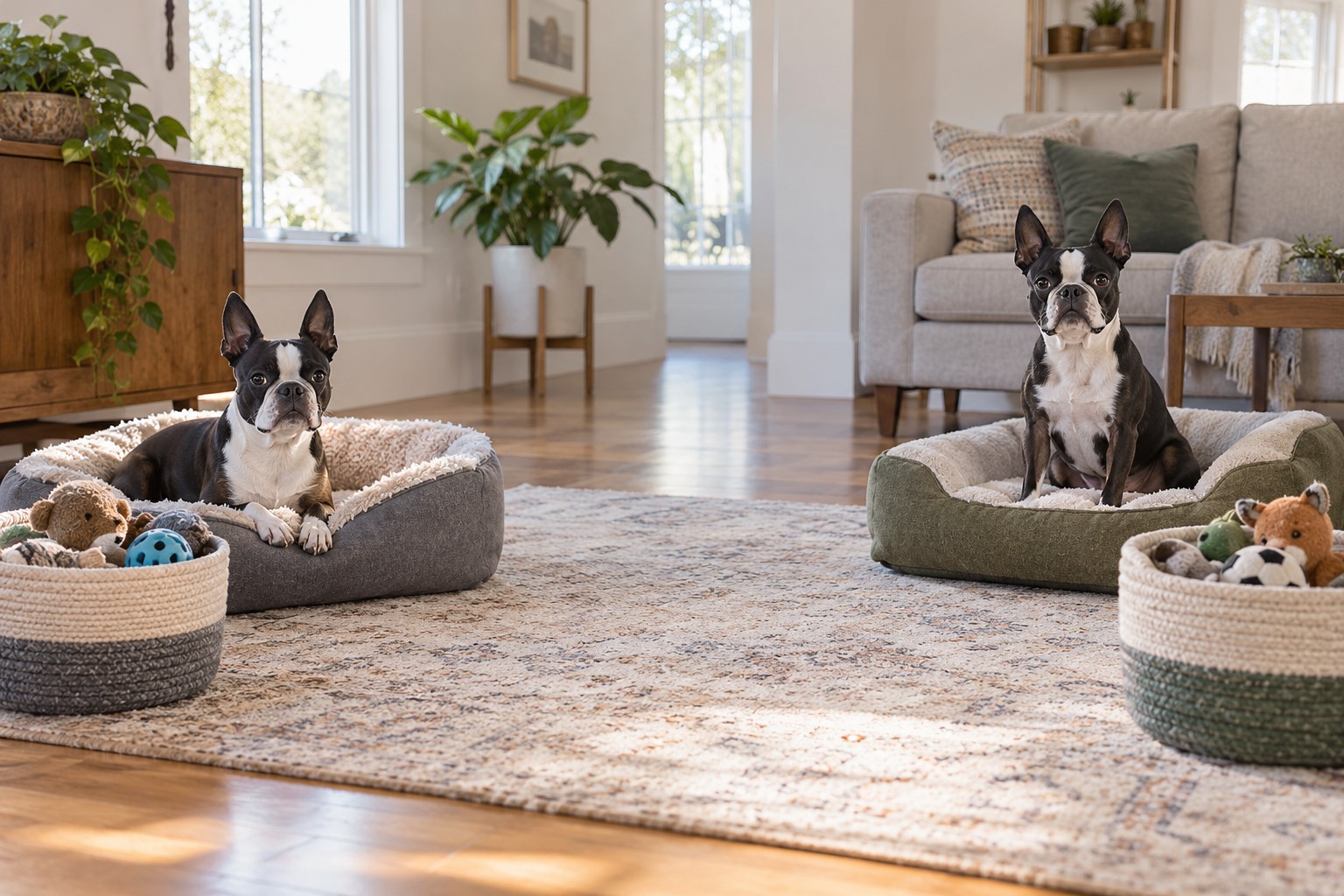
Place resting options where one dog cannot control the only passage to all of them. Two beds side by side in a narrow corner may function like a single resource if one dog blocks the entrance. Spread options across usable areas and keep routes to water and exits clear. Consider whether a dog resting by the stairs obstructs another dog's normal movement.
Observe ordinary transitions: when you enter the room, prepare food or take out a toy. Note which dog moves away and whether the same dog always loses access. Do not assume that an absence of barking means both dogs are comfortable. If you are concerned about tension, seek advice before arranging another test.
Offer valued items separately
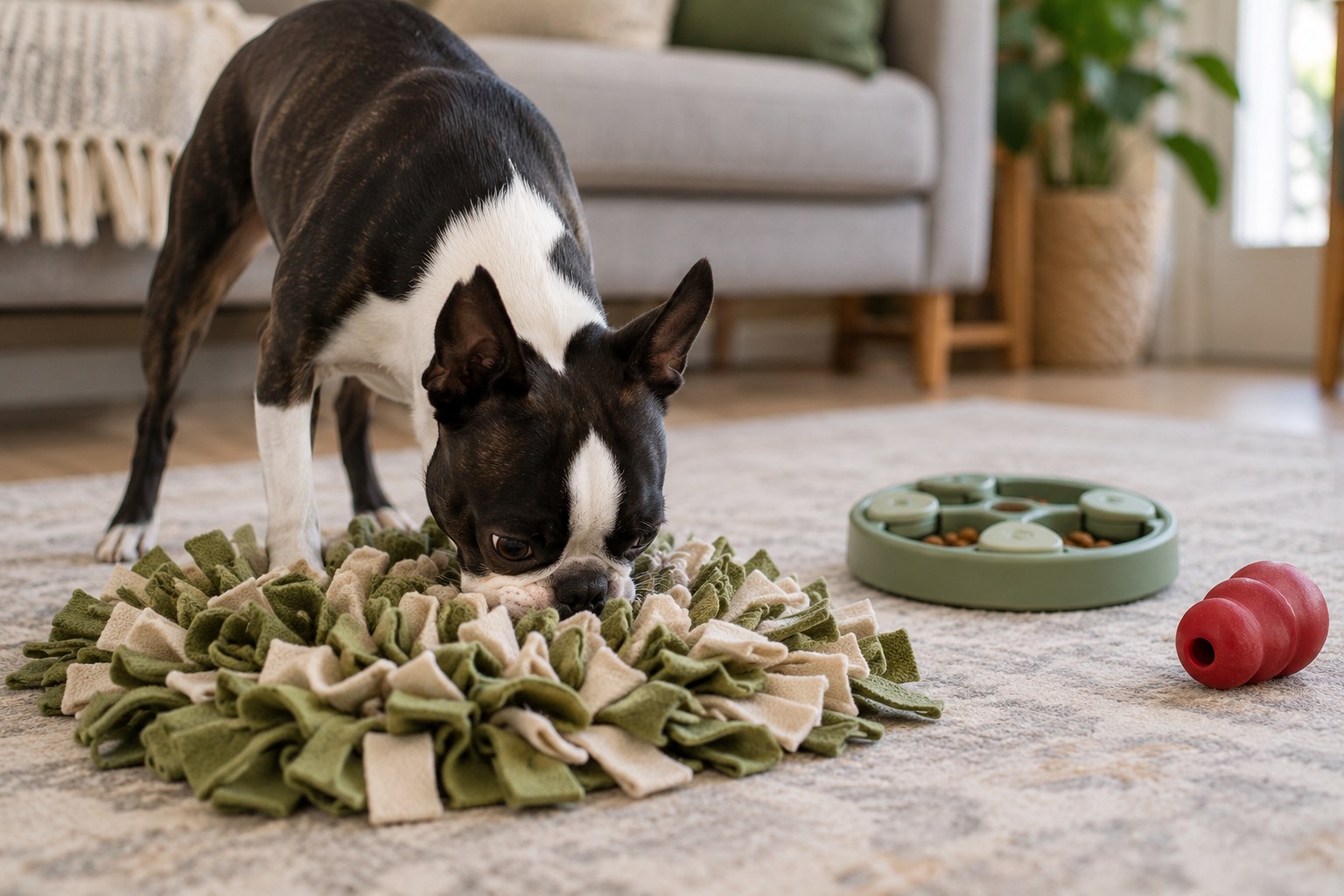
Give food toys, chews and meals in separate secure areas when competition could arise. Check that the barrier prevents dogs reaching around or through it, and avoid placing the items directly on opposite sides where they can still provoke attention. Remove leftovers before bringing the dogs together again.
Identical toys do not guarantee equal interest; the item another dog holds may still be the one both want. Supervise shared play and make it easy to pause without grabbing objects from mouths. Store particularly valued items when you cannot supervise. Separate access is a management choice, not a judgment that the dogs have failed to become friends.
Keep a route out of the interaction
Avoid crowding dogs into one small play area to encourage sharing. Clear furniture that creates dead ends and give each dog a place to rest apart. Children should not retrieve contested toys or intervene between dogs. Assign an adult to manage separation if needed, using an agreed plan that does not involve reaching into a conflict.
Do not punish growling or force a dog to surrender an item to demonstrate that people are in charge. The RSPCA's behavior guidance recommends professional assessment for aggression. Speak to your veterinarian and an appropriately qualified behavior professional about guarding, repeated blocking or conflict. Sudden behavior changes also deserve veterinary attention.
Review one change at a time
Start with an observable adjustment such as moving a bed out of a doorway or separating food activities. Record whether access becomes easier, rather than declaring the problem resolved after one quiet evening. Keep any professional plan available to every caregiver.
When a visitor brings a dog or a new dog joins the household, reassess the arrangement from the beginning. Previous sharing patterns do not automatically include the newcomer. Maintain enough separate space to manage the household while you learn more, and ask for guidance if you cannot provide safe separation in the current layout.