Confirm the handover arrangements
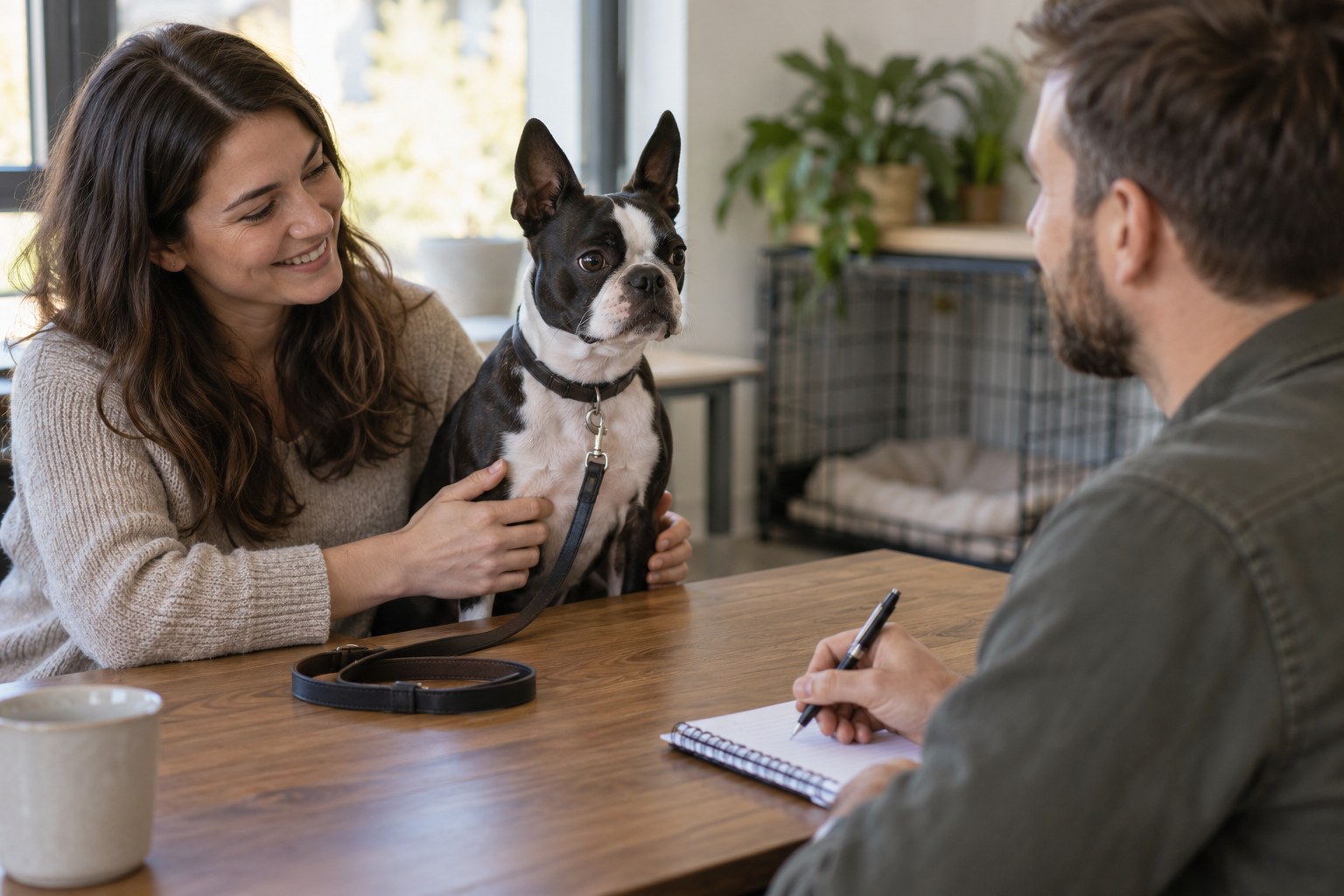
Ask where and when the handover happens, who will be present and what you must bring. Check which equipment accompanies the dog and whether your own restraint is suitable for their current measurements and travel experience. Read the restraint manufacturer's instructions before the day; a new fastening should not be learned with the dog waiting beside traffic.
Discuss the journey length and any known travel difficulties with the rescue and your veterinary team where appropriate. Ask about feeding, prescribed medication and stops using the individual dog's plan. Do not give sedatives, travel supplements or an unfamiliar meal to make the trip easier without veterinary advice.
Keep the driver free to drive
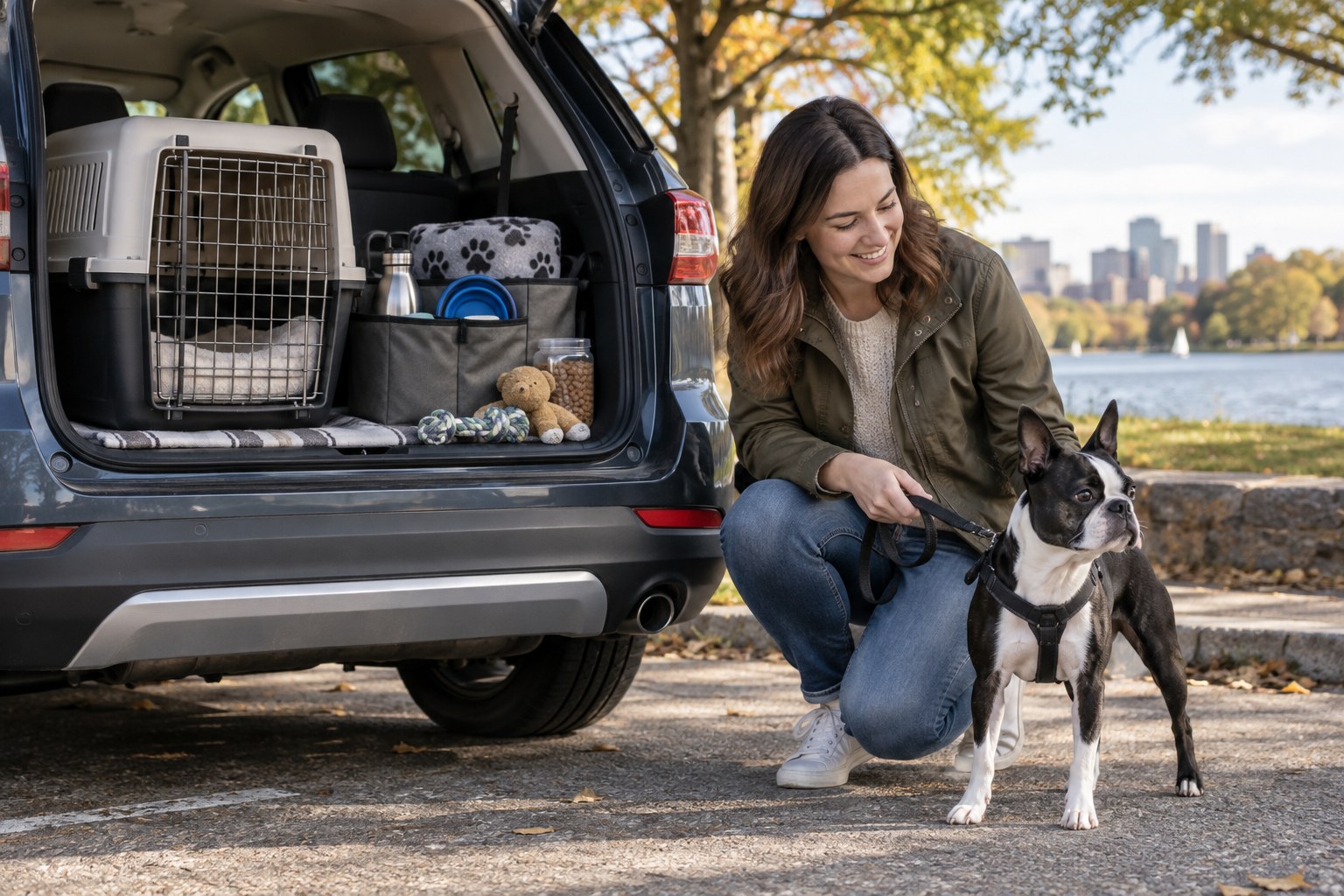
Secure the dog with an appropriate car restraint or carrier used as directed, and keep luggage from moving into their space. A second responsible adult can help manage the handover and monitor the dog without distracting the driver. A dog held on a passenger's lap is not a replacement for a suitable restraint.
Keep water, waste bags, a towel and contact details reachable. Plan any stops around a safe place to park and secure handling before doors open. Do not undo the restraint while an external door is open and assume the dog will stay still. Newly adopted dogs may not respond to your voice or behave as they did with their previous caregiver.
Collect the records before leaving
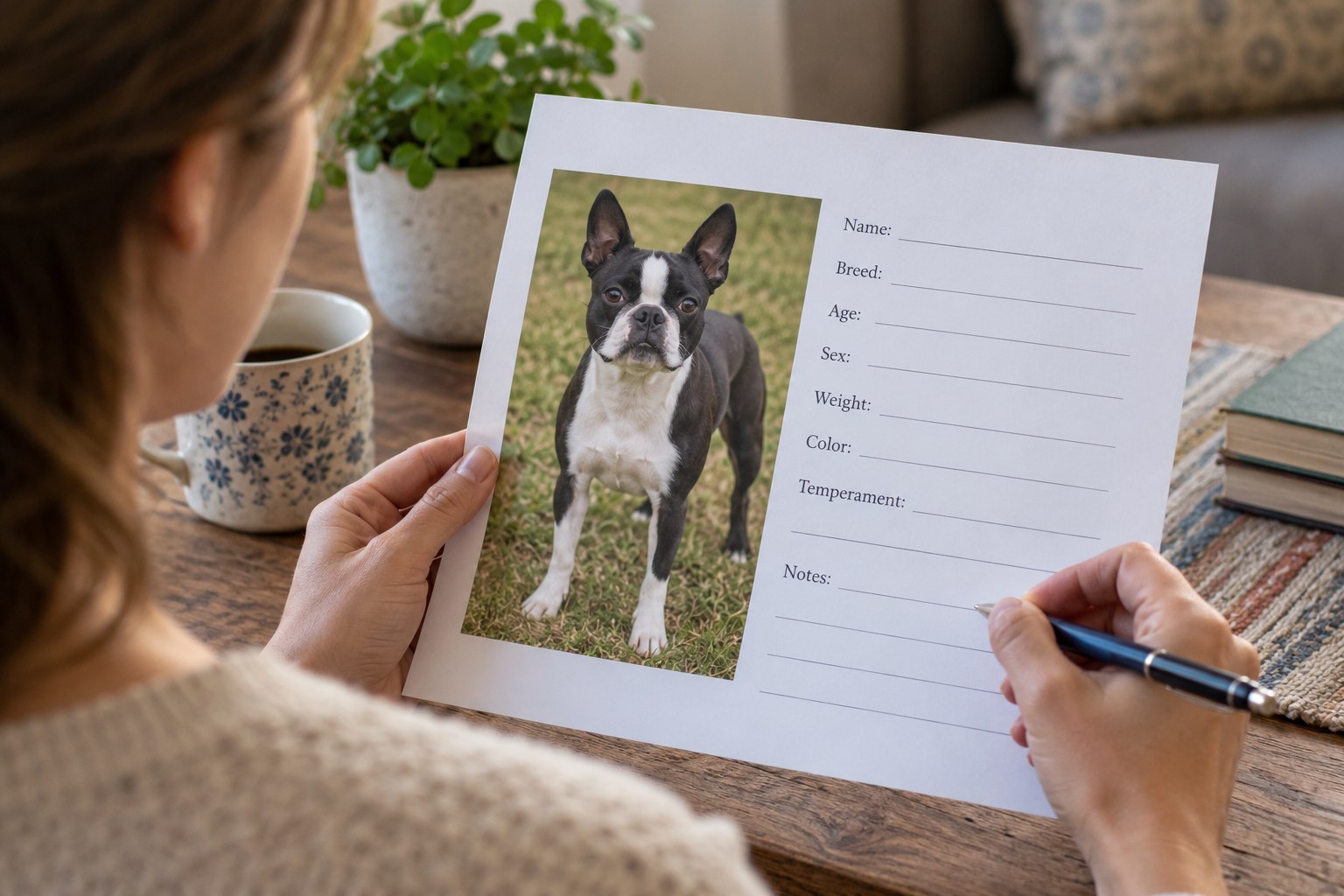
Check that you have the agreed care information, current food details and labeled prescribed medication where applicable. Keep medical records and the signed documents together, away from loose equipment or spilled water. Ask who to contact for an administrative question after the handover.
Clarify any information you do not understand before setting off, or record the agreed follow-up if the answer must come from someone else. Do not replace an unclear medical instruction with a guess. Have the rescue's verified number and a veterinary contact available throughout the journey.
Arrive without a reception line
Prepare the home before departure: secure doors, arrange resident animals separately and put water and a resting place in the agreed area. On return, let one person handle the dog while another moves bags. Offer a quiet supervised toilet opportunity and a simple route inside.
Avoid collecting visitors for the arrival or taking the dog on an additional outing to celebrate. Watch their comfort and seek veterinary help for concerning symptoms. Never leave the dog in a parked car while preparing the house. Once they are secure and supervised, finish unloading and place the care documents where the next caregiver can find them.