Keep an alternative close to the ordinary route
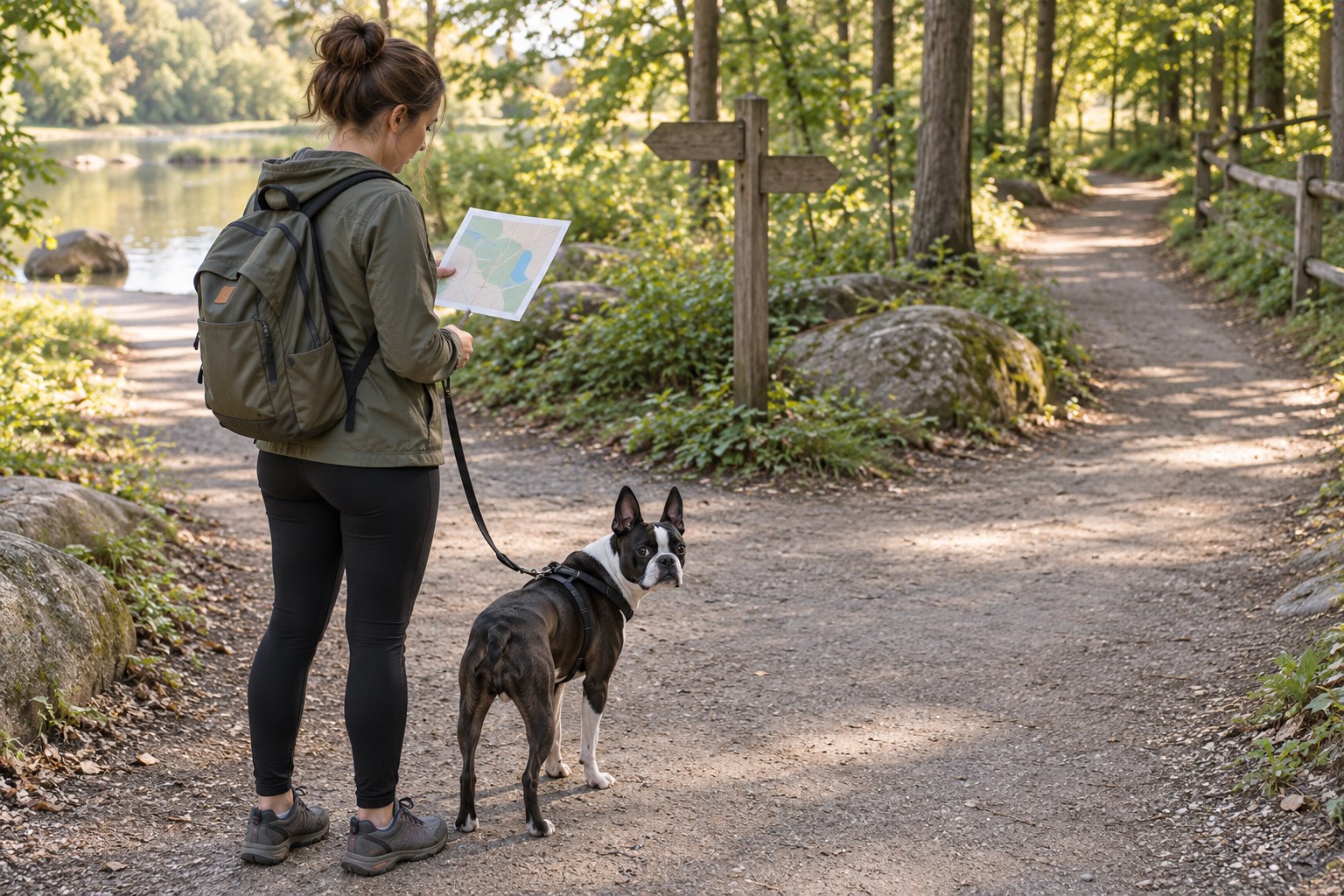
Identify a shorter loop near home and a second route that avoids the most likely closure. Walk them yourself when convenient and notice narrow pavements, busy entrances and places to turn around. A map shows connections but may not show a broken gate, steep step or temporary barrier.
Write down the useful decision point: 'if the park entrance is closed, turn left before the crossing.' That is easier for another caregiver than a long route description remembered under pressure. Include where the dog is permitted and where local signage must be checked. Do not assume that a neighboring field is public access because it looks open.
Treat the closure as a new condition
Construction noise, queues and diverted traffic can affect the area outside the barrier. Increase distance or leave if the surroundings are uncomfortable. Do not lift the dog over fencing, step around work equipment or let them explore a closed section while you look for another entrance.
Check weather and surface conditions on the alternative. A shaded park route and a pavement loop can have very different exposure, even at the same time of day. Keep water available as appropriate and make the walk shorter when necessary. Follow the dog's individual exercise guidance instead of trying to recover every minute lost to the closure.
Keep the purpose of the outing manageable
If the immediate need is a toilet opportunity, you may not need a replacement long walk at all. Use a suitable nearby area, then decide later whether conditions allow more activity. A quiet familiar sniffing route can provide a better experience than pushing into an unfamiliar busy place to reach a distance target.
Allow time for a different surface or route to be investigated without pulling the dog onward. Keep equipment secure and avoid optional greetings where space is limited. If your Boston Terrier struggles in the changed environment, head back and choose another activity consistent with their needs. The successful decision may be returning home early.
Leave the next walker useful information
Send a factual update with the closure location and the route you used. Include a date because temporary works change. Avoid a vague 'park closed' if only one entrance is affected, and do not promise a reopening date unless it comes from the responsible authority's current notice.
Restock the outing kit and note any new practical obstacle, such as a narrow pavement beside parked cars. When the normal route reopens, inspect the changed area before assuming every feature is as it was. A small set of known alternatives helps you remain flexible without turning each disruption into an entirely new plan.