Establish the ordinary starting point
List what your dog currently does comfortably: the routes, opportunities to sniff, play sessions and time resting afterward. Include the pace and terrain, because a slow level walk differs from a fast climb even if the clock shows the same duration. Notice whether the dog willingly joins the activity and whether anything has recently changed.
Ask your veterinarian about an appropriate plan, especially before increasing exercise or when health, age or weight has changed. Bring your observations rather than requesting a universal number of minutes. Mention ongoing treatments and any activity instructions you were previously given so the new plan does not conflict with them.
Choose the conditions as well as the route
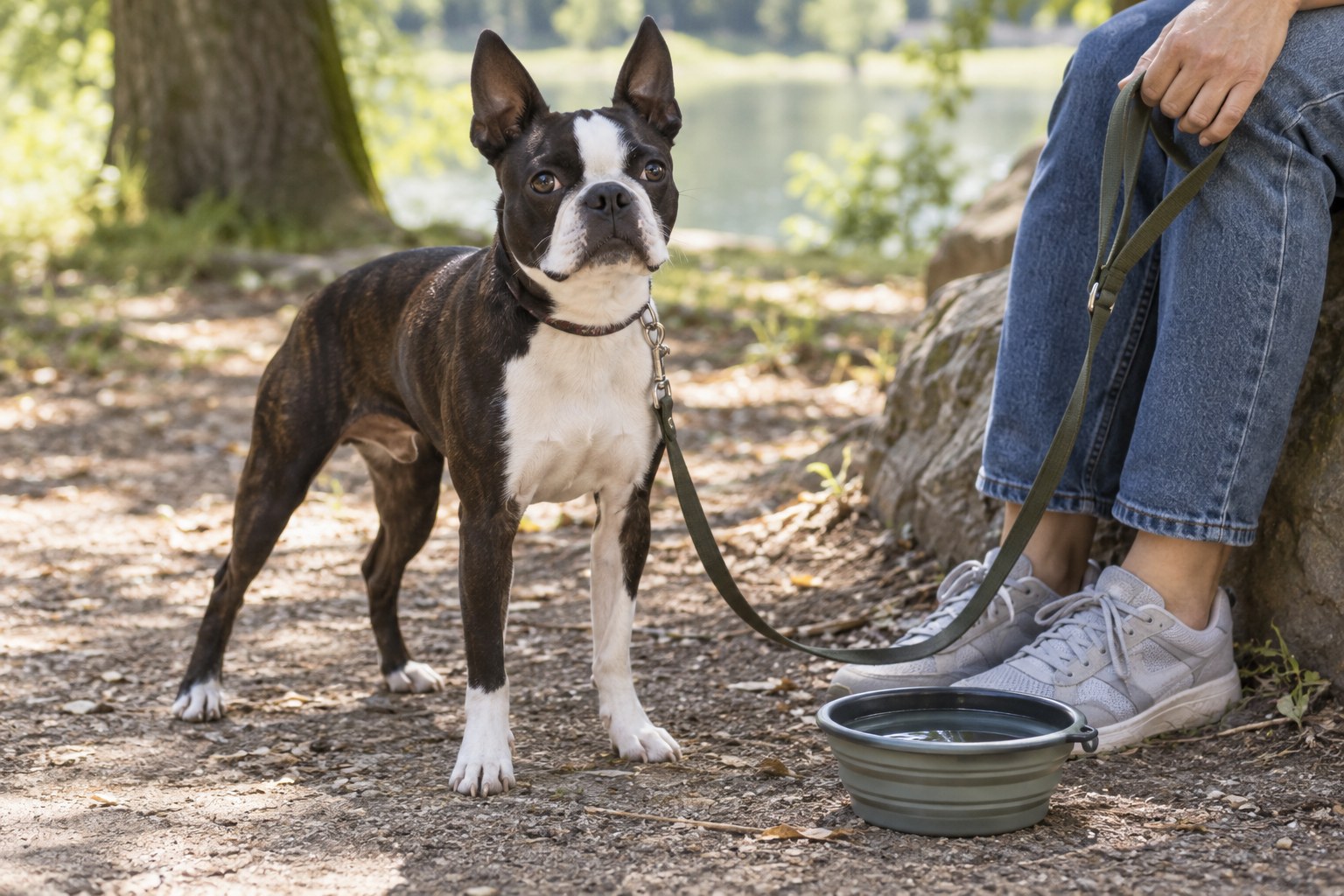
Check temperature, humidity, shade and the walking surface before setting out. The AVMA notes that short-nosed dogs have increased risk with warm-weather exercise and recommends cooler times, breaks and water. A familiar route can become a different outing on a warmer, more humid afternoon. Have a shorter alternative available instead of making the farthest point your only destination.
Think about where you can stop comfortably and turn back. A route with no shade or safe exit offers fewer choices than several short loops near home. Carry what you need for water and waste, and choose equipment that fits without restricting movement. Weather, equipment and the dog's response all belong in the same decision.
Change one demand at a time
If your veterinary team agrees an increase is suitable, avoid simultaneously extending distance, speeding up and adding a steep path. Keep enough familiar elements to observe how the change goes. A note such as 'new slope, same short route' gives you a clearer comparison than recording only the total time.
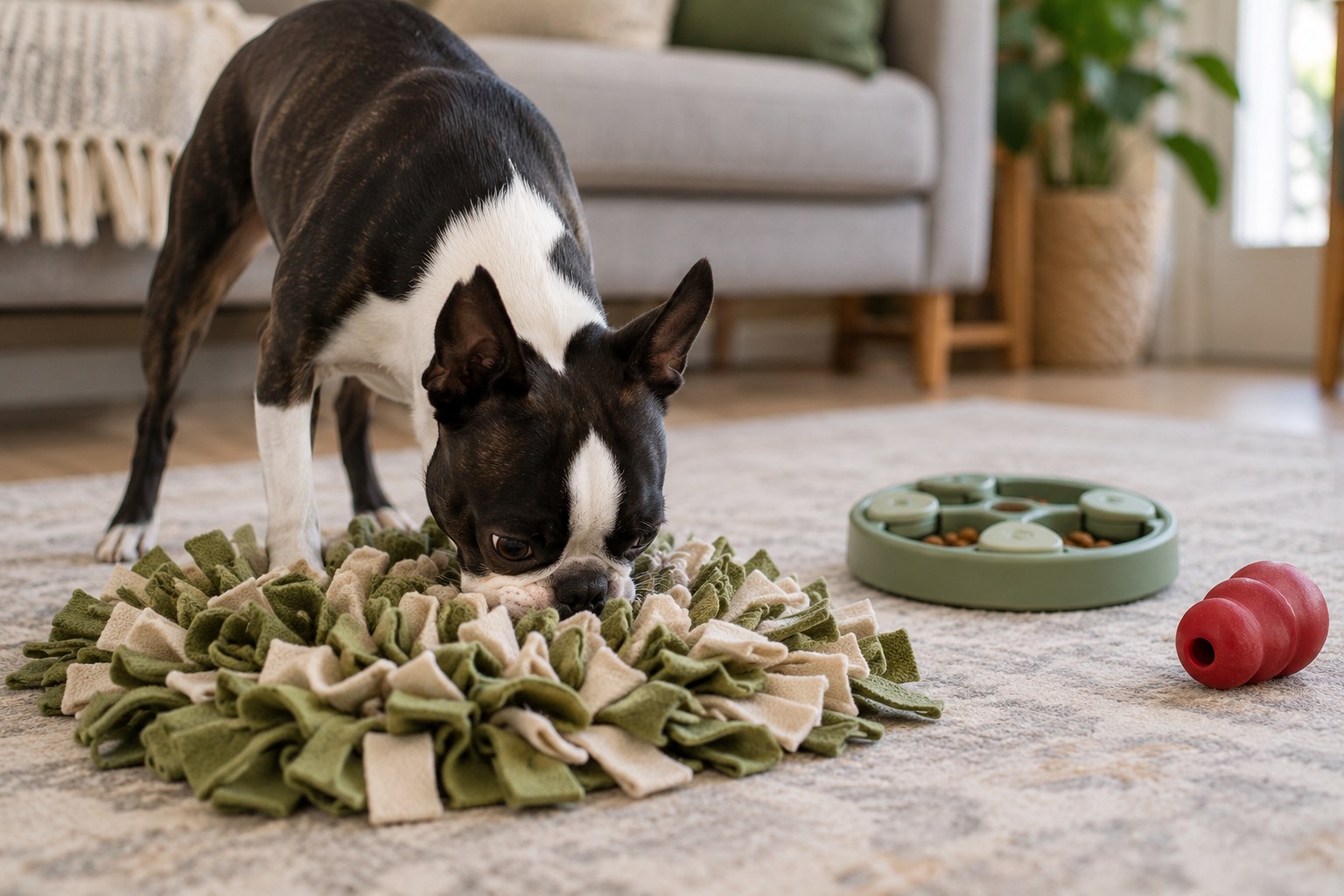
Include suitable low-key activities rather than trying to make every outing strenuous. Sniffing on a manageable route or working on a familiar rewarded cue can vary the experience. Indoor activity may be an option when conditions are poor, but choose tasks consistent with any medical restrictions; a game involving repeated jumps is not automatically a gentle substitute for a walk.
Let the response change the plan
Pause if your dog slows, seeks shade or seems uncomfortable, and shorten the outing when needed. Do not use excitement about a toy as proof that more exertion is appropriate. Contact your veterinary team about unusual changes in stamina, movement or recovery rather than pushing through to meet a tracker target.
Breathing difficulty, collapse or suspected heat illness require urgent veterinary help. Move out of the stressful conditions while arranging that help and follow the clinician's directions. For routine planning, keep a few dated observations of comfortable outings and review them as seasons and circumstances change. A flexible plan makes those changes visible before the old routine becomes an assumption.