Choose one reason to go out
Decide what the outing is for: reaching an agreed nearby walking area, practising the journey to a regular carer, or making a brief visit to a place that permits dogs. Avoid adding errands simply because you are already outside. Each additional stop introduces another entrance, waiting arrangement or decision about where the dog can go.
Check that the outing is suitable for your individual dog with the responsible professional or organisation where needed, particularly when health, vaccination or recent handover questions are unresolved. An article cannot decide readiness from the breed name or the number of days since arrival. Settle those questions before choosing a route.
Trace the full journey
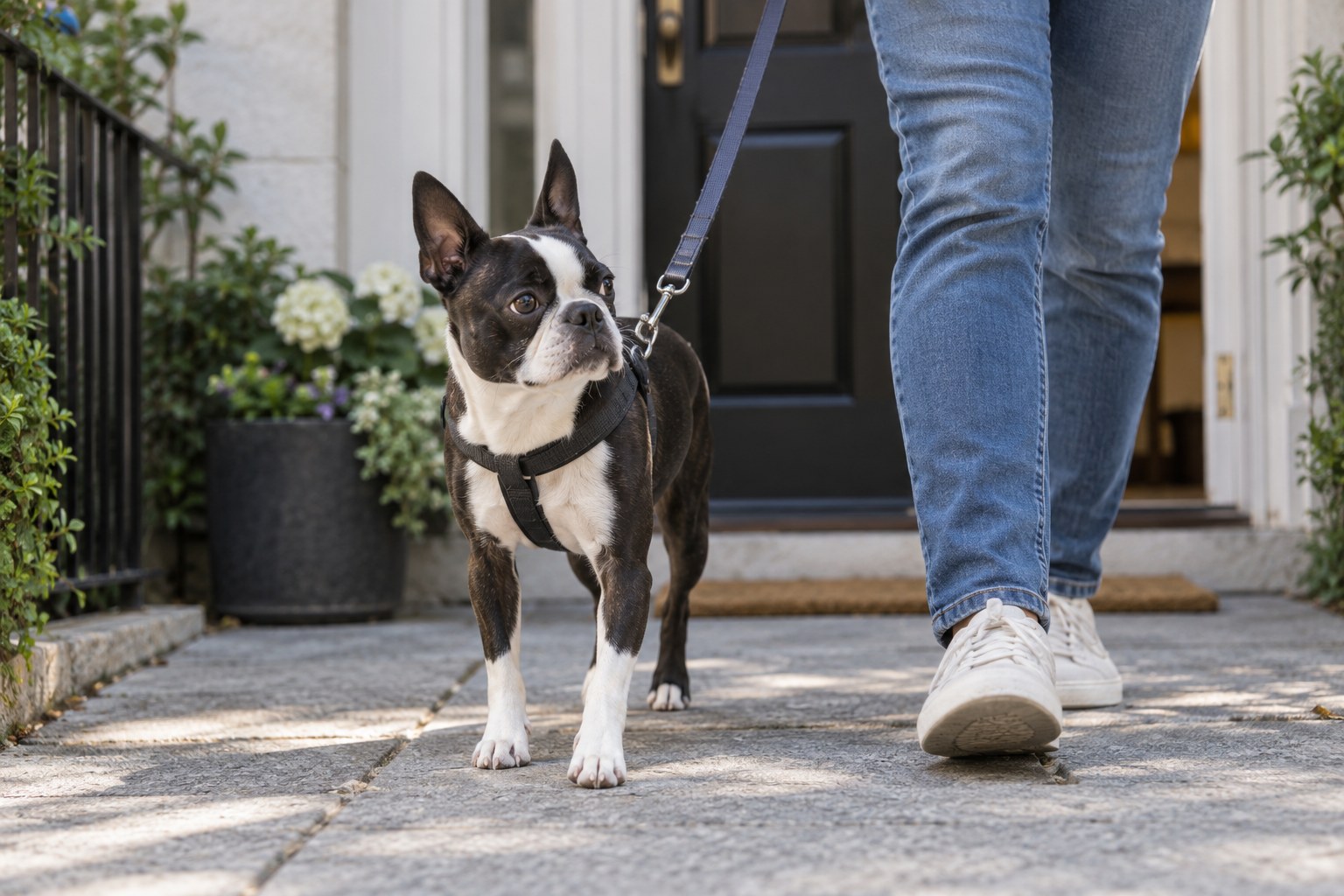
Look beyond the destination pin. Identify the door you will leave through, the walking approach or vehicle arrangement, and how you will return if the original stop is unsuitable. A café allowing dogs does not guarantee a convenient place to wait at the time you arrive. A nearby park can involve a difficult crossing that a broad map makes easy to overlook.
Check the equipment calmly at home, following its instructions. Carry what the planned outing requires, with room for an ordinary change of plan, rather than packing for every possible day out. Keep necessary contact information and the route back accessible without searching through several unrelated messages.
Give a companion a specific role if someone joins you. One person can handle the dog while the other manages a door or checks the approach, provided those tasks are agreed. Avoid changing handlers repeatedly in a busy place or assuming everyone understands the same return plan.
Let the arrival decide the next step
On arrival, assess the actual space and activity. A location that looked quiet in a photograph may be crowded, noisy or different from what you expected. Use the prepared alternative or head home if the stop does not suit the outing. There is no requirement to complete a planned visit simply because it was described as short.
Afterwards, note one useful detail: which entrance worked, what was unnecessary in the bag, or where the return became awkward. Use that observation for the next trip. Keep the experience specific to the dog, place and conditions instead of turning one uneventful visit into a promise that every similar outing will be straightforward.