Walk through an ordinary visit together
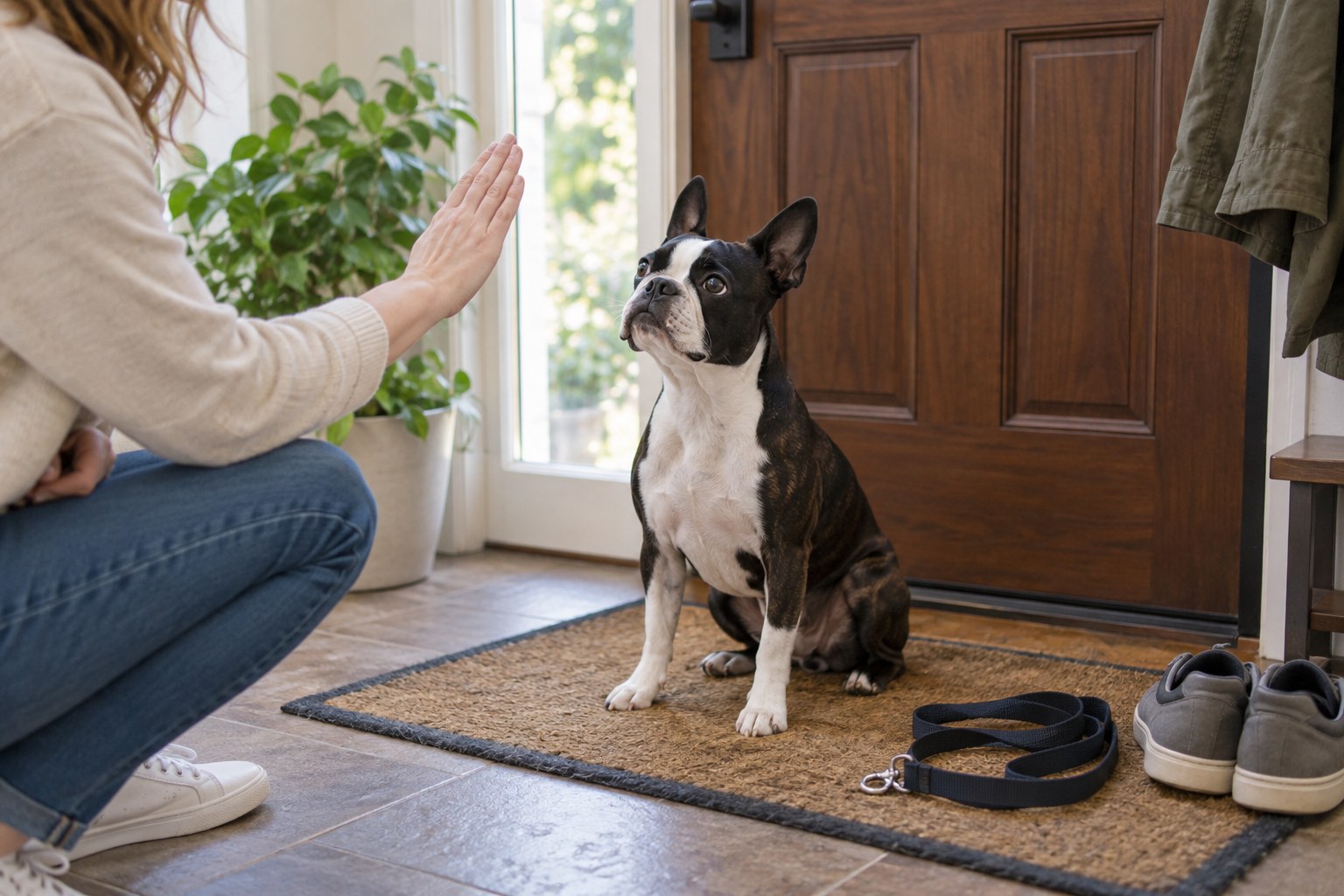
Show the sitter how to enter, secure the door and find the dog. Demonstrate the leash and harness rather than assuming every fastening is familiar. Explain the permitted walking area, the toilet routine and any household spaces that are kept separate. Let the sitter perform the sequence while you watch so questions appear before you leave.
Describe your Boston Terrier's current habits in observable terms: where they rest, what happens when the doorbell rings and which handling tasks they accept comfortably. Avoid shorthand such as 'a bit funny with dogs.' Explain the situation, the distance or management needed and the professional plan if one exists. Do not ask a sitter to improvise behavior training during care visits.
Put the day's instructions on one page
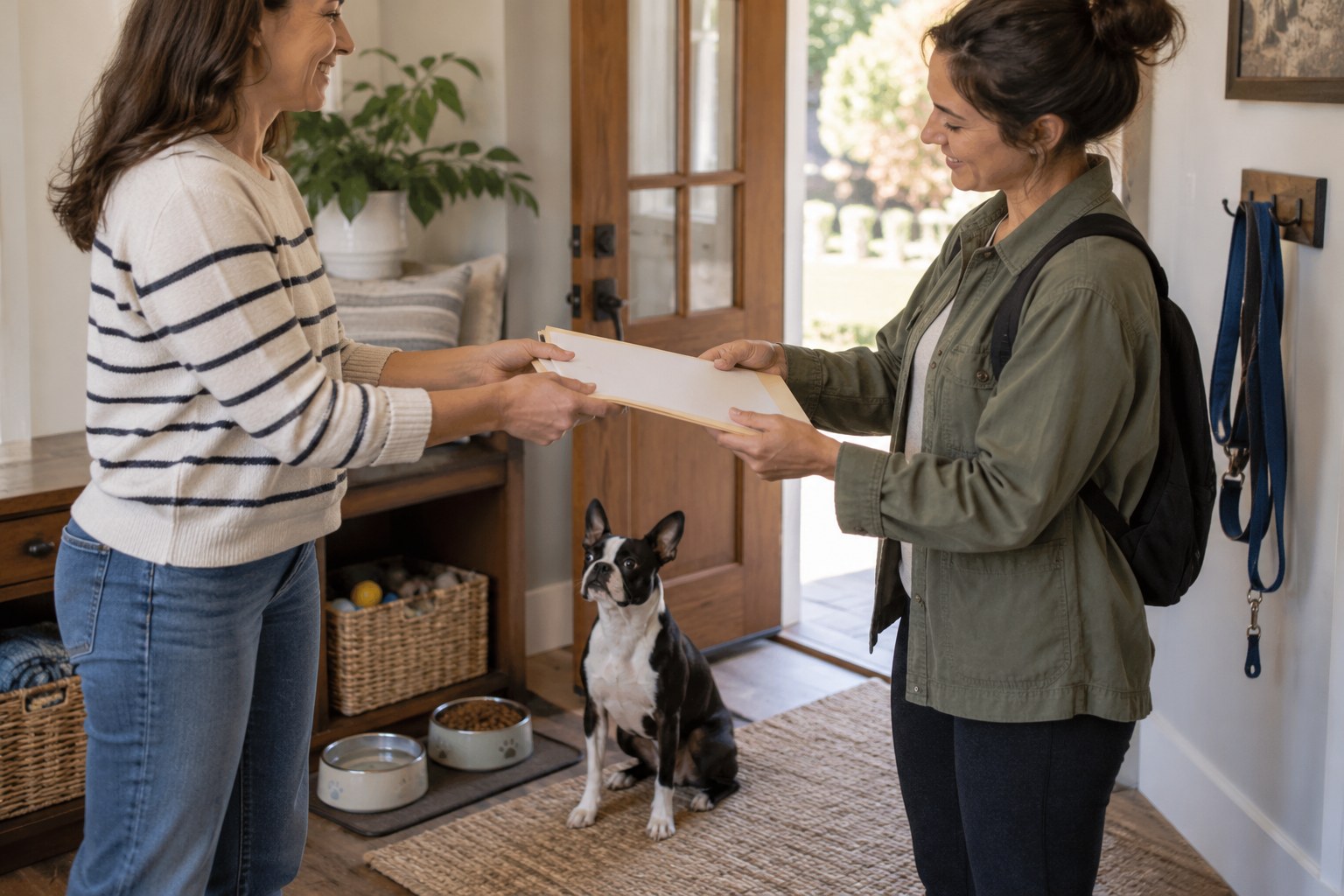
List food by product and measured amount, with storage and serving instructions. Identify where fresh water, clean bowls, towels and waste supplies are kept. Mark whether a task is done with time and initials, especially when several people are helping. Keep the normal care instructions distinct from that day's completion record.
Provide prescribed medication in its original labeled packaging with the current veterinary directions. Agree who administers and records it, and tell the sitter how to contact the prescribing clinic for uncertainty. Do not leave a collection of unlabeled tablets with a handwritten guess. Inform the sitter of any relevant restrictions and ask them to confirm they are able to follow them.
Plan for a question you cannot answer immediately
Include your number, an available backup contact, the regular clinic and a checked emergency service. Discuss who may authorize care, how transport will work and what financial arrangements the clinic accepts. Contact the clinic beforehand when necessary; a document you write alone may not establish its consent or payment process.
Agree how the sitter should report ordinary updates and urgent concerns. If you will be on a flight or in meetings, give the times and the backup route. A photograph can help describe an observation, but recording or messaging must not delay urgent veterinary help. Make sure the sitter knows where the dog's medical records are available.
Check access before departure
Test the key or entry method, the shared document link and the contact numbers. Keep an offline copy of essential information if internet access is unreliable. Share only the household information the sitter needs, and store sensitive access details separately from documents that might be forwarded.
Update the care page immediately before leaving and remove older versions. Tell the sitter what to do if their own plans change and how replacement care must be arranged. Afterward, ask which information was missing. Use that feedback to improve the next handoff instead of making the document longer by default.