Confirm the format and the purpose
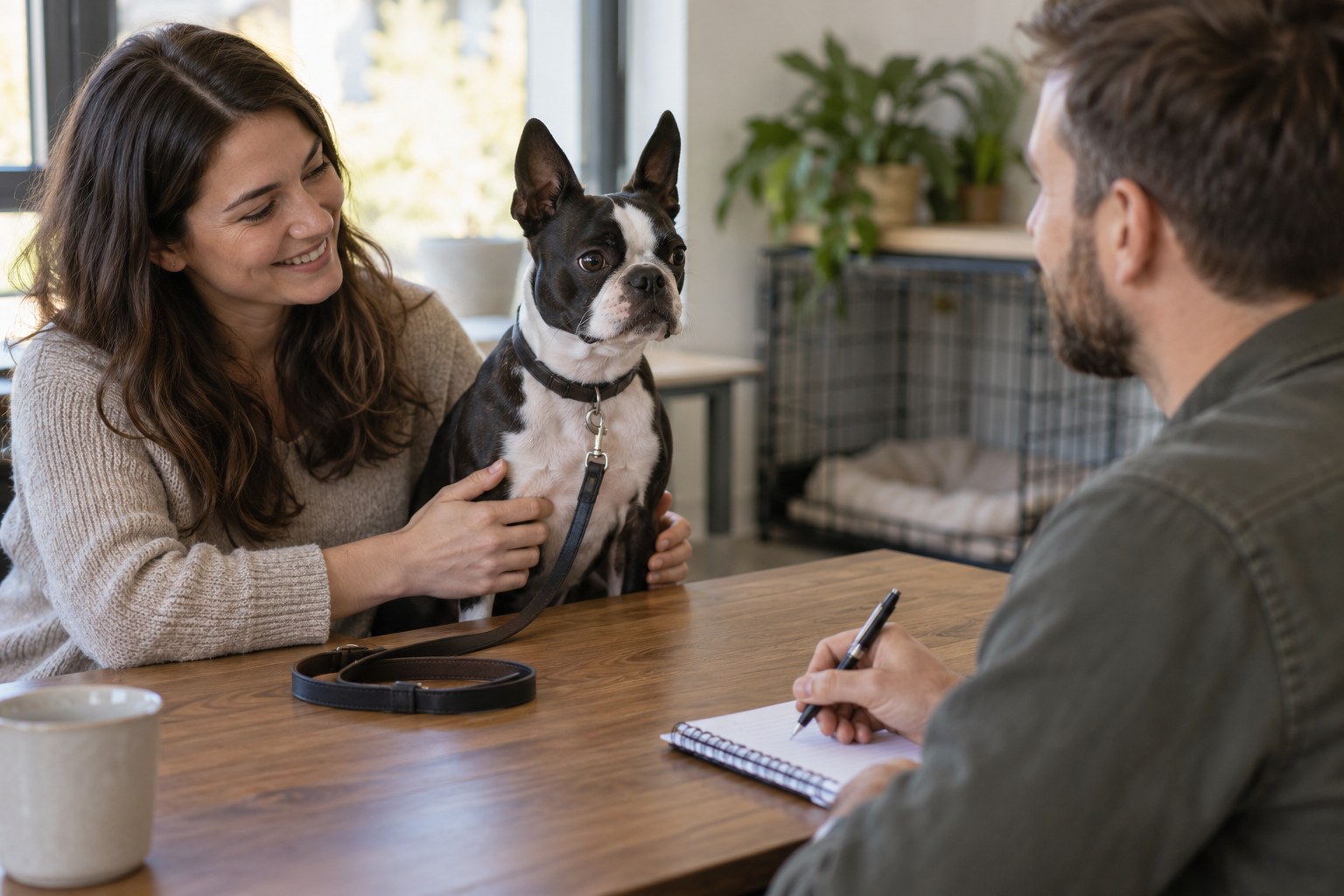
Ask who will conduct the assessment, how to verify their connection with the organization and whether it is in person or remote. Confirm the appointment and which household members should be present. If the organization requests photographs or video, ask what is needed and use its verified route rather than sending a full home tour to an unknown account.
Find out whether there are particular questions about the dog you are discussing. A proposed placement with specific care needs may require a different conversation from a general application check. Have the relevant information ready, including housing permission and your actual weekday schedule. Be open about pending repairs or changes.
Walk the dog's likely day through the home
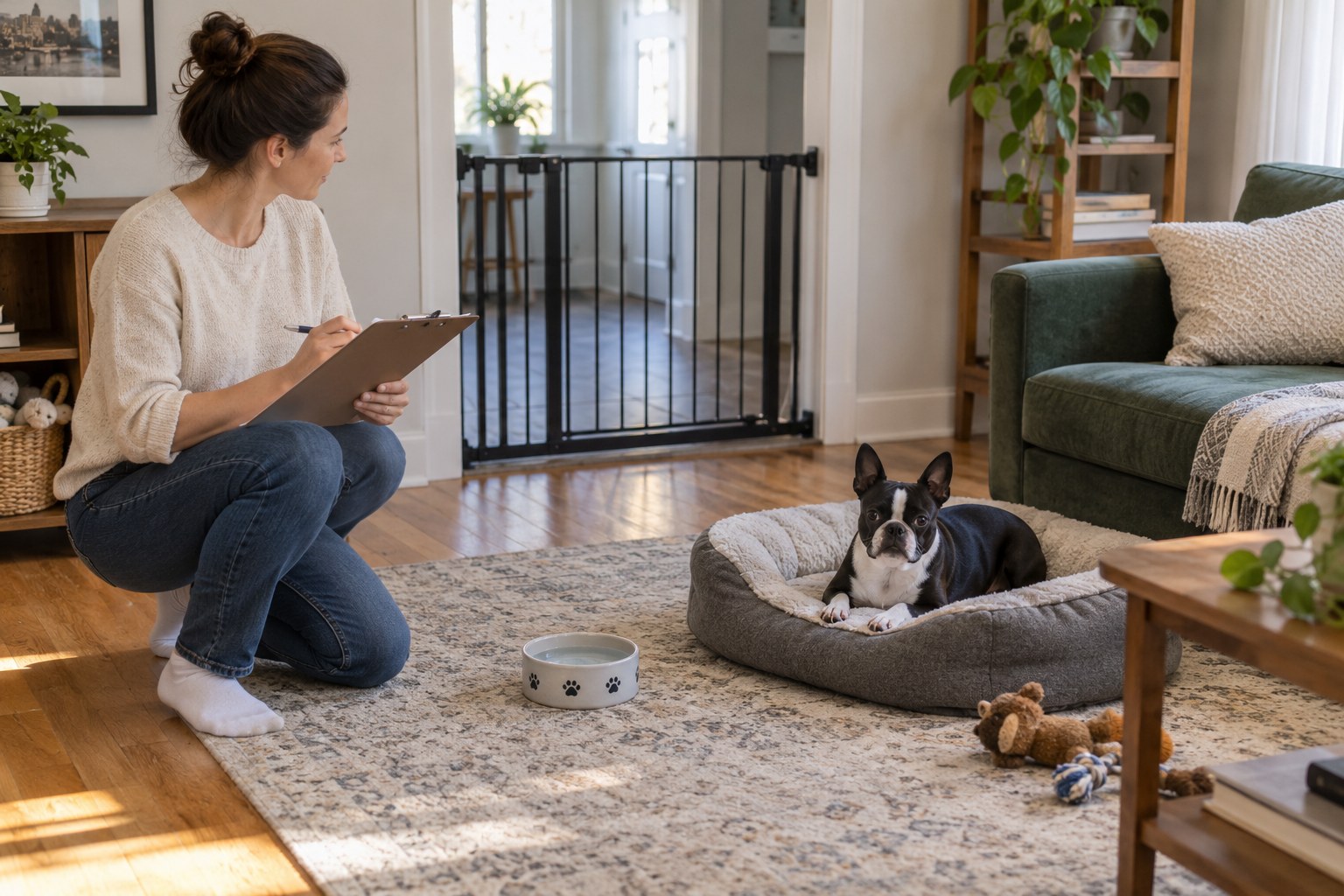
Start at the entrance and explain how doors are managed during deliveries and departures. Show the resting area, food storage, water location and the route to toilet outings. Check accessible medication, cleaning products and loose cables. If there are stairs, low windows or outdoor spaces, discuss how access would work.
For a garden or patio, inspect boundaries and gates and explain supervision. Do not claim a space is secure without checking it. If the organization identifies an alteration, clarify the exact action, when it must happen and what confirmation is required. Record that agreement rather than relying on memory.
Describe how children, resident animals and visitors use the same space. Show where separation could occur and how adults would manage it. If the home cannot support the proposed setup, say so; moving a temporary gate into place for a photograph does not establish a sustainable daily arrangement.
Use the conversation to test the care plan
Explain who handles meals, walks, absences and veterinary visits. Have a backup for illness or work changes and identify any parts still being arranged. Ask how the rescue expects new adopters to communicate questions or significant difficulties. A clear support route is more useful than assuming the assessor will remain your personal contact indefinitely.
Answer factual questions honestly, including uncertainty. You do not need to invent previous experience or present every surface as spotless. The relevant issue is how the dog's needs and household limits fit together. If a requirement is unclear or seems impractical, discuss it before progressing.
At the end, summarize any actions and ask about the next step. An assessment is not automatic approval or a guarantee of a specific dog. Keep the notes with your application and complete agreed changes before reporting them as done. The process should leave both sides with a more accurate picture of the proposed home.