Decide who manages the entrance
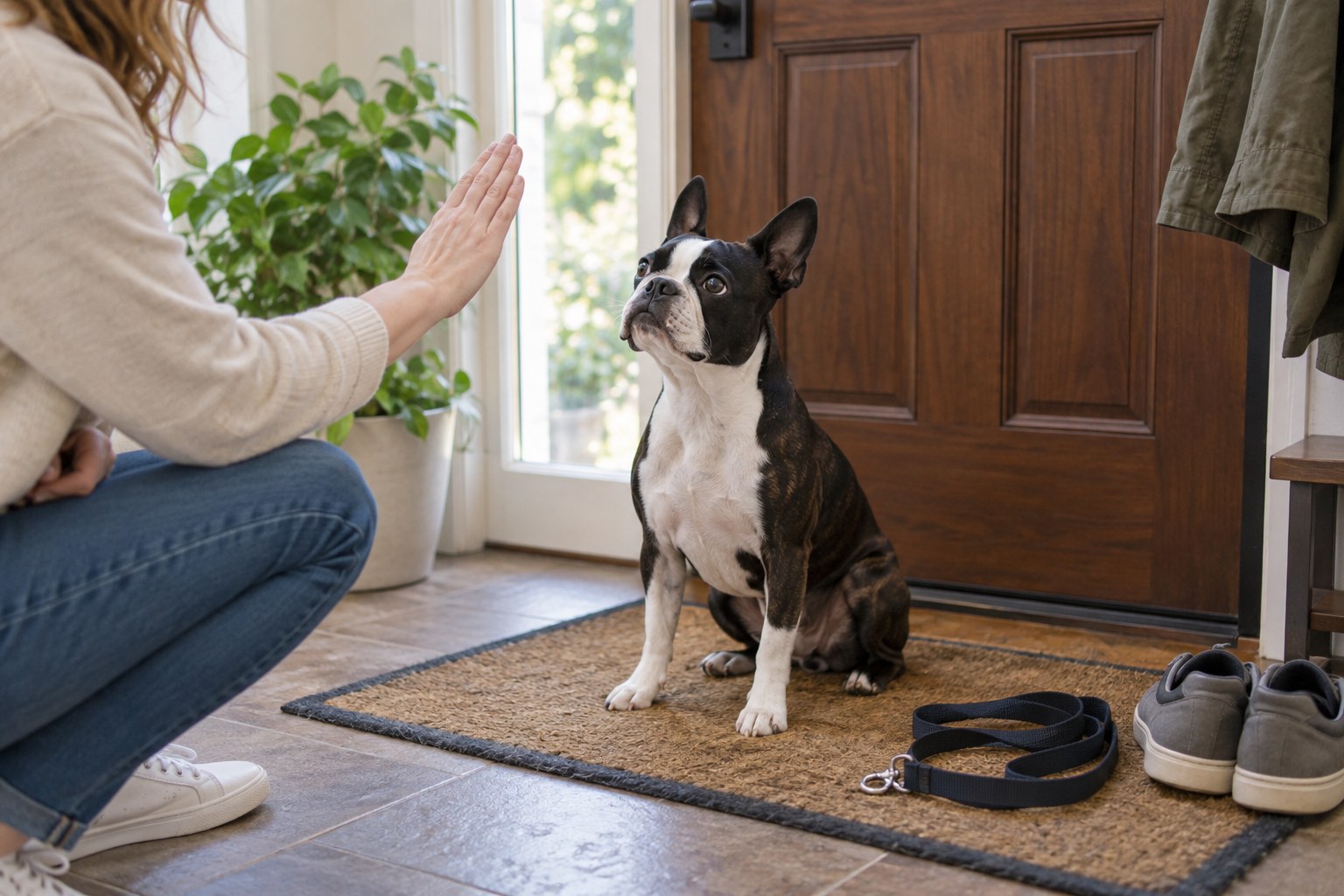
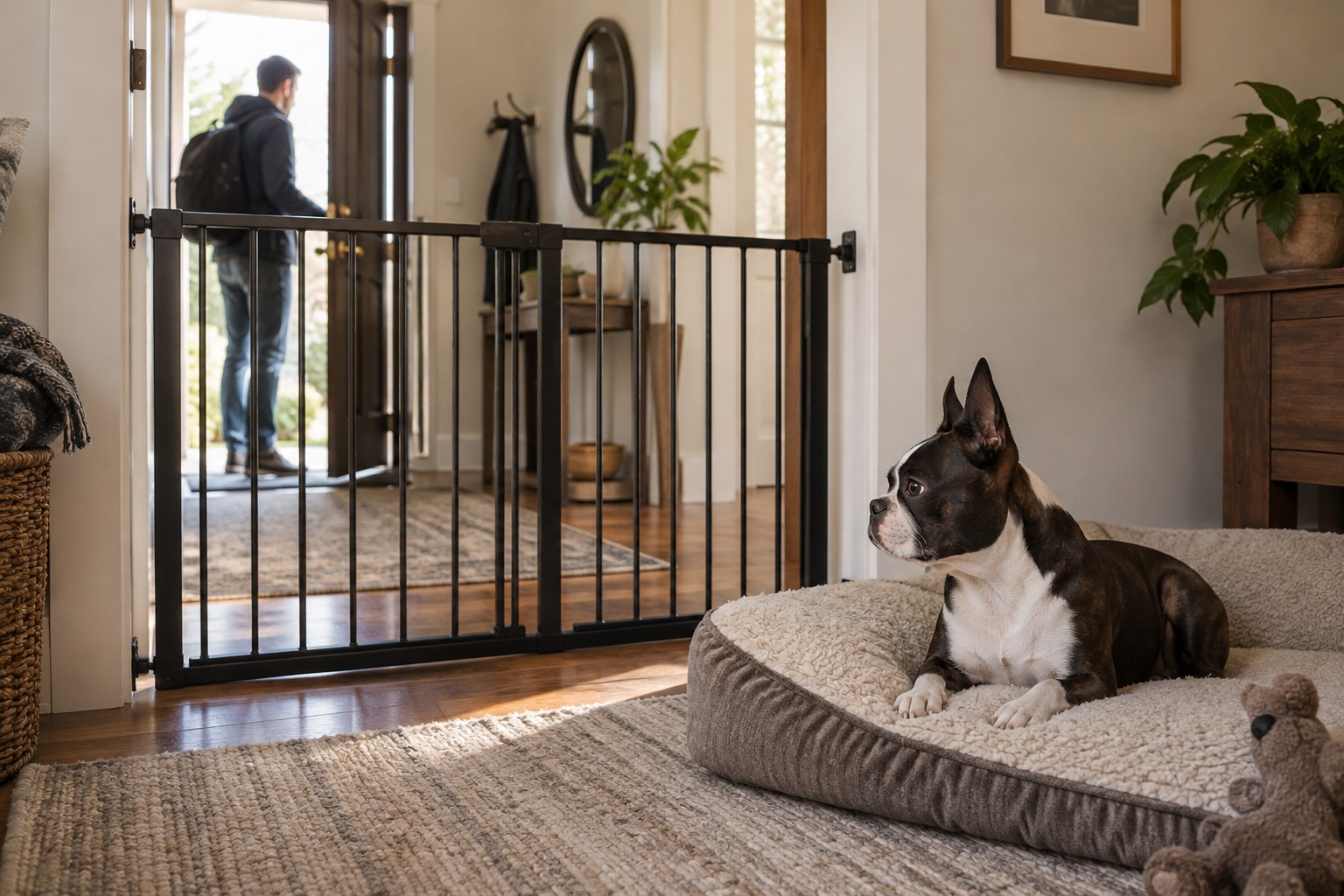
Assign one adult to open the door and another to manage the dog if that is possible. If you are alone, put the dog in an already familiar secure area before admitting guests. Practice this arrangement on an ordinary day so the visit is not the first time a gate or closed room appears.
Check that the barrier fits, the latch closes and the resting area has what the dog normally needs. A narrow hallway can fill quickly with coats, luggage and a dog at ankle height. Clear those objects before the visit and ask guests to bring bags inside without leaving the external door propped open.
Send one useful instruction beforehand
Tell visitors what to do on arrival: come in quietly, give the dog room and wait for you to explain any greeting. This is more useful than saying that your Boston is 'friendly,' which does not describe how they feel about several people leaning over them. Ask guests to leave their own dogs at home unless a separate meeting has been agreed.
Children need an adult to supervise them throughout any interaction. Explain that the dog's bed is a place to leave alone, and that a dog moving away is allowed to go. The visit can work without touching the dog at all; offer another activity rather than turning petting into the event everyone is waiting for.
Make greeting optional
Keep enough distance that the dog can choose whether to approach. Avoid surrounding them between chairs or asking someone to hold them while another person strokes them. If the dog turns away, retreats or struggles to settle, increase space or return to the familiar separate area.
Food can complicate a busy room. Ask before visitors offer treats, keep human snacks out of reach and avoid having multiple people feed the dog from different directions. Follow any behavior plan already provided by your veterinarian or qualified professional rather than experimenting during a social occasion.
Manage departures as deliberately as arrivals
A relaxed evening can still end with an open door and a crowded hallway. Move the dog to the agreed safe area before people gather their coats. Check that you know where the dog is before allowing several guests to leave together.
Afterward, note the part that worked and the one that needed help. Perhaps the entrance was manageable but chairs left no route to the bed. Rearranging the room for the next visit may be enough. If visitors repeatedly cause fear or defensive behavior, arrange professional advice instead of making each new guest another training test.