Keep the label attached to the food
Before putting food away, locate the lot number, best-before date and storage directions. If the print is faint or on a seam that might tear, photograph it while it is readable. Include the product name in the same record so a close-up of a code still makes sense later. Record when you opened the package somewhere you will see at feeding time.
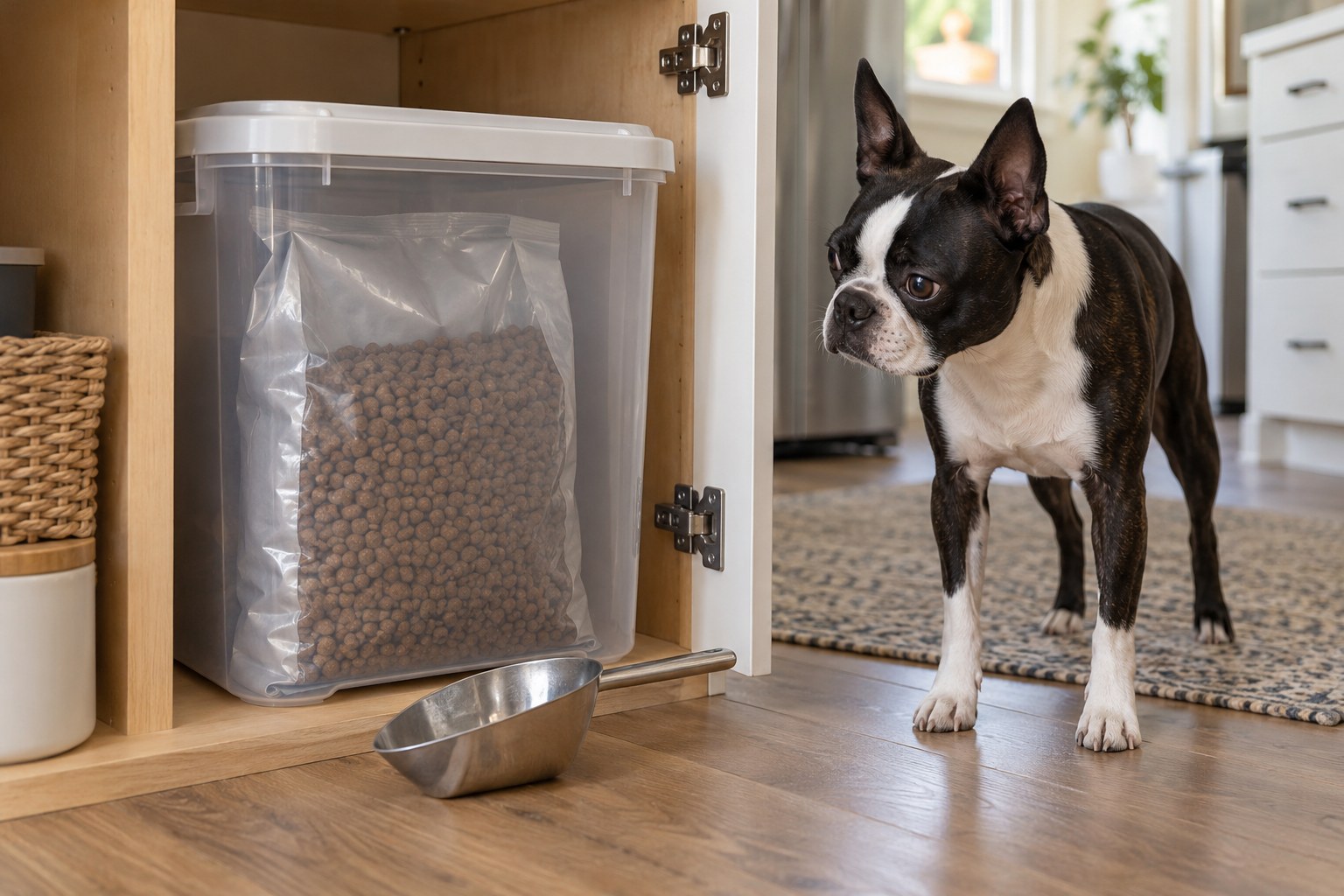
The FDA advises retaining original packaging and, when using a separate bin for dry food, placing the bag inside it where possible. Choose a bin that accommodates the bag without preventing its closure. A container advertised for pet food still needs to fit your particular package and the space where it will live.
Choose the cupboard for its conditions
A space beside an oven, radiator or sunny window may be convenient but unsuitable for the storage directions on the pack. Check whether the location stays cool and dry through the day. Keep food away from household chemicals and somewhere your dog cannot open, tip or chew their way into it.
Do not buy a larger bag merely because it fits a sale. Work out how quickly your household uses the food and compare that with the manufacturer's guidance after opening. A smaller pack that is finished under the stated conditions may suit a single Boston Terrier better than a bulk purchase. Keep reserve packs closed and use the oldest suitable pack first.
Give opened wet food its own reminder
Read the specific instructions on opened cans, trays and pouches; the unopened shelf location does not tell you what happens after opening. Refrigerate or discard leftovers promptly as appropriate, use a suitable cover and mark the opening date. Set a reminder if small portions mean a package might otherwise linger unnoticed at the back of the refrigerator.
Use a clean utensil to remove portions, and keep food utensils separate from anything used for medications or cleaning. If another person feeds the dog, make the current pack easy to identify. A note saying 'use this opened tray first' is clearer than several partly used containers with no dates.
Reset the storage when the pack changes
Allow the bin to become empty, then wash and dry it before adding the next bag. Topping up indefinitely hides old crumbs and makes it harder to know which lot was served. Change the label photograph or attached information at the same time; a carefully saved code from the previous purchase is misleading.
If food smells wrong, a container is damaged or the dog becomes unwell after eating, stop using the suspect product and contact your veterinarian and the manufacturer as appropriate. Keep the packaging available for those conversations. Storage records support an investigation; they do not establish the cause of an illness by themselves.