Turn the illustration into a three-dimensional check
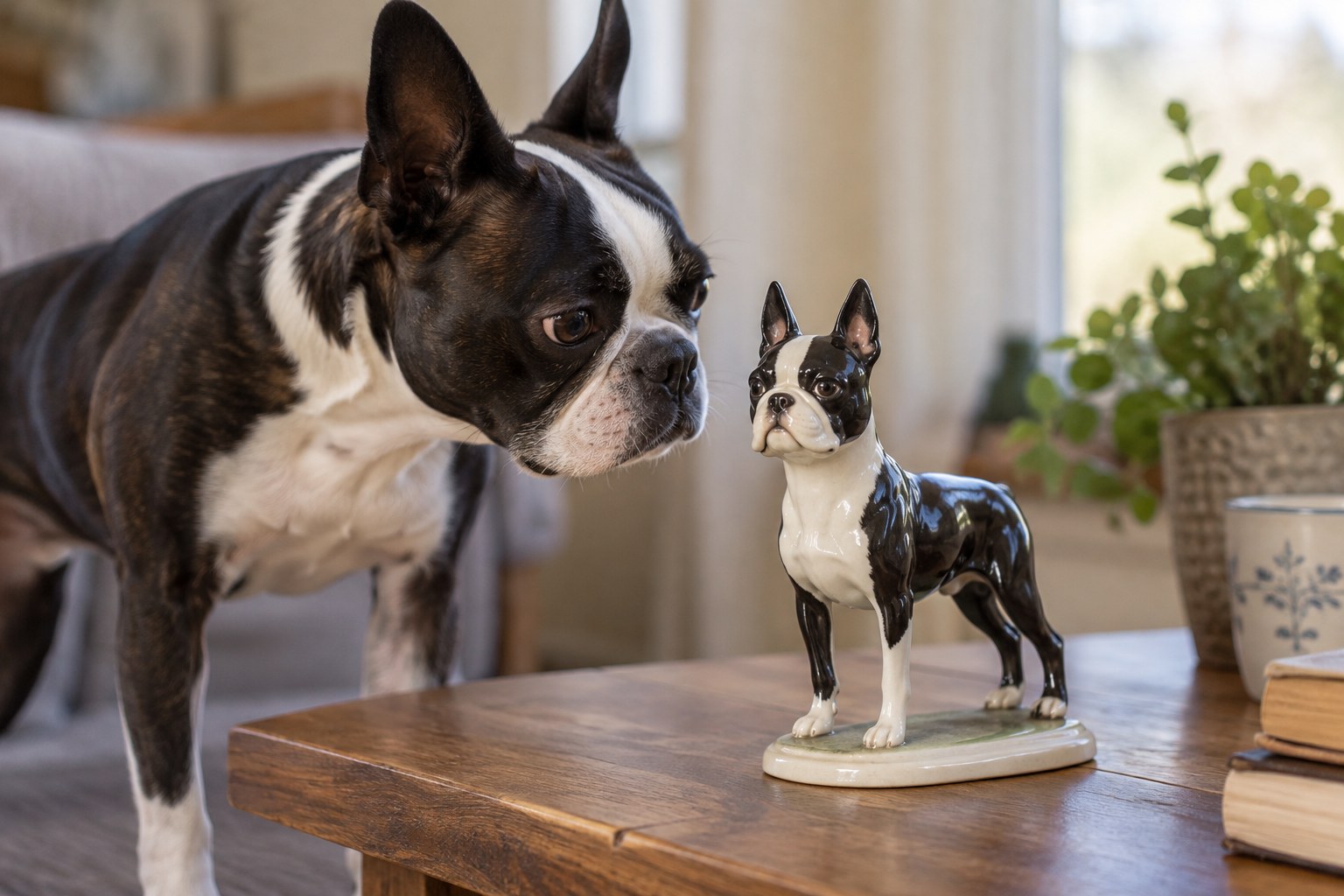
Ask for photographs from the front, side and back. A single front view can hide the body proportions and tail. The AKC Boston Terrier standard describes a compact, square-looking dog with a short muzzle and short tail; those features can help distinguish a breed-themed object. An artist may simplify them, so decide which details matter for the particular gift rather than demanding a show-standard miniature.
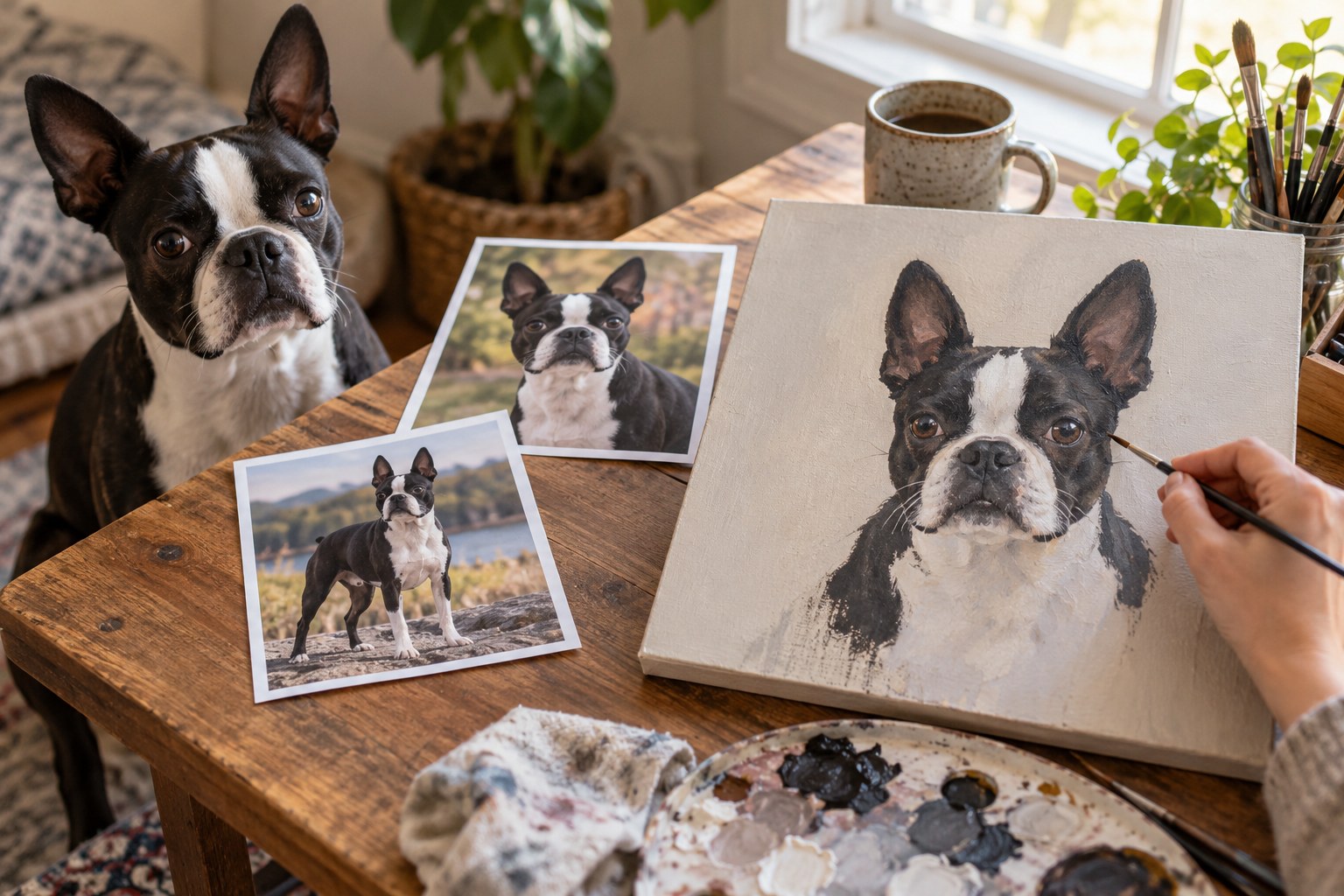
Look at the ears, muzzle and markings as a group. If the figurine is intended to resemble a particular dog, compare the placement of the white areas with a clear photograph. A generic Boston design does not need to match every individual marking, but a personalised order should explain what the maker can change. Do not infer ancestry or health from a decorative object or one photograph.
Measure the object and its base
Check height, width, depth and any stand. Make a small paper footprint for the intended shelf or desk. Include space for books, cables or other objects that normally share it. A tall ear or projecting tail can make a figurine awkward in a low shelf even when its base fits neatly.
Read the material and finish description. Ask how the piece should be cleaned and whether the colour is applied to the surface or incorporated into the material if that matters to your use. Avoid assuming a glossy surface is washable or that a heavy-looking object is actually heavy. A product photograph cannot establish those details.
Plan display and delivery
Choose a stable location where the figurine is unlikely to be knocked while reaching for another item. Keep fragile decorative pieces away from the dog's access and do not present them as chew toys. If the gift is for a child's room, check its intended age and use rather than relying on the animal theme.
Ask about protective packaging, especially for projecting ears or feet, and inspect the piece before wrapping it. Keep photographs of damage if you need to report a problem, following the seller's process. Include a short care note with the gift when cleaning or display restrictions are specific. The recipient should be able to choose a place without discovering hidden requirements later.