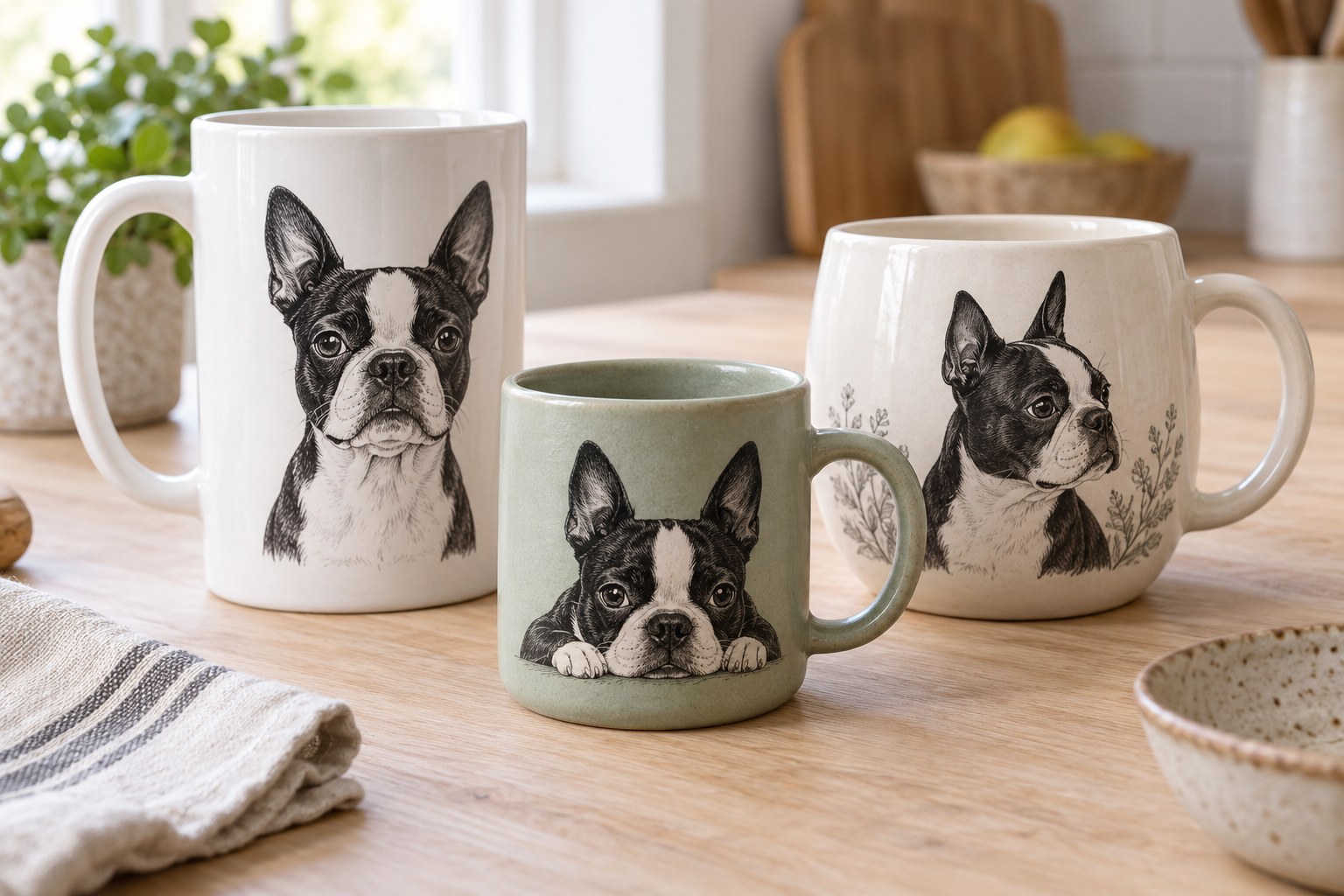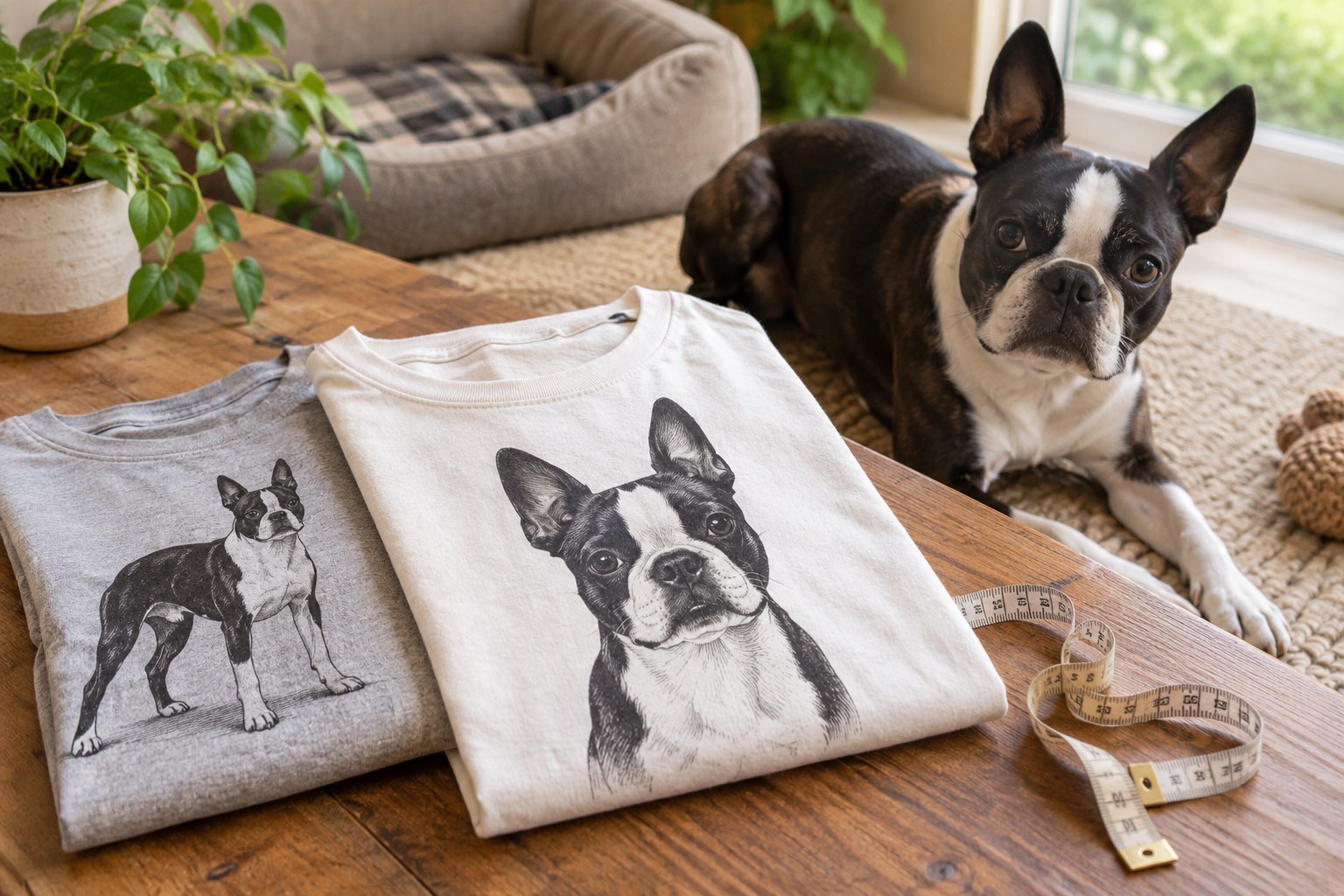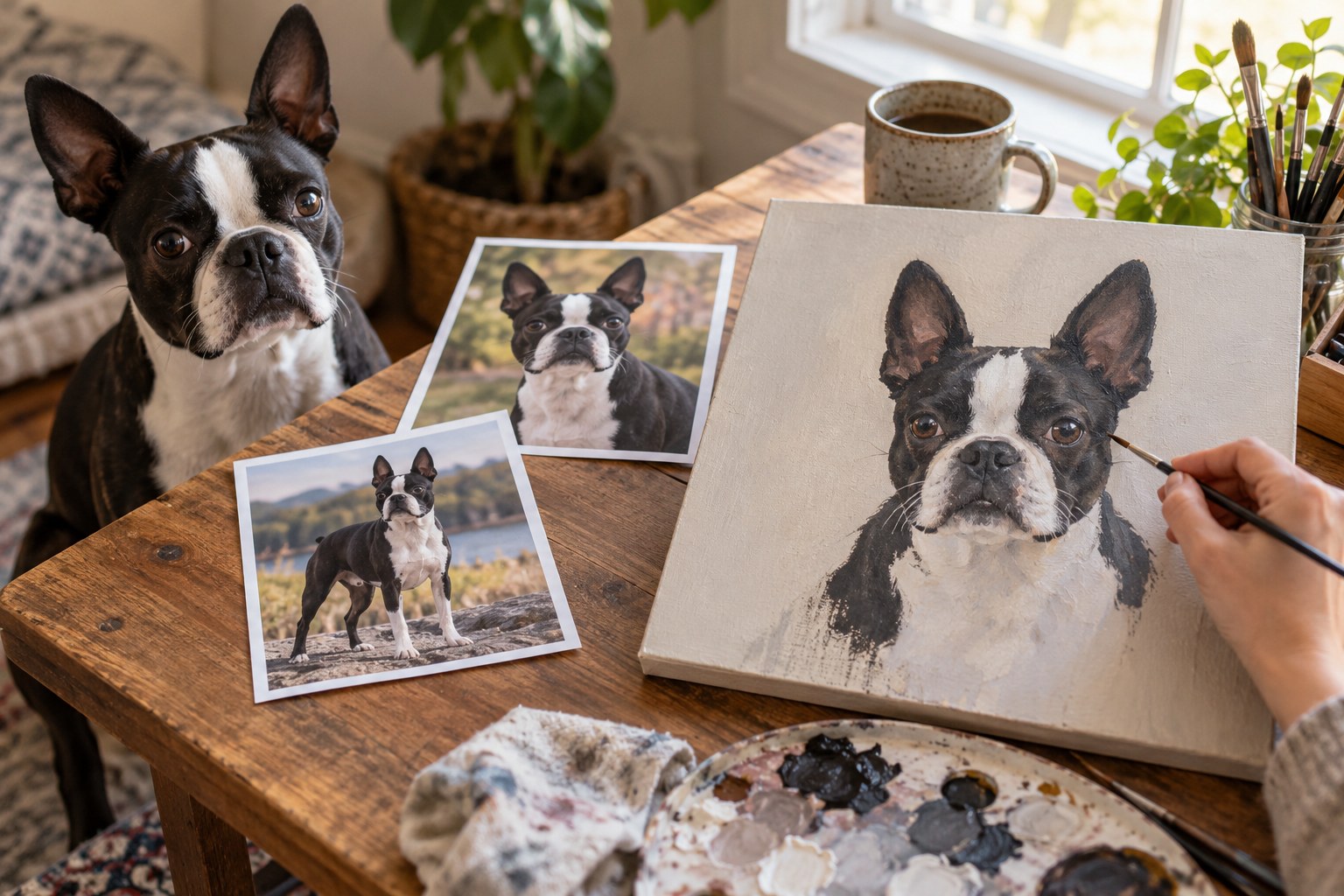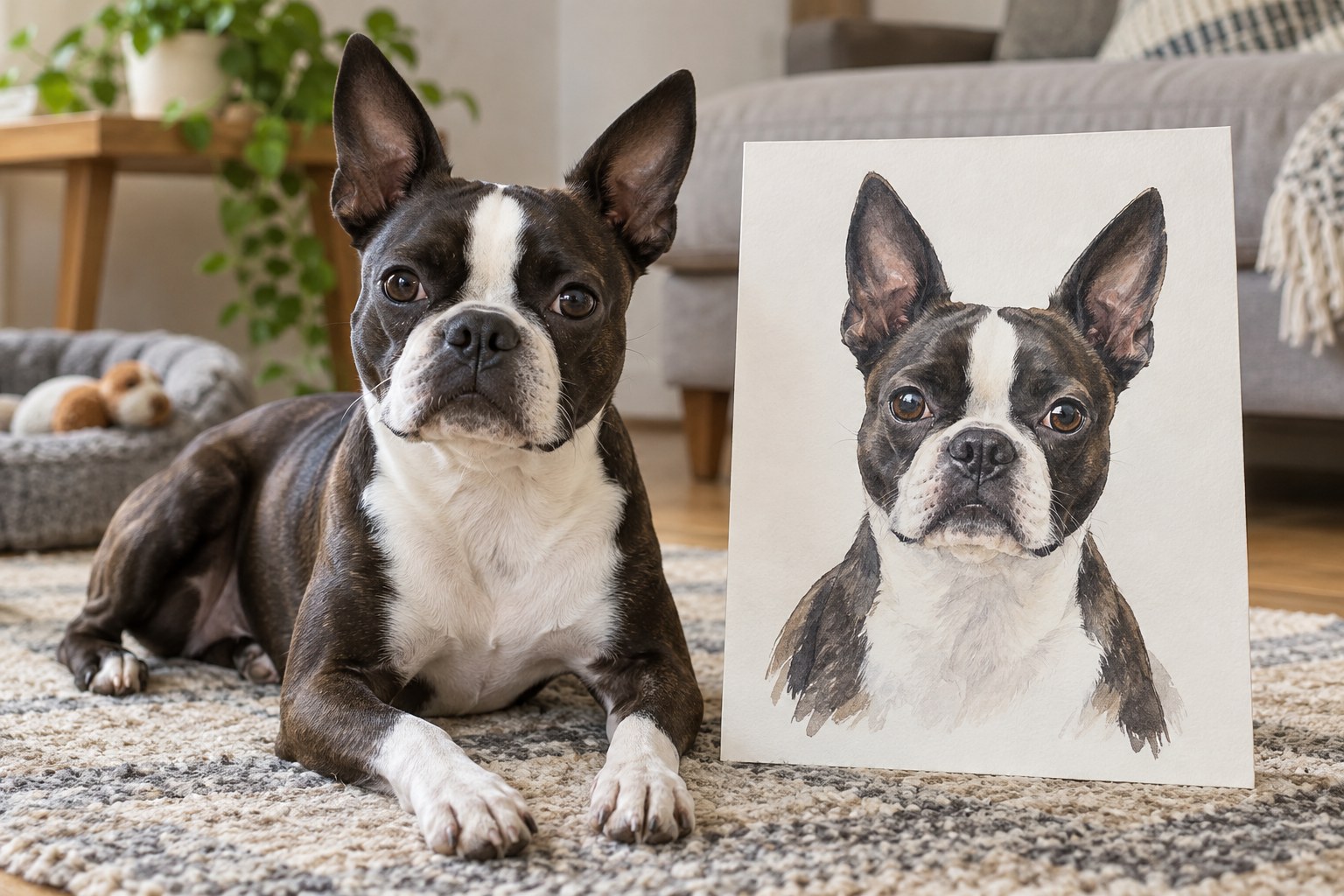
Begin with the silhouette
Look at the head, ears, body and tail together. The AKC standard describes a square head, short muzzle, erect ears, compact proportions and a short tail, with black, brindle or seal colouring combined with white. Those points provide a reference for a breed depiction, but an artist may simplify them into a few shapes. Decide which features remain visible at the product's actual size.
Avoid judging the breed from black-and-white colour alone. Many dog images use those colours. Compare the muzzle outline, ear shape and body proportions, especially in a silhouette where markings disappear. A large head on a very long body may be a deliberate cartoon choice, but it may not convey the Boston Terrier look you intended for a gift.
Check the specific dog, if one is intended
For a portrait-like product, compare with clear photographs of the actual dog. Notice the white blaze, muzzle marking, chest patch and ear position. A generic breed illustration is not a promise to reproduce every individual feature. If a particular marking matters, ask whether it can be changed and whether the order includes a proof.
Keep the distinction between a breed standard and an individual dog's appearance. A rescue dog or a Boston with unusual markings can still be the subject of a meaningful portrait. Do not use a product illustration or a single photograph to make an ancestry or health judgment. The shopping question is whether the drawing represents the intended subject clearly enough for its purpose.
Read the image at its finished scale
Reduce the preview to roughly the size of the print, charm, embroidery or card. The details that establish the breed may vanish when the object is small. Check the full product view as well as the enlarged artwork. Ear tips can be cropped by a phone camera opening, and a muzzle may disappear into a dark fabric colour.
If the listing remains ambiguous, ask for another view or choose a design whose subject is clearer. Read the artist's description rather than inventing an explanation for a mismatched shape. For a personalised order, identify the exact correction in the proof instead of saying only that it looks wrong. Keep the approved image with the order so the expected depiction is clear.