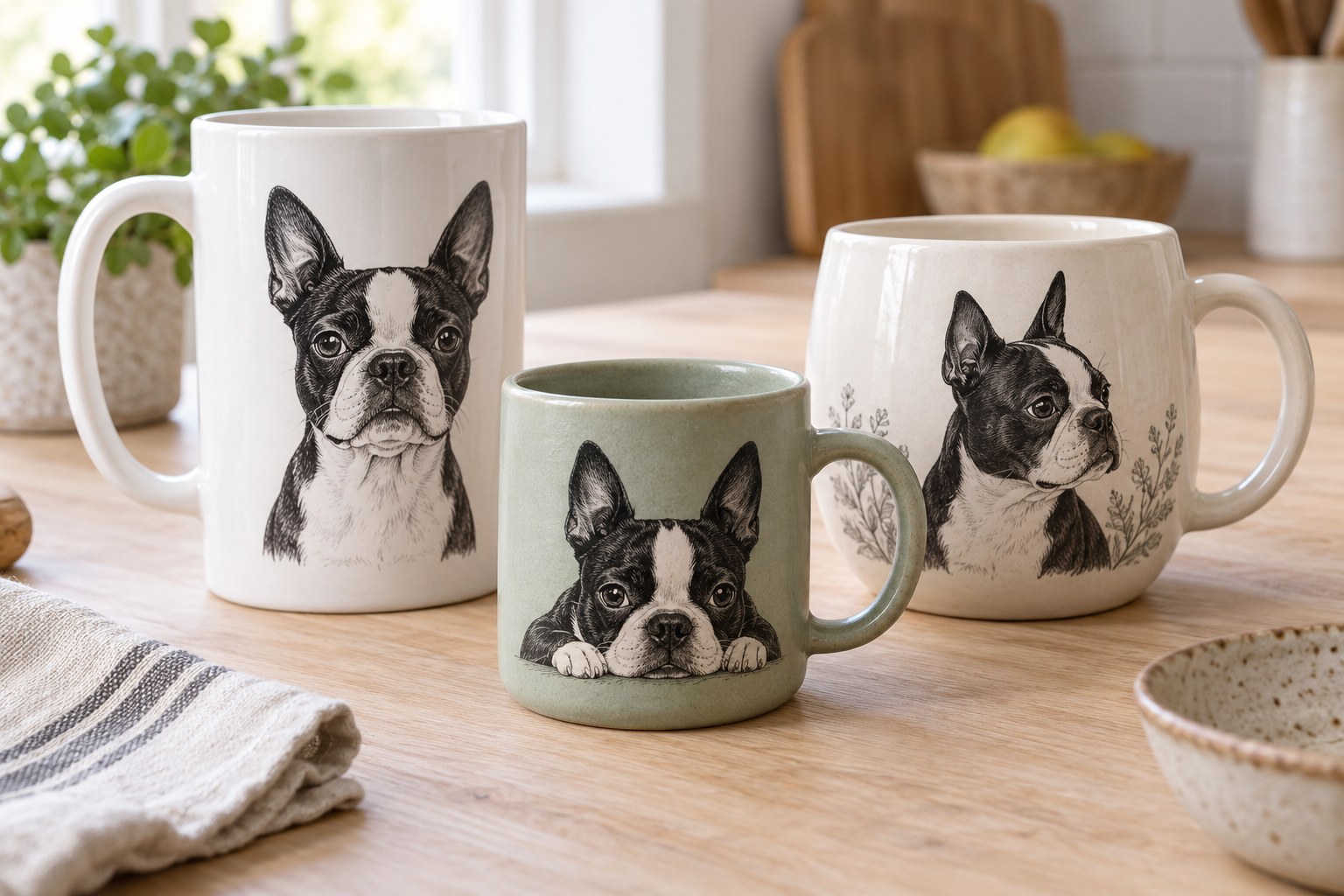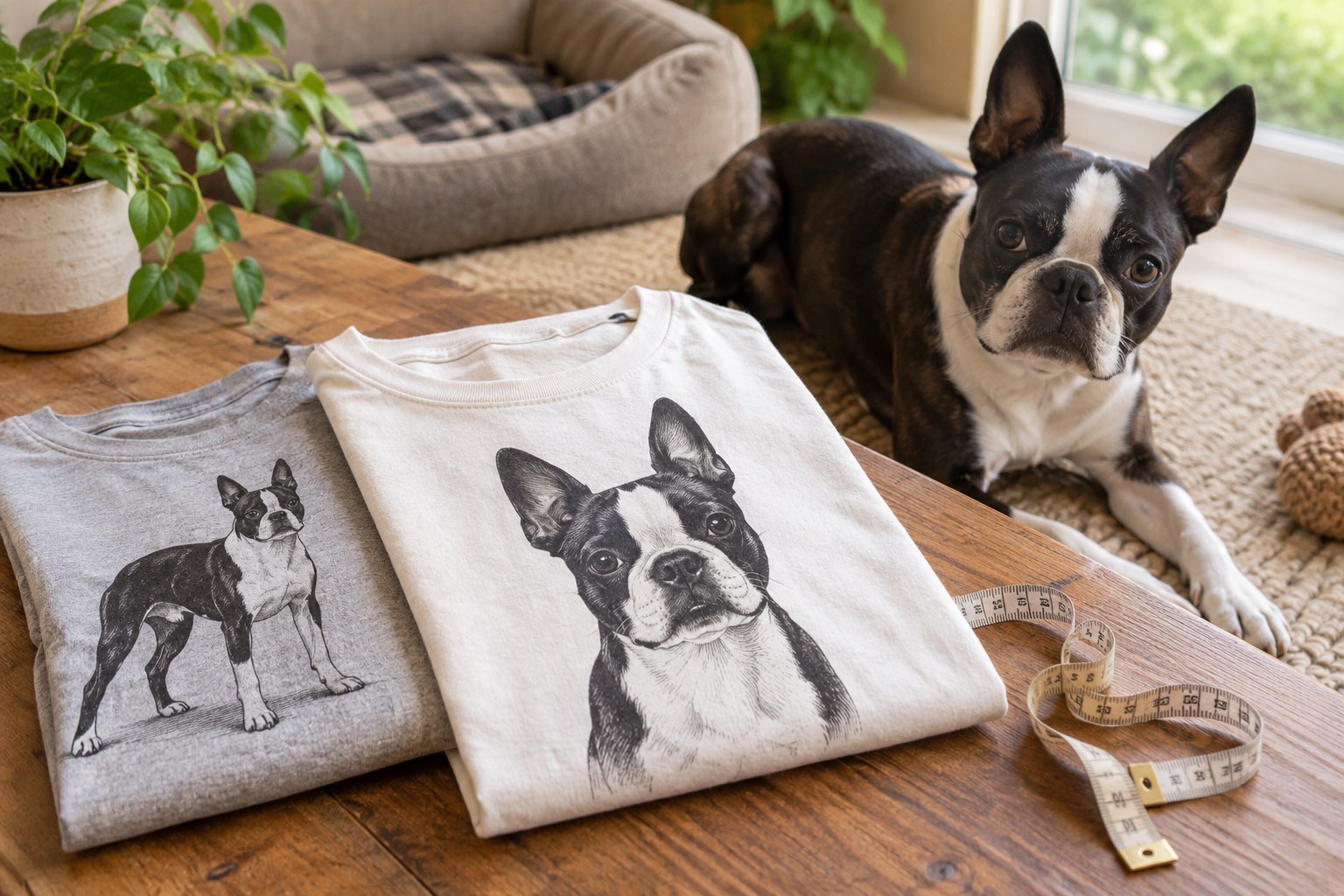
Give the set one centre
Choose a useful item that suits something you know about the recipient: a notebook for someone who keeps written lists, a tote for their usual errands or a print for an identified display space. The Boston Terrier illustration provides the theme. You do not need every component to repeat the same dog image, especially when that makes the set harder to use together.
Write down what the recipient would need to use the main item immediately. A print may need a correctly sized frame; a card needs a suitable envelope. Those additions serve a clear purpose. A second mug, extra decoration or another scented item may simply create more possessions. Keep the total budget for the useful combination rather than spending it on the number of objects.
Check the recipient's preferences before including food, cosmetics or products applied to a dog. A theme does not justify guessing dietary needs, sensitivities or grooming routines. When those details are unknown, use an ordinary non-consumable accessory that fits the main item, or let the main gift stand alone.
Package it as a ready-to-use group
Lay the components out and verify dimensions together. A pen should fit the notebook's intended holder if one exists; a frame should match the print and border; a pouch should fit the tote rather than fill all its usable space. Read separate care instructions instead of assuming that matching artwork means the materials can be washed together. Where two items have separate size options, record both selections instead of assuming the shop will match them automatically.
Choose packaging that protects the objects without concealing essential information. Keep a care card or instructions with the relevant item. If a box is much larger than the contents, use an appropriate protective insert rather than loose filler that the recipient must sort through. Check fragile pieces before sealing the package.
Add a short note connecting the gift to the person, such as the routine or room you had in mind. Keep order details privately in case a defect needs attention. If an item remains unconfirmed or delayed, simplify the set rather than substituting unrelated filler. A finished gift should feel like a coherent choice, with every included piece having an understandable job.