Read the size range before opening
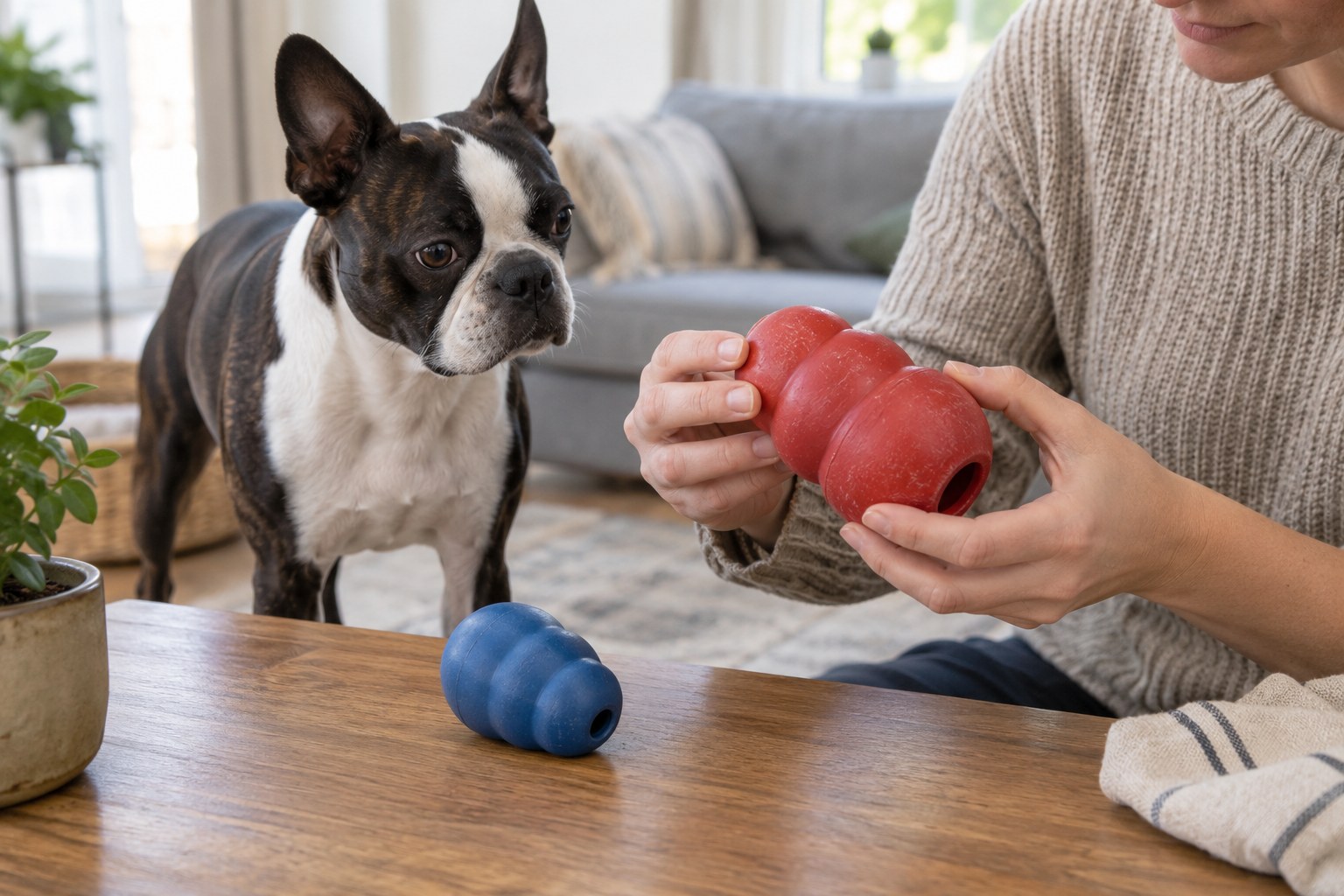
Compare the maker's sizing guide with the actual toy dimensions and your dog's current size. Do not infer suitability from a photograph held in an adult hand. Look for the stated chewing category and age restrictions, if any. Different shapes within one brand may have different guidance, so a size chosen for one toy does not automatically transfer to another.
Check openings, projecting pieces and components that may detach. Think about how your dog grips objects: do they work at a narrow end, hold an item between the paws or press it against the floor? This observation helps you inspect the part likely to receive attention. It does not replace the manufacturer's suitability guidance or justify using an item outside its stated purpose.
Use a before-and-after inspection
Before the first supervised session, photograph the clean toy from several sides. This gives you a reference for its original shape. Feel around the edges and look inside accessible openings without forcing them apart. After the session, compare the same areas, checking for splits, torn material, loose pieces or substantial changes in shape. Good lighting makes this easier than a quick glance at the toy on the floor.
KONG advises removing damaged toys and regularly inspecting them. Apply the exact maker's directions to the item you own, and set it aside whenever its condition is uncertain. Do not trim away a damaged edge and assume the remaining shape has been assessed for chewing. If you think the dog has swallowed a piece, contact your veterinarian rather than waiting to see whether a replacement lasts longer.
Keep the record small enough to use
Write the toy's model, size and date introduced on the saved packaging or in a phone note. Add a factual observation when you retire it, such as where it split or which component loosened. These details can help you ask the maker a specific question. They also prevent you from accidentally buying the same unsuitable shape because its colour has changed.
Store items awaiting inspection apart from toys available for play. A separate box removes the ambiguity of a damaged toy returned to the basket. Check the cleaning instructions before washing, then inspect again when the item is dry. Reassess size as the dog grows or their way of playing changes; replacement decisions should follow the current dog and current object.