Map the changes in space
Think through one ordinary walk: the doorway, pavement, crossing, park entrance and return home. At each point, note whether your dog needs to stay close, has room to sniff or must wait while you open something. A leash that feels convenient on an empty path may leave you managing spare material beside traffic. Choose for the tightest routine section first, then decide whether a separate training line would serve open spaces.
The stated length may include handles and hardware, so ask how the maker measures it. An adjustable design can offer several working lengths, but identify which rings carry the load and whether the clips can reach them easily. Extra settings are useful only when you can change them deliberately while keeping control of the dog.
Try the hand position you actually use
Hold a candidate handle with the hand you normally use, and with a winter glove if that is relevant. Notice whether the seam presses into your palm and whether the grip becomes awkward when the leash is shortened. A second handle near the dog can be helpful in a confined area, but check its position against the height of your Boston rather than assuming you will reach it comfortably.
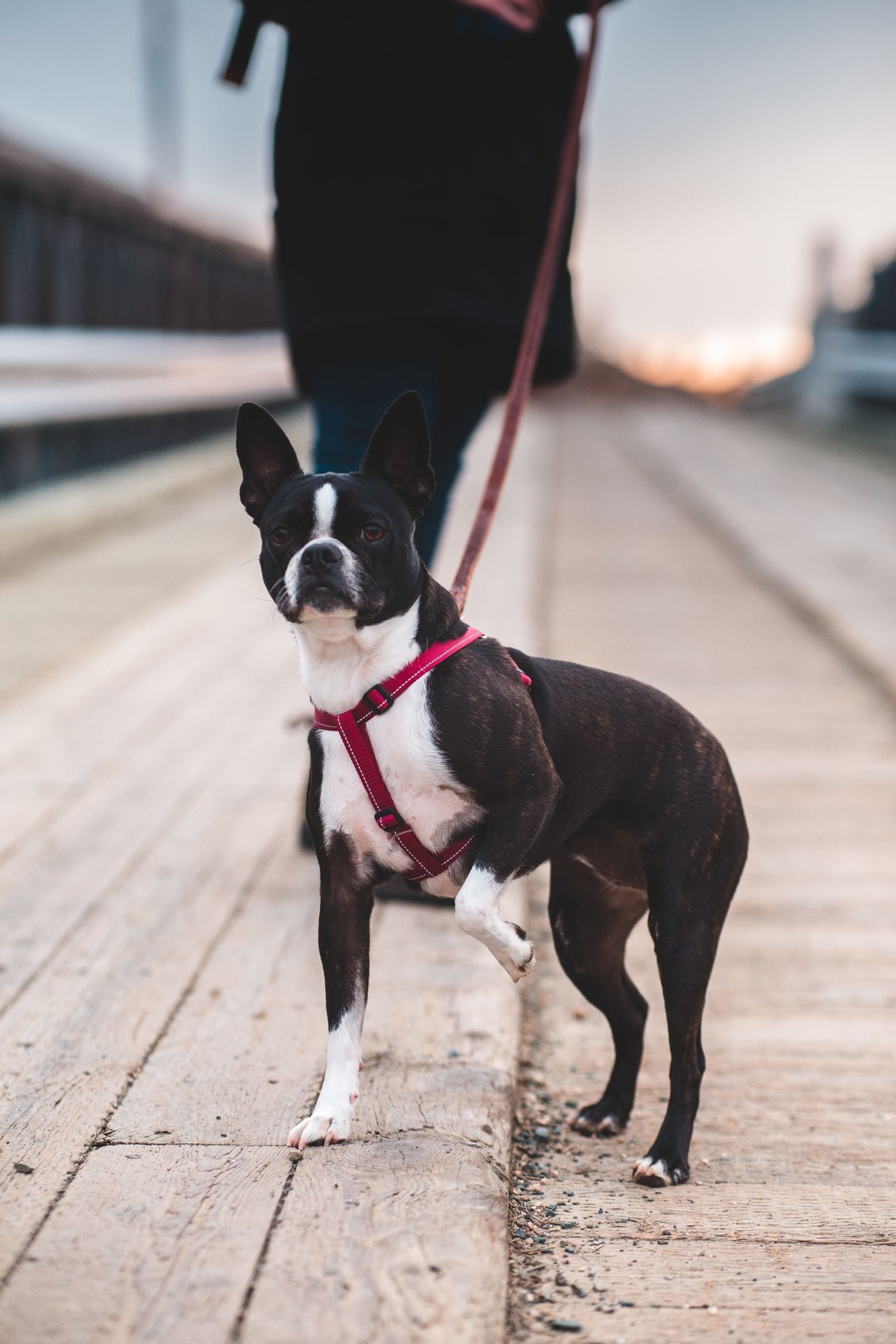
Inspect the clip opening against the harness attachment ring. It should engage fully without trapping fabric, and its gate should return to its closed position. Heavy hardware can be cumbersome on a small dog; very small hardware may be fiddly for the handler. Compare the complete combination instead of treating either component in isolation.
Keep training changes deliberate
For a short practice session, decide in advance where you will gather spare length and where your reward pouch sits. Keep loose loops away from your feet and other walkers. Avoid wrapping the leash around your hand to take up slack. If you need substantially more distance, change equipment in a contained place rather than making an improvised extension from several clips.
Before each outing, run your fingers along the material and check stitching, gates and adjustment points. After a wet walk, follow the care instructions and let the leash dry before storing it. Make a note of any part that is difficult to operate: a repeatable everyday setup is more useful than a feature you rarely use.