Match sleeping positions to the room
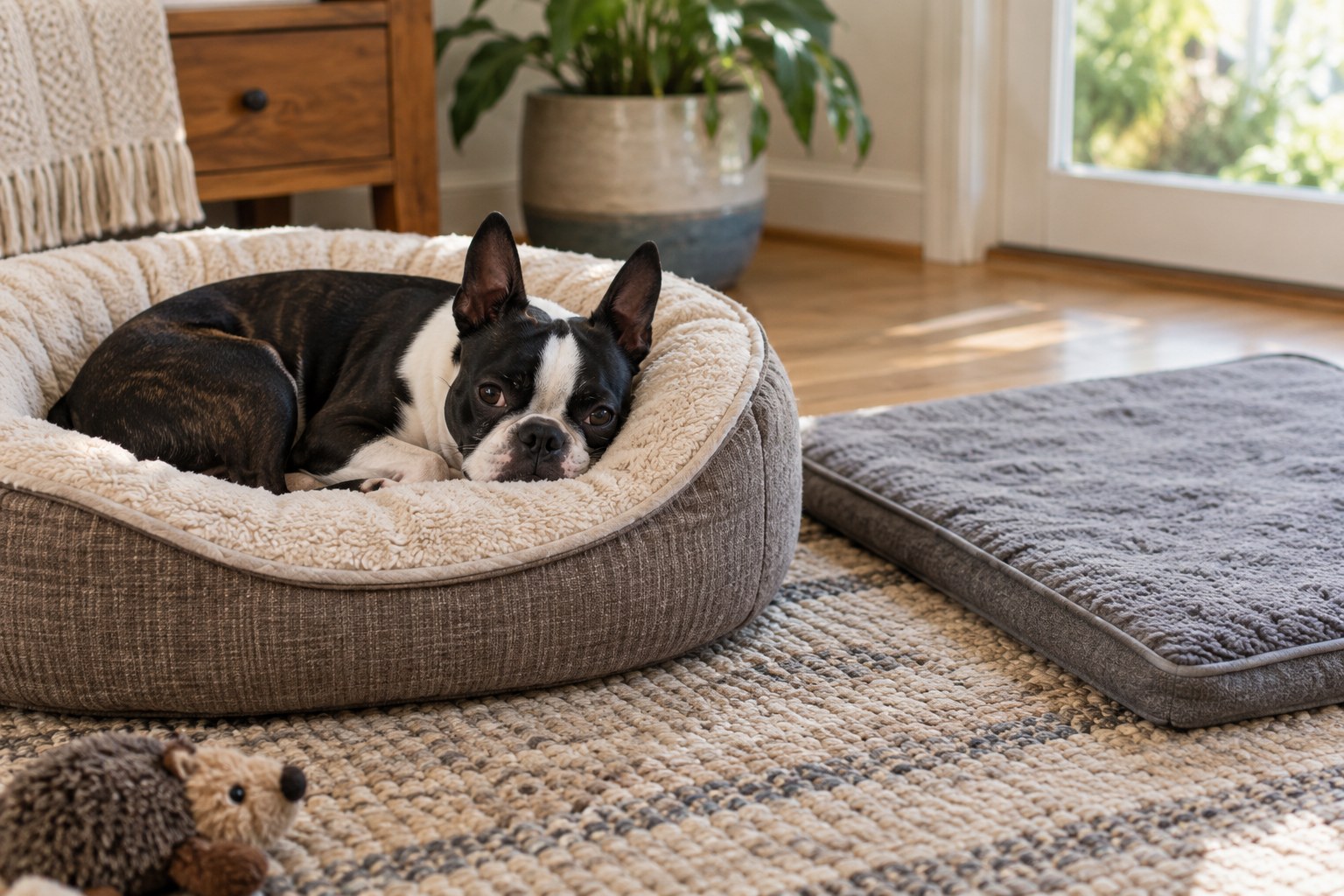
Notice where your Boston puts their head, legs and back during several ordinary rests. A tightly curled dog may also stretch out later, so one sleeping photograph is a poor sizing reference. Measure the space occupied by a comfortable stretched position without disturbing the dog, then compare it with the bed's usable sleeping area. Raised sides can reduce that area considerably even when the outside dimensions look generous.
Look at the approach as well as the sleeping position. A bed with a continuous bolster may require the dog to step over a raised edge. A low entrance offers a different route, but its opening still needs to be wide enough for an unhurried turn. Do not assume a breed photograph beside a product establishes the dimensions for your individual dog.
Mark the proposed footprint on the floor with removable tape or a sheet of paper. Open nearby cupboard doors and walk past it while carrying laundry. An oval or round bed may sit differently in a corner from a rectangular mattress, and a thick bolster can extend into a walkway. Include space for the dog to enter without being squeezed between the bed and furniture.
A flat pad allows several directions of entry and may fit an existing crate if its dimensions and instructions suit that use. A bolster offers an edge to rest against, but check whether it is fixed or removable. If the dog tends to drag bedding elsewhere, consider whether handles, zips or protruding trim will be accessible during that behaviour.
Check the bed as a washable assembly
Ask what can actually be washed: the whole bed, the outer cover, the cushion cover or only a spot-cleaned surface. Compare the washing instructions with your machine capacity and the space available for drying. A large removable cover is still awkward if the opening is too narrow to replace the filling without a struggle. Look for a clear explanation of how the parts come apart.
Keep the old resting option available while introducing a new bed. Place the replacement in a familiar quiet location and let the dog investigate it without being put inside. If they consistently choose the floor beside it, reconsider the location, temperature and shape before assuming they need a smaller or more enclosing design.