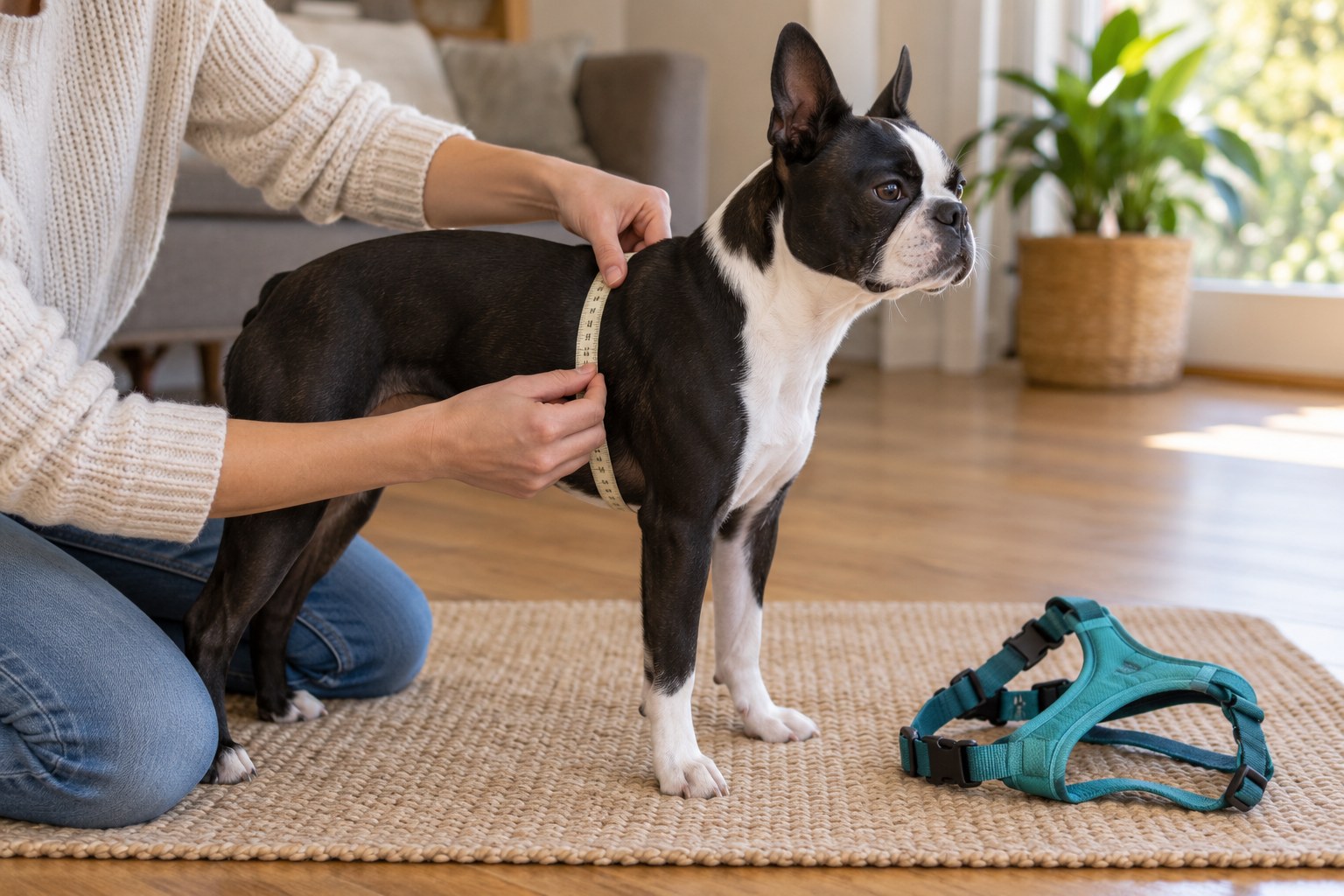
Measure height and approach space together
Measure the vertical distance from the floor to the surface the dog will reach. Then measure how much clear floor extends in front of it. Include room to approach and turn at both ends, rather than fitting the equipment tightly between a sofa and coffee table. Doors, walking routes and drawers can reduce the available space even when the equipment technically fits.
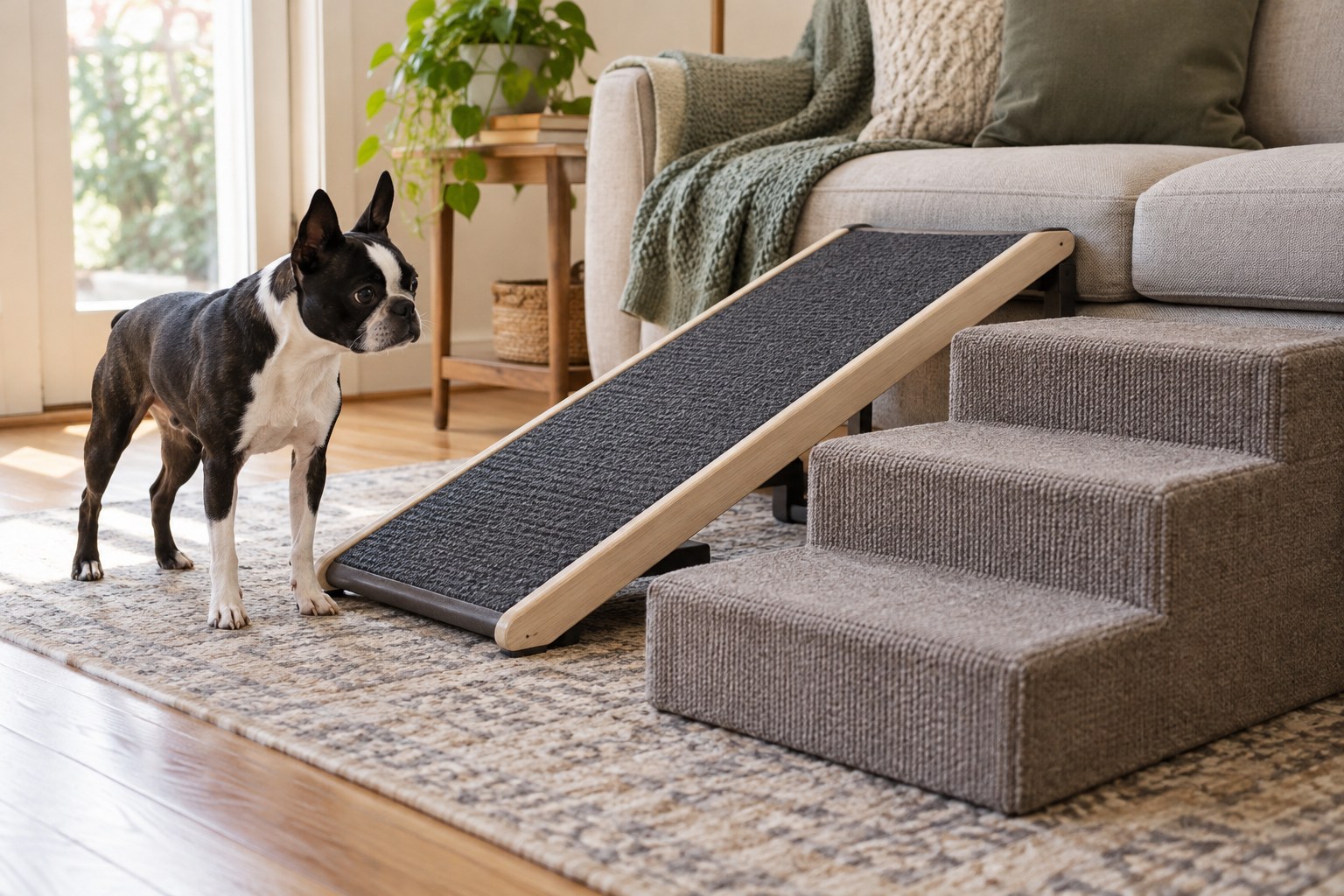
A longer ramp generally occupies more approach space at a given height, while steps divide the route into separate rises. Compare the actual dimensions in the listing: overall height and length, usable width, individual step depth and the shape of the top landing. Do not choose a product solely because a photograph shows a dog of a similar breed beside it.
Distinguish layout questions from health questions
If your dog has pain, weakness, an injury or a change in movement, ask your veterinarian which activities and equipment are appropriate before making a purchase. A household measurement can establish whether a ramp fits the room; it cannot establish whether climbing that ramp is suitable for a particular condition. Avoid treating a product described as orthopedic as a complete explanation of its intended use.
For an ordinary layout comparison, consider how the dog currently moves and which route they choose. Look at footing, entry position and whether there is room to wait while you help. Note these observations without forcing the dog to demonstrate a difficult movement. A cautious approach is useful information, not a reason to push the dog onto an unfamiliar structure.
Read the support and setup instructions
Check the load limit, permitted height range, support points and installation requirements for the exact model. The upper end may need a particular contact surface, and folding or telescoping sections may require specific locks. Examine the manual before ordering. A product intended for a vehicle may not be intended to rest against a soft sofa edge, even if the height appears similar.
Compare the surface and how it can be cleaned. Deep texture, fabric covers and replaceable treads each need different care. Look for edge details and spaces where paws or claws could catch. Set up the empty equipment and check every fastening as directed, without using the dog to test whether an uncertain support holds. Check whether replacement treads or covers are supplied for that exact model, and retain their part numbers if the maker lists them.
Allow time for introduction and storage
PetSafe's ramp introduction guidance begins with the ramp on level ground before progressing. Apply the instructions for your own product and let the dog investigate gradually with an appropriate reward-based plan. Avoid pulling the dog up by the lead or placing them partway along the structure. Stop if the session becomes difficult and seek guidance where needed.
Practise the complete route only when the setup is correct and the earlier steps are comfortable. Stay nearby and keep the surroundings clear. If the dog bypasses the equipment, reconsider its position and the training plan rather than leaving it in place and assuming they will learn by accident. Other household members need to know the intended route too.
Finally, measure the stored shape. A folding product may need more room to open than to use, while a fixed unit occupies the route continuously. Identify where it can dry after cleaning and where it will stand without falling or blocking a door. Recheck locks, treads and contact points whenever the equipment is moved into position.