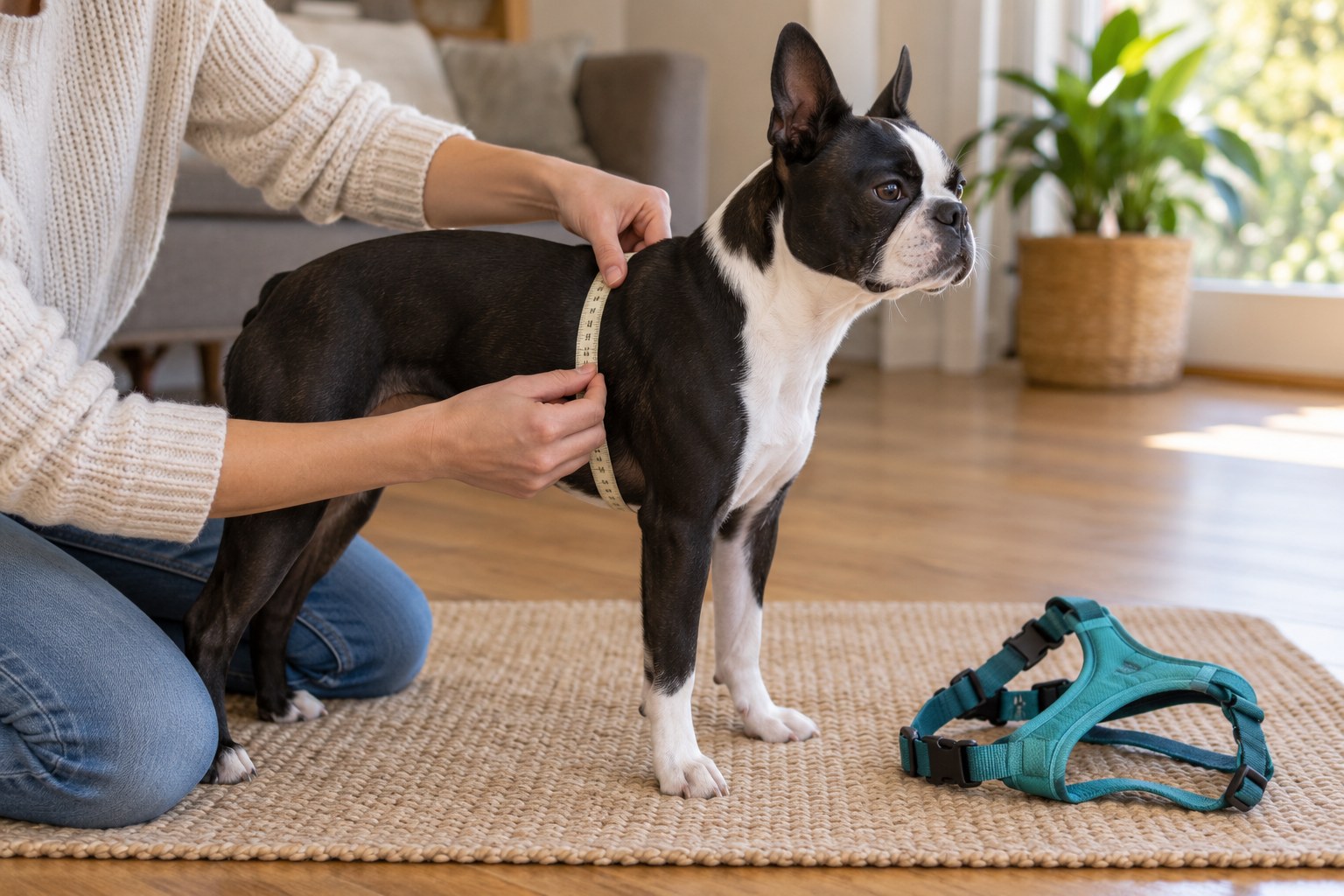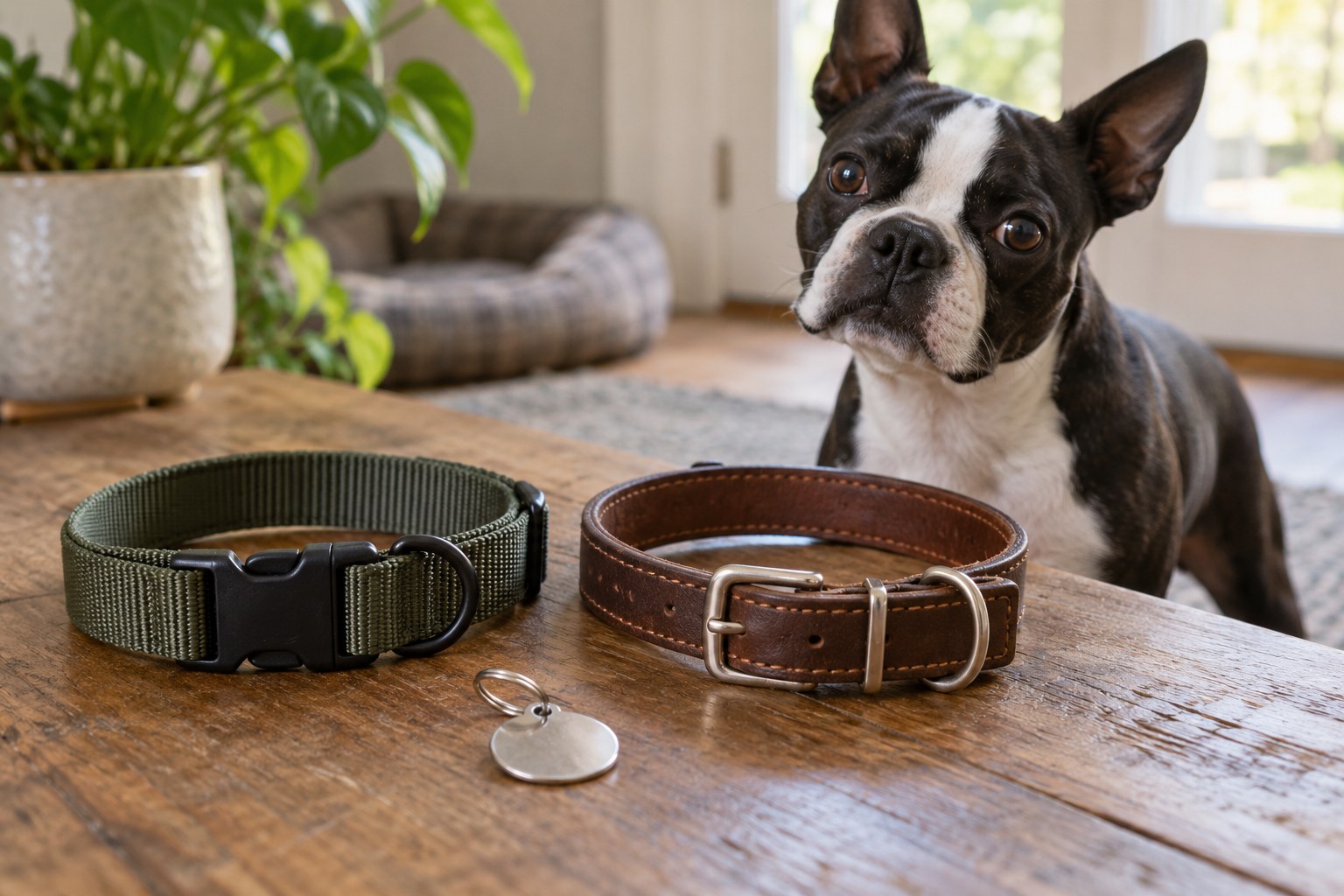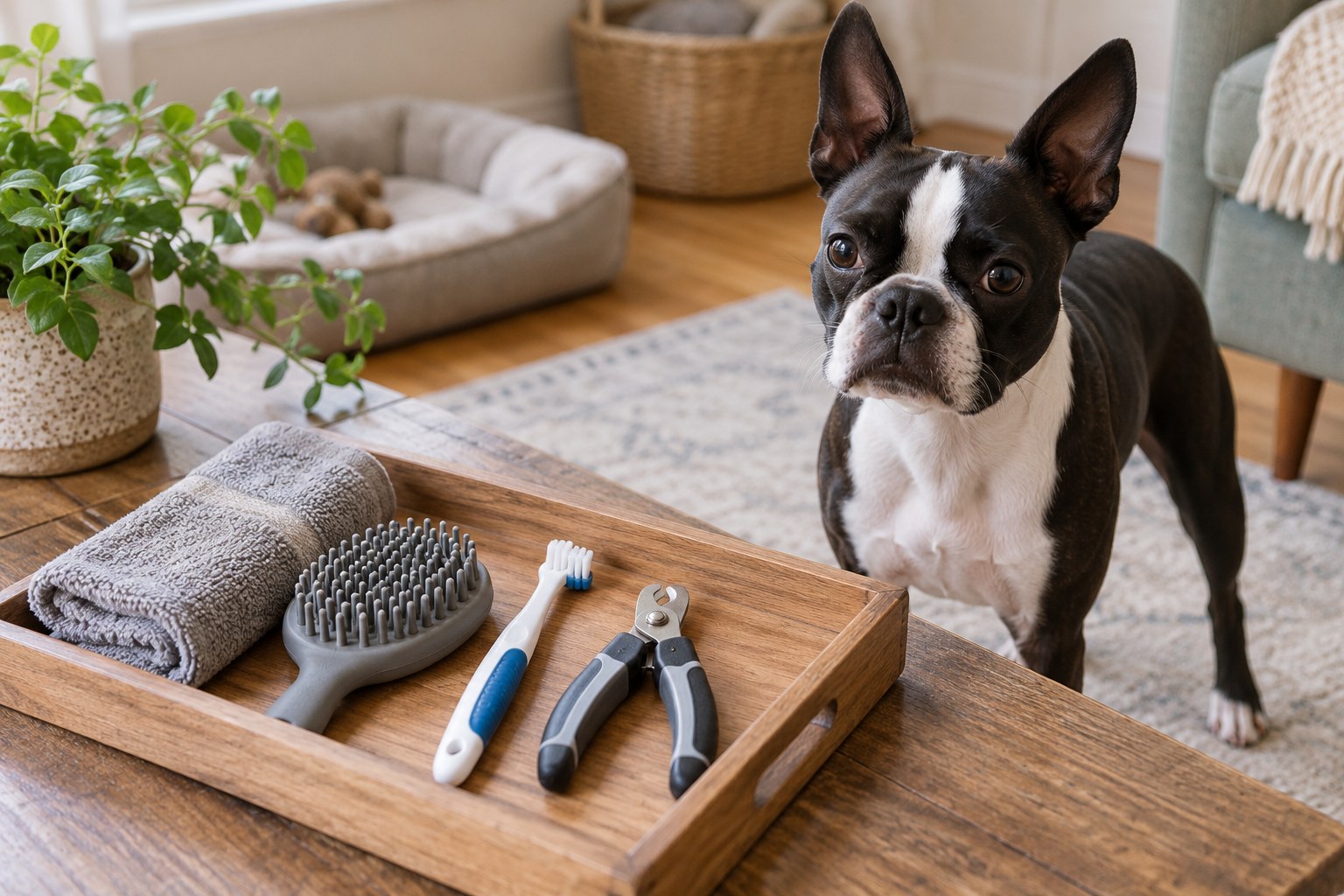
Choose tools for a task you can carry out
Write down what you currently do: brush the coat, wipe muddy paws, wash bedding or another clearly defined task. Beside each item, list the tool, cleaning method and storage place. Put unfamiliar procedures in a separate question list for your veterinarian or groomer. A product listing is not a substitute for learning how to carry out a procedure comfortably and appropriately for your dog.
For a familiar task, compare the tool's size and grip in your hand. A small brush head may reach a narrow area but require more passes over the coat. A large handle can be awkward to control close to the dog. Check for clear instructions on use and cleaning, and avoid attachments whose intended pressure or purpose you cannot explain.
Set up where the dog has a stable footing and you can put tools down without reaching over them. Keep only the current task's equipment within reach. A washable towel, a place for used materials and a clear route away can simplify the session. Do not arrange a crowded tray beside the dog simply because it looks like a complete kit.
Keep sessions short enough to observe the dog's response. Pause if the dog turns away repeatedly, struggles or appears uncomfortable, and ask a qualified professional about the difficulty. Avoid attempting to finish a task by increasing restraint or switching to a more forceful tool. The kit should support a procedure you can perform with care, not encourage you to do more than you understand.
Store clean tools ready for the next task
Clean each item according to its instructions, including removable pads, covers and handles. Let damp components dry before closing the container. Separate used towels from tools that are ready to use, and keep liquids upright in their original labelled containers. Check expiry dates where applicable rather than keeping an old bottle because most of its contents remain.
A shallow divided box can make missing items visible. Put sharp tools and products requiring secure storage where the dog and children cannot reach them. Retain instructions with the model information, especially for equipment you use infrequently. Review the kit occasionally and remove duplicates that make it harder to identify the correct tool for the task.